
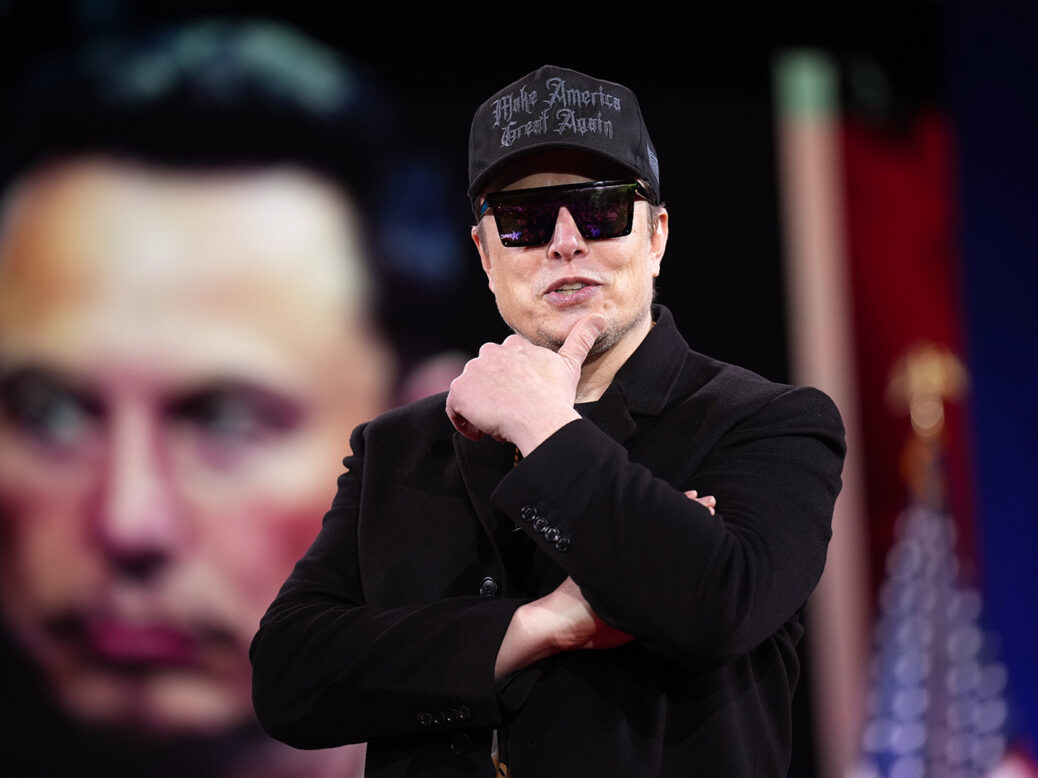
The year has started in a familiar fashion: with Keir Starmer duelling with Elon Musk. Last January the world’s richest man – $642bn as of this morning – excoriated the Prime Minister over grooming gangs, stating that he was “complicit in the rape of Britain” and should go to prison. Today the feud centres over the sexualised deepfakes created by X users through Grok, the site’s AI chatbot (that curious name, by the way, derives from the Martian language of Stranger in a Stranger Lanned).
“The actions of Grok and X are absolutely disgusting and shameful,” declared Starmer at last night’s PLP meeting. “Protecting their abusive users rather than the women and children who are being abused shows a total distortion of priorities. So let me be crystal clear, we won’t stand for it, because no matter how unstable or complex the world becomes, this government will be guided by its values. We’ll stand up for the vulnerable against the powerful.
“If X cannot control Grok, we will – and we’ll do it fast because if you profit from harm and abuse, you lose the right to self-regulate.”

Shortly before Starmer addressed MPs, Liz Kendall announced that new laws banning the creation of non-consensual, intimate images will be enforced from this week. Ofcom, meanwhile, has opened a formal investigation into X, which could see the company fined up to 10 per cent of its global revenue or, ultimately, banned in the UK (a last resort that Kendall has made explicit).
This is a government that has often refrained from picking fights – while sometimes stumbling into inadvertent ones – so why is this a battle No 10 is happy to have? First, Downing Street has always rejected what one senior aide described to me as the “libertarian” view of the internet as an anarchic, anything-goes space – that’s why the Online Safety Act was passed in spite of the dystopian warnings of Reform.
Second, No 10 is buttressed by the knowledge that the public is on its side. “They want any excuse for censorship,” tweeted Musk after the threats against X. But remarkably few voters take this view: 97 per cent believe that AI tools should not be allowed to generate sexually explicit content of children, while 96 per cent say the same of adults – possibly the strongest consensus in UK politics (Musk’s net approval rating, meanwhile, stands at -60, even lower than Starmer’s -54).
A right that used to chide the left for mistaking Twitter for Britain now routinely makes the same error. This is not a country of voters anxious that banning sexual deepfakes is the road to serfdom. Rather than defending Musk, Kemi Badenoch would be better off doing her best Mary Whitehouse impression.
Yet challenges remain for Starmer. One is the long-running debate over whether the government should continue to use X. Challenged over this at last night’s PLP, Starmer said only that the matter remained under review. (No 10 did not confirm whether the PM, who last posted five days ago, is effectively boycotting the site.)
Then, as Freddie notes, there is the geopolitical dimension, with Musk once again a presence in Donald Trump’s court – the pair dined at Mar-a-Lago a week ago. Can a Prime Minister who has consistently sought to charm rather than offend the president afford to go to war with one of his patrons? Here is another reason why Labour’s reawakened Europeans believe the government must put more distance between itself and Maga-land.
Some Spad news of note: Morgan Wild, until recently Labour Together’s chief policy adviser and one of the party’s brightest thinkers, has joined Pat McFadden as a policy adviser. In his new post as Work and Pensions Secretary, McFadden is keen to reaffirm the Beveridge-era contributory principle – through a new system of unemployment insurance – a cause that also animates Rachel Reeves and Shabana Mahmood.
So it’s worth revisiting The Case for Contribution, the paper that Wild wrote for Labour Together last September, which was studied by No 10 and the Treasury, and which argues that the government must end “the pretence that the public will support a welfare system they often see little benefit from themselves” and calls for “earnings-linked, short-term unemployment insurance, better family and care entitlements, and higher contributory pensions”.
This piece first appeared in the Morning Call newsletter; receive it every morning by subscribing on Substack here
[Further reading: The housing market has already crashed]
Content from our partners


Related
Join the debate
Subscribe here to comment