
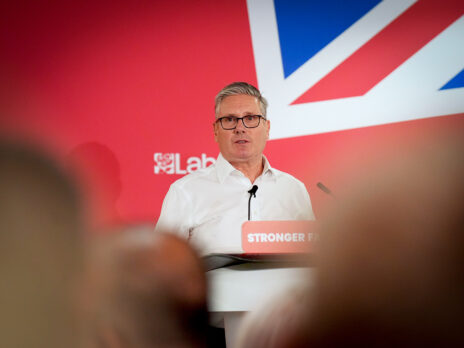
Westminster was united in asking one question at Monday lunchtime: was it enough? Keir Starmer’s much-anticipated reset speech was intended to cool heads in the Parliamentary Labour Party as MPs seethe over one of the party’s worst local election results ever, and some consider whether to push ahead with a leadership contest.
The Prime Minister’s rhetoric was both modest and strident. He admitted to mistakes and acknowledged he had doubters in his own party who were frustrated with him, an admission delivered long after those facts were taken as given by his colleagues. But he also pledged to carry on with the job, to be more radical and gave no ground to those who want Andy Burnham returned to parliament as a ready-made replacement for Starmer before the next general election.
His central argument against a leadership challenge was that it would replicate the Tory chaos that the Labour Party was elected to stop.
“Stories beat spreadsheets,” was one of the rhetorical flourishes Starmer deployed as he made a series of announcements which varied in concreteness. The headline proposal was the full nationalisation of British Steel, legislation for which he said would be introduced to parliament in the King’s Speech this week.

Then there was Europe. This part of the speech was trailed by Downing Street last night in an effort to pique the interest of the broadly pro-European PLP. But what the Prime Minister said was somewhat underwhelming. He pledged, once again, and in the same language, to put Britain “at the heart of Europe” and repeated proposals for a youth mobility scheme with the European Union.
That got a cheer in the room, but was swiftly undermined when Jim Pickard of the Financial Times asked for details. Did this mean Starmer would break his red lines – no return to the customs union, single market or freedom of movement – and include a commitment to all or one of these in Labour’s next election manifesto? The PM became more cautious at this point, saying he wanted to turn his back on the arguments of the past but build on his EU reset. It wasn’t a direct no, but it was perhaps less exciting than some pro-Europeans had expected. If he had been planning to make a bold pro-European offer, this would have been the time to say so. He might not get another opportunity.
He also pledged to go further on improving conditions for young people, promising guaranteed jobs, work placements or training for Neets (those “not in education, employment or training”). Alan Milburn, a Blair-era minister, is currently conducting a review into youth unemployment and inactivity for Starmer, which will report back later this month, but today’s speech gave a taster of what we might see.
Alongside these pledges, Starmer made an emotional case against Reform, saying that he was determined to stop Nigel Farage from becoming prime minister (and including some colourful language about the Reform leader being a “grifter”). He also addressed a persistent criticism that the party has tried too much to ape Reform UK, especially with its restrictionist immigration policies pioneered by Home Secretary Shabana Mahmood. “We cannot win as a weaker version of Reform or the Greens, we can only win as a stronger version of Labour,” he said, “I will never stop fighting for the decent, respectful, diverse country I love.”
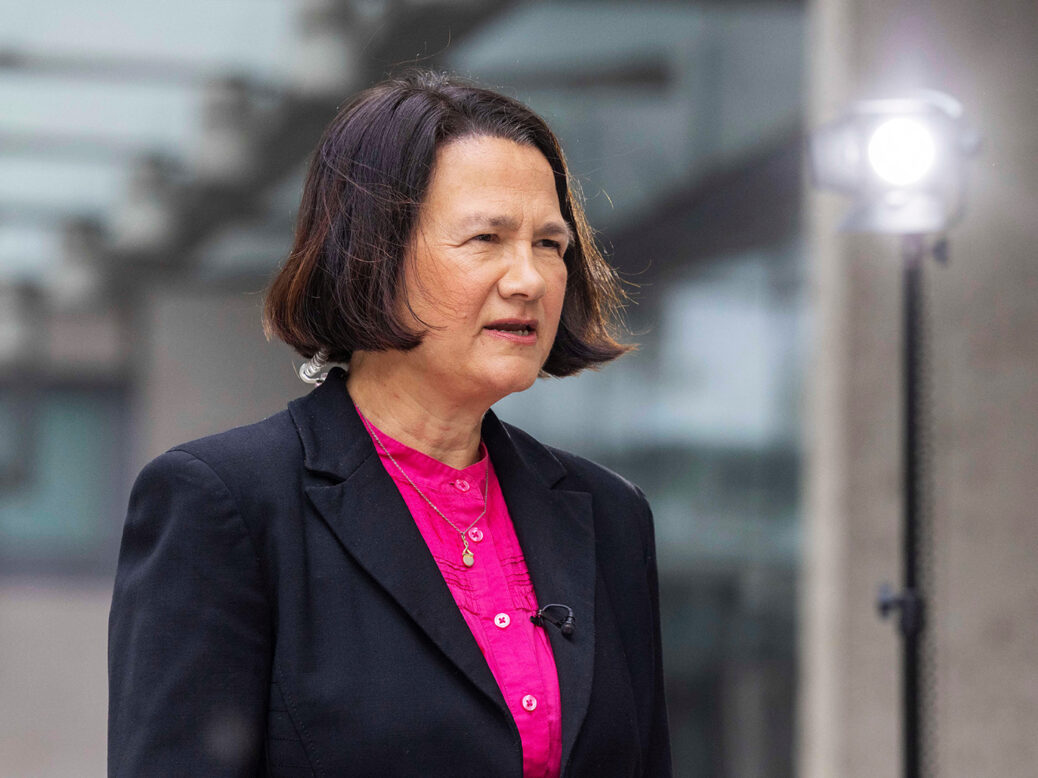
It has swayed at least one important person. Shortly after the speech was delivered, Catherine West stepped down her prospective backbench challenge for the leadership of the party. Though she described the speech as “too little, too late,” she will not now trigger a contest by seeking the nomination of 81 MPs. Instead she is organising a letter to No 10 asking Starmer to set out a timetable for stepping down, for which she will seek signatures from parliamentary colleagues.
That removes the immediate threat to Starmer of a contest being triggered today, but his breathing room remains limited. Now expect a concerted push from the soft left to get Andy Burnham into the House of Commons. West explicitly called for a new leader to be in place by the September annual conference. That would hypothetically give Burnham sufficient time to fight and win a by-election. She has now moved from a figure whose actions stood most to benefit Wes Streeting – by triggering a sudden leadership contest – to one who might help Burnham.
[Further reading: Labour faces civil war to replace Starmer]
Content from our partners



Related

Join the debate
Subscribe here to comment