
Labour is unpopular because it’s too left wing. You’re going to hear that argument a lot over the next few months – as well as the rejoinder that it’s too right wing. Neither view captures the complexities and nuances of public opinion.
Let’s turn to one of the most important graphs in British politics, from More in Common. It’s invaluable because it shows salience – how noticed a policy is – as well as popularity. Decisions such as the transfer of the Chagos islands and the return of the British-Egyptian activist Alaa Abd El-Fattah are viewed negatively but lack the totemic status that critics might assume. The problem for Labour is the number of policies that are both widely noticed and widely disliked: the winter fuel payment cuts, the inheritance tax rise on farmland and the early release of prisoners (the latter preventing the collapse of the system). The blocking of Andy Burnham – cast by some as an obscure internal feud – also features high.
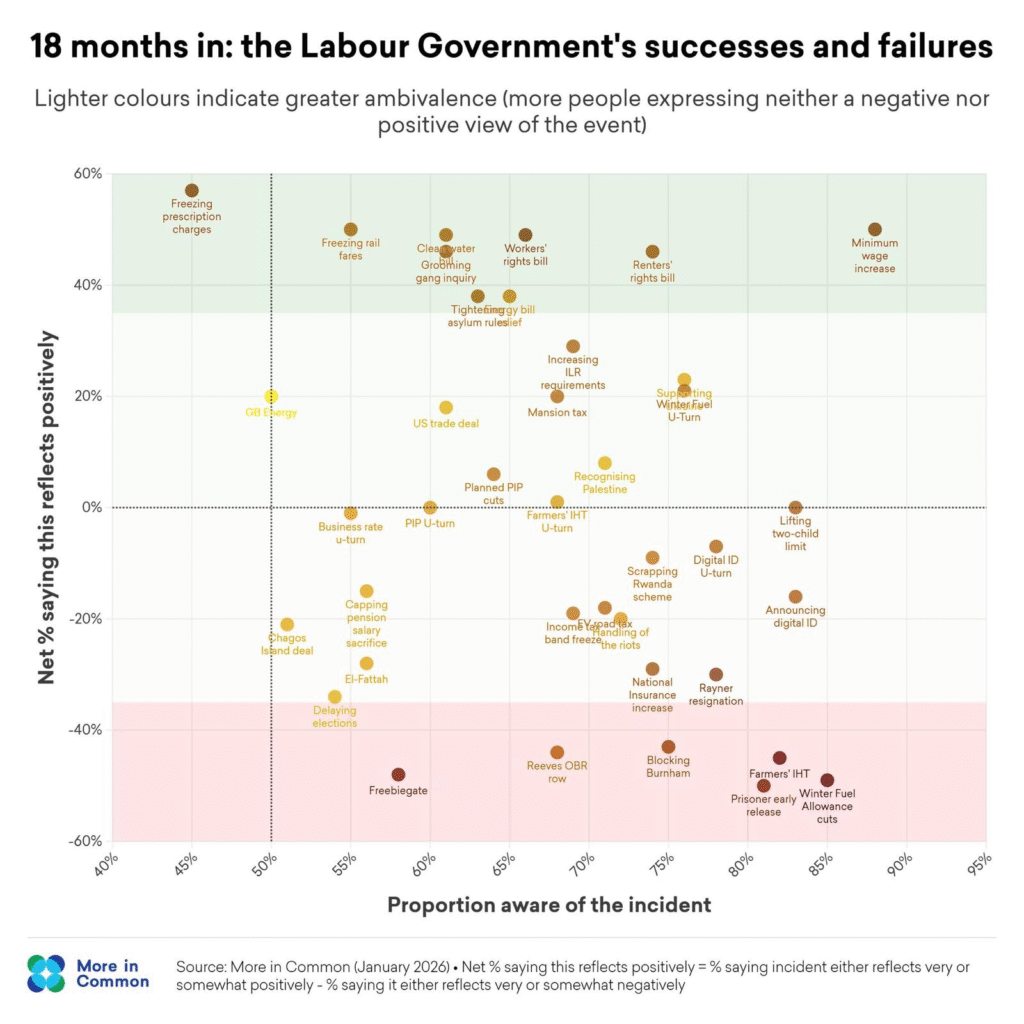
These net negatives have been counterbalanced by too few net positives: the only policy that is unusually popular and salient is the rise in the minimum wage, now among the most generous in the world at over £25,000. Public opinion is turning against higher taxes and spending – the traditional “thermostatic” response to a Labour government (under a Tory one the reverse trend usually applies).

But don’t mistake this for an anti-interventionist trend. Measures such as the workers’ rights and renters’ rights bills are among the most popular and voters welcome cost of living policies such as the freeze in rail fares and the freeze in prescription charges (they are neutral on the lifting of the two-child benefit cap and positive towards the “mansion tax”). Shabana Mahmood’s reforms to asylum and immigration are also viewed favourably, if not to a transformative degree. Labour won’t win an election on this issue, though it could easily lose one.
Popularity should not be fetishised: a midterm government that takes tough but necessary decisions leaves itself poised to benefit by the time of the election. Labour’s weakness is that pain has been accompanied by too little gain: the winter fuel cuts and farmland tax will now raise less than £1bn between them (or 0.1 per cent of public spending).
That political capital might well have been better spent on reforming the state pension triple lock or imposing a wider land tax. But for Labour avoiding more mistakes is only part of the answer – to win re-election, the party desperately needs more signature successes.
This piece first appeared in the Morning Call newsletter; receive it every morning by subscribing on Substack here
[Further reading: Morgan McSweeney’s political obituary]
Content from our partners


Related

Join the debate
Subscribe here to comment