
Every political project carries within it the seeds of its own destruction. Its tensions, contradictions, limitations – and ultimately its demise – are baked in from the start. The sociocultural zeitgeist into which it is born, together with the quality of its thinking and leadership, determine its longevity.
Classically, the post-war settlement endured because it was underpinned by both a strong working class and a powerful liberal intelligentsia. Likewise, Thatcherism became hegemonic not just because of her leadership qualities but because of its intellectual foundations – like Friedrich Hayek’s Road to Serfdom – and the much more individualistic, consumer-orientated times it arrived in. But nothing lasts forever.
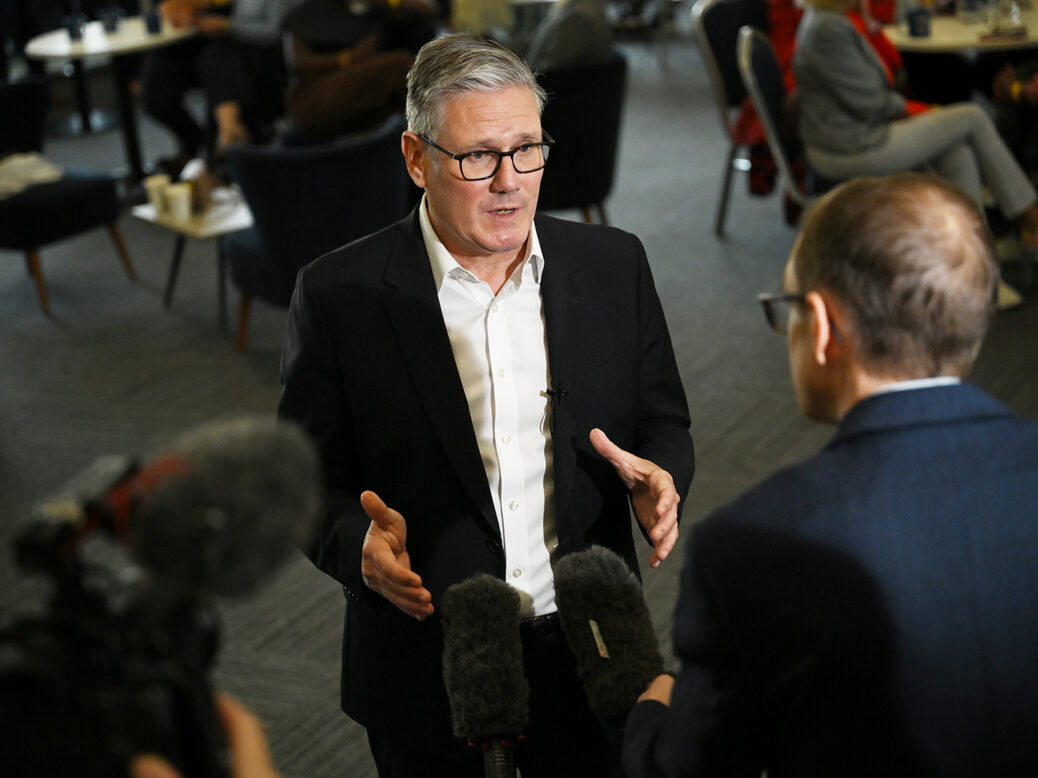
And so we turn to the Labour Party in 2026, and the leadership of Keir Starmer. A party, a project and a leader that are all in existential crisis less than two years after being elected to office, and despite a working majority of 165. As sense is made of the local election results as they come through, there are only two questions facing Labour: how big is this crisis and can Keir Starmer avert it?
The thinness and vacuousness of the Labour victory in 2024 is now being revealed. The old adage remains true: “It’s governments that lose elections, not opposition parties that win them.” If there was one thing that was remotely astute about the Starmer project, it’s that it skilfully let the Tories crash the last election for themselves. But Labour’s small target strategy of giving its opponents and the media nothing to aim at has now come back to haunt it, faster than even its greatest critics could ever have imagined. “Change” for Starmer and co was just a convenient slogan.

Unlike Attlee, Wilson or Blair, Starmer and his team never did their homework. They never dug deep in terms of vision, policy or plans. Of course, they have a culture. But hyper-factionalism is entirely unsuited to governing in complex, chaotic times. It cynically enabled his team to hoodwink the party into backing him in the 2020 leadership election, but as a governing method it is totally and utterly ill-suited to the job of running a government in these times of polycrisis.
All this when they knew from 2022 that the next election was theirs and had ample time to prepare. For them, it was enough to rout the left, not be the Tories, and get in as the “competent grownups”. What events have shown, however, is that no government can behave competently in the absence of an intellectual framework, a deep understanding of the zeitgeist, and a culture and a programme that allows you to navigate and negotiate your way to a vision of a good society, on a journey that enough voters and forces in the country want to share.
But the debate arising now is not just about the end of a particular leadership project; it’s whether it takes the party down with it. Pasokification was the term coined to describe the dramatic fall of Labour’s sister party in Greece in 2009, which went from over 40 per cent to less than 5 per cent in one election cycle. Could Labour now be going through its own version of Pasokification?
Clearly, poll numbers are a factor. Labour support has in effect halved since the general election, from a historical low of only 34 per cent for a winning party. And now it’s Reform that looks set to benefit from the boost that first past the post hands the leading party, winning a possible Commons majority on only 28 per cent of the vote. Polls obviously can change. There is a world in which Labour can win again, but it is predicated, like 2024, on everyone around them doing badly. This is feasible. Both the Reform and the Green Party projects are new and fragile. They might mature quickly, professionalise and solidify – or they might come unstuck, as Farage does regularly and Zack Polanski has done recently with a range of mishaps and missteps. Starmer’s eve of poll message to the country was essentially that Reform and the Greens were not serious parties for serious times. Throughout the campaign, Labour nationally said little, if anything, about what it would do in terms of improving people’s lives locally. Good councillors were left to take a beating through no fault of their own.
Likewise, a big national issue might come along, like it did in 2019 to “Get Brexit Done”, or in 2024 to “Kick the Tories Out”, which delivers a numerically large single party majority. But as we’ve seen on both occasions, the underlying fragility and fragmented nature of the political landscape rules out any possibility of strong and stable government. Unless there is both a clear vision, a programme about where to take a government, and a method of governing within what looks like the permanent fragmentation of the party system, there will only be continued chaos. So even if Labour can somehow conjure another majority, however slim, on presumably a lower share of the vote than last time, this just kicks the can of Labour’s death down the road. Unless the party can refashion itself as an energetic, hopeful and ambitious party of change, able to operate on the basis of pluralism not tribalism, then it will be doomed to irrelevance.
Wales is the bellwether, a country it has led for a century. This is the political equivalent of the ravens leaving the Tower of London. Labour no longer looks or feels like a national party of government. And look at the party itself. No one knows what the true membership figure is because the party bureaucrats refuse to humiliate themselves by revealing it. One rumoured estimate is that the real number is less than 200,000, putting Labour’s membership third behind Reform and the Greens. Maybe this isn’t so surprising when Keir Starmer spoke to the nation and said those who didn’t support him within the party “know where the door is”. These elections will have seen another huge swath of councillors lost, often the only people who keep their local parties functioning. A series of votes at union conferences over disaffiliation are also coming, just at the moment rich party donors are said to be keeping their hands in their pockets, many of them disaffected by failed promises to govern effectively. If the drift and decline continues, there are likely to be MP defections to the Greens and possibly Reform.
Critically, Labour has seemingly lost its monopoly of opposition to the right. Up until now, Labour could coerce progressive voters to vote with their head over their heart against either the Tories or Reform. But the by-elections in Caerphilly, and Gorton and Denton, where Plaid Cymru and the Greens leapfrogged Labour to beat Reform respectively, has crushed its one remaining card. Here it’s worth noting that the problem with Peter Mandelson wasn’t just that he cultivated and prolonged a friendship with a paedophile, and that he was intensely relaxed about the filthy rich, but also his claim that Labour voters had nowhere else to go. They do now.
Ultimately, for many, this is all because Labour has lost its moral compass. Whether it was the winter fuel allowance, the “freebie” glasses and gigs, its refusal to tax the rich, the aforementioned Mandelson affair and, perhaps most tellingly, its lack of opposition to the genocide in Gaza, too many members and voters no longer view Labour as a progressive party. All of this is set against this self-proclaimed Prime Minister “who never loses” and therefore never really learns. A Prime Minister described by candidates on the door as “electoral kryptonite”. A Prime Minister who once claimed to never dream, and who insists there will never be such a thing as “Starmerism”. A Prime Minister who is therefore ill-equipped to make the bold changes the party and the country needs. Starmer never worked out why he wanted to govern, for whom, or how. Inevitably it ended up being a politics of surviving the day in ever-decreasing circles of ambition.
The omnicrisis is not going to end. The symptoms are everywhere: the Union, Nato, the transatlantic alliance, Ukraine, the Middle East, climate change, the economy, and the breakdown of the social contract itself – all compounded by democratic systems that no longer appear capable of resolving them. The crux in all this is that Starmer has neither the inclination, motivation nor wherewithal to change the state and economic systems. Failure was inevitable.
In his early days, Starmer talked a lot about the end of sticking-plaster politics. There will be demands now to give him more time. Time is not the issue. The issue is his potential and capacity. No one, not least those in the Cabinet who are parroting their lines from No 10, really thinks Starmer can lead Labour into the next election. It must be doubtful whether he really believes it. There will come a time when the plaster must be ripped off. It might be this week or a few months. The sense of urgency for MPs might not be there yet. But it will come. A project this brittle, with such shallow intellectual and cultural roots, cannot withstand repeated political humiliation.
The stark truth is that Starmer has never really been leader of the Labour Party or Prime Minister because he has never offered any serious leadership. Labour has to decide when, not if, it banishes its ghost leader before it’s too late.
[Further reading: This looks like the end for Labour]
Content from our partners
Related
Join the debate
Subscribe here to commentPoliticians in medium sized countties like the UK cannot do anything to directly improve the lives of ordinary people because they are not allowed to borrow too much money from the bond market. The UK has lived beyond its means since……WW2! Poor decison making by all parties means the country has fallen apart and everything from the Royal Navy to the local councils needs massive investment. The money simply is not there and neither are the well paid private sector jobs that can allow people to stand on their own two feet. Hence the use of the benefit system to top up peoples wages and salaries for a large swathe of the adult population. Living standards are going to be levelled down because the bond market will not fund social democratic policies especially in countries with weak economies. UK governments are now faced with dividing up an ever shrinking national income and it will not be possible to borrow the difference between what we earn and what we spend. Everyone is effectively on their own but then Thatcher taught us that from 1979 onwards.