
I’ve spent the past few months trying to write a speech about the times we’re living in. I wanted to think through the crises we face: the growing threat of climate catastrophe, as politicians turn their backs; the decline of democracy and the rise of far-right politics and autocratic regimes around the world; vast inequality; rampant loneliness. When you combine all of that with extreme digital disruption and fears about AI, the picture is grim.
Where once we talked about fake news, now reality itself feels fake. It’s a lot, but I do think that public interest journalism is part of the answer. Facts are crucial, but on their own they’re not enough. You also need investigative reporting, bold thinking, fresh perspectives, human connection, hope – all things AI cannot provide. Anyway, I finally brought these thoughts together in a speech at London’s Conway Hall. We invited Guardian readers, staff and friends, and it felt great to get it all out there.
Trains of thought
The part of my speech that people seemed to like best was about how we cover local communities, specifically in Britain. I don’t believe we should present the so-called view from nowhere – the kind of bland, Davos-friendly journalism that breezes over the great diversity of the world around us. At the same time, the crises we face are linked, and they affect almost everyone. I prefer to talk about “many somewheres” – and another enjoyable part of my job is getting around the country.
I’m always on a train anyway. Not just because I love them, but for family reasons I’m constantly travelling between London, Yorkshire, Birmingham and South Wales. Ahead of the local elections I spent time with our Scotland and Manchester teams, too. On-the-ground reporting tells you what’s really going on, and if you listen carefully, election results usually aren’t a surprise. I trust what our expanded northern team hear in Makerfield more than any poll.

How to fight the fog
My role requires me to travel abroad, and I have been in New York, Washington DC and Berlin over the last couple of weeks. The US team, which now numbers 200, was thrilled to have overtaken the once mighty Washington Post in terms of US readers. I love travel, apart from the jet lag. But I’ve recently discovered the solution: the Timeshifter app. You put in your flight details and it’s very strict, telling you what time to drink coffee, put on sunglasses, take melatonin, etc. Its instructions often feel odd, such as sitting in a darkened room on a sunny Sydney morning. But it works.
Inside the scoop
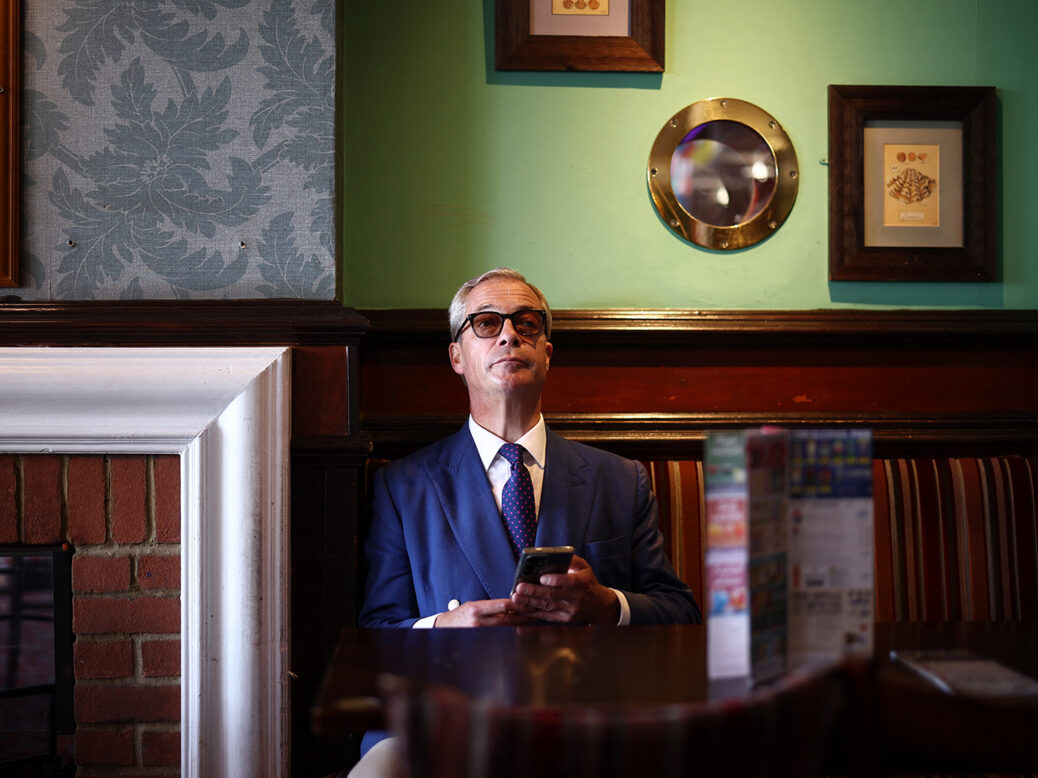
Our scoop about Nigel Farage receiving an undeclared £5m “gift” from the crypto billionaire Christopher Harborne shortly before the Reform leader declared he would stand in the 2024 general election gained a lot of traction. It was a brilliant piece of work by Anna Isaac, the Guardian’s City editor, but the way Reform dealt with it shows the risks of being straight with them.
Anna put a series of questions to Farage and gave him 24 hours to get back to us, which is standard journalistic practice. But instead of answers, Anna got excuses and then pleas to give Farage more time to respond. He used that time to drop the story in the friendly lap of the Telegraph, telling them he needed the money for his security.
Still, it remains a Guardian scoop and Farage was dogged by questions about it. The parliamentary standards commissioner has now launched an inquiry into whether or not he broke Commons rules.
Committing to memory
My job is frantic and relentless, which suits me. I do not long for the era of CP Scott, the legendary Guardian editor from 1872 to 1929, who said, “Comment is free, but facts are sacred,” and whose day-to-day hours were so relaxed that he was able to be an MP at the same time – in Andy Burnham’s old constituency no less.
But away from work I am often in a care home for people with Alzheimer’s, visiting someone close to me, which has taught me a lot about how the world works (the home has been taken over by a private equity firm). It has also made me obsessive about Alzheimer’s prevention techniques, from the proven (meditation, exercise, nutrition, sleep, socialising) to the speculative (there’s an as yet scientifically unproven link between picking your nose and dementia). When you’re desperate, you try all of it, whether facts are sacred or not.
[Further reading: A trip home to Farage country]
Content from our partners


Related



Join the debate
Subscribe here to comment