
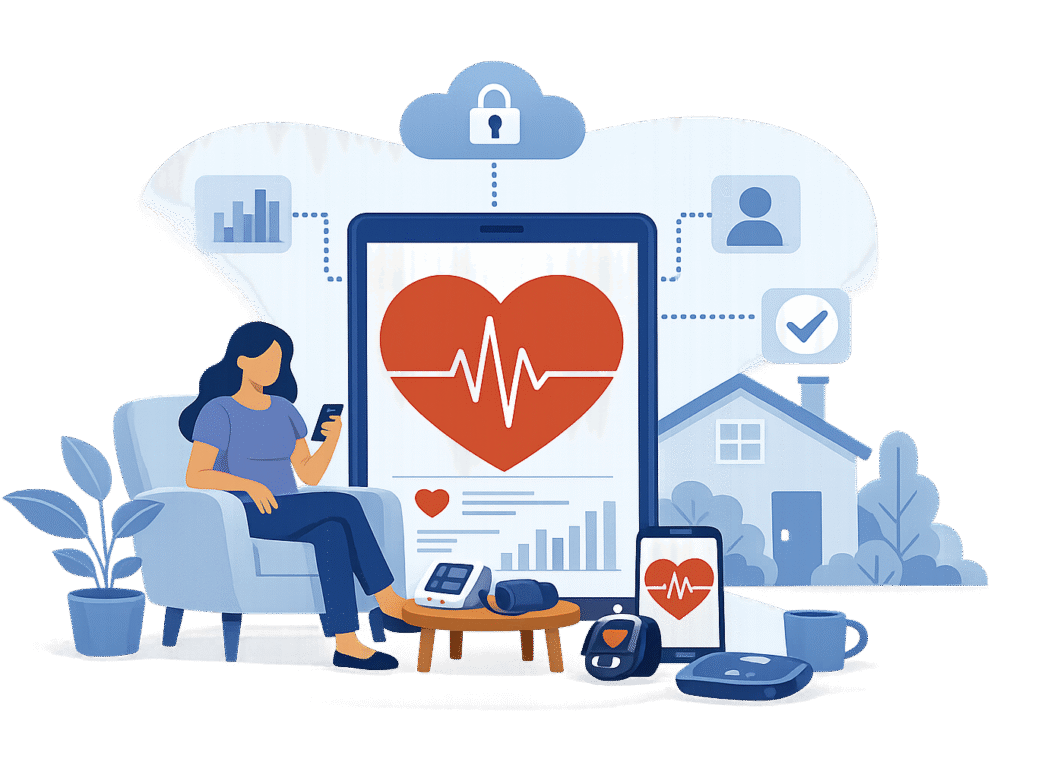
Hypertension is the leading modifiable factor of cardiovascular disease in the UK. We asked our experts what needs to change in order to better turn that fact into an opportunity.

Pauline Swift, chair, Blood Pressure UK
We have long campaigned for those living with high blood pressure to “Know Your Numbers”. People should be empowered to measure their own blood pressure, bringing about a reduction in related harms, including stroke, heart and kidney disease, and dementia.
Being able to check our blood pressure at home makes it easier to feel in control of one’s own health. The NHS must aim to make home blood pressure measuring simple and accessible.

This means people getting a validated BP monitor easily, then sharing readings with their healthcare provider without complicated apps or systems.
As patients, we really don’t want to have to engage with lots of different platforms; we want a simple, ideally single platform, such as the NHS app, offering accessible advice on what to do if our numbers are too high. We need to know our data is secure, will lead to timely feedback from our healthcare providers, and won’t just disappear into the system.
Also, a digital-first NHS must not leave individuals behind. Not everyone is comfortable with, or has access to, digital tools. Pharmacies, local health services and charities have a vital role in supporting people to check their blood pressure, understand their results and engage with their care.
If this is done properly, it could move blood pressure management away from an occasional check-up at a specified place and time towards something more continuous, supportive and centred around our everyday lives.

Dr Manish Saxena, hypertension specialist, Barts Health NHS Trust
To realise the 10-Year Health Plan, early diagnosis of hypertension and better community treatment must become priorities.
Certain groups carry a higher burden of disease and experience poor health outcomes, while inequalities and poor access to care deepen the problem. The shift from analogue to digital blood pressure measurement offers an opportunity for patients to be better informed and involved in their care.
Development of novel drugs and devices for hypertension and cardiovascular disease are accelerating. Cuffless blood pressure monitoring technologies are moving closer to regulatory approval.
Many technologies are smart-phone based, increasing practicality and affordability, avoiding the need for any new hardware and making scalable monitoring more realistic.
Their ease of use at home, work and community settings could support earlier detection and better monitoring, improve engagement with healthcare systems and reduce health inequalities. Clinically they offer effortless, real-time and longitudinal blood pressure monitoring in the community, which has long been difficult to achieve, while creating conditions for more advanced, AI-based risk prediction.
The UK can become a global leader in evaluation and responsible adoption. The next wave of digital revolution is coming. The strategic shift now required is building the evidence, infrastructure, and policy confidence to move from episodic blood pressure measurement to continuous, community-based, digitally
enabled prevention.

Alex McIntyre MP, Health and Social Care Committee
Think of people living with high blood pressure and chances are you picture an older man, perhaps a smoker. But the evidence today suggests a rapidly changing profile of people being diagnosed with hypertension.
In fact, studies suggest that 1 in 8 adults aged 20 to 40 will be affected and almost 1.3 million younger sufferers will not be receiving treatment for it.
The challenge of rising rates doesn’t sit in a silo. As part of a new prevention focused NHS model, we need to start a national conversation about how everyone in our country can lead a healthier lifestyle, avoiding conditions like high blood pressure in the first place. The Health and Social Care Select Committee is examining the role obesity plays in ill health and the impact of promoting a healthy diet and more active lifestyles. Our report is due later this year.
We need to act now and act earlier to identify young adults suffering with hypertension and offer them the right support.
The current NHS Health Check Programme invites 40-74 year-olds who don’t have a pre-existing condition to a health check every five years. Including 18-39 year-olds with a risk factor such as obesity could identify this at-risk cohort earlier.
Another key shift highlighted in the government’s 10-Year Plan is to care in our community. I would like to see community pharmacies up and down the country being used to perform these checks. Together, these changes would rapidly reduce the number of young adults living with untreated hypertension, avoid future heart attacks and strokes and potentially save lives.

Professor Jacob George, chief medical and scientific officer, MHRA & Mark Grumbridge, head of clinical investigations, MHRA
We should strengthen the MHRA’s role in the regulating of digital blood pressure monitoring technologies across their full lifecycle.
The MHRA already plays a key role ensuring devices using software and AI-enabled clinical decision support tools are clinically validated and effective for use at scale.
Not all digital hypertension tools meet robust clinical validation standards, demonstrate reliable real-world performance or integrate safely into NHS systems. Clear regulatory expectations, and the provision of regulatory advice and support to manufacturers, can help developers navigate UKCA marking requirements, generate relevant clinical evidence and design proportionate clinical investigations.
MHRA oversight helps enhance lifecycle performance requirements, interoperability and cybersecurity, ensuring technologies can integrate securely with NHS digital platforms. This supports innovation and maintains patient safety, data integrity and public confidence.
Crucially, MHRA’s role extends beyond pre-market assessment, using real world data to monitor ongoing performance, identify device inaccuracies, algorithmic drift, cybersecurity risks or inequities across populations, taking regulatory action where needed.
Through these measures, MHRA can support the deployment of safe, accurate digital hypertension technologies, enabling earlier detection, improved adherence and a shift to prevention-focused care – delivering improved population-level blood-pressure control.
Related