
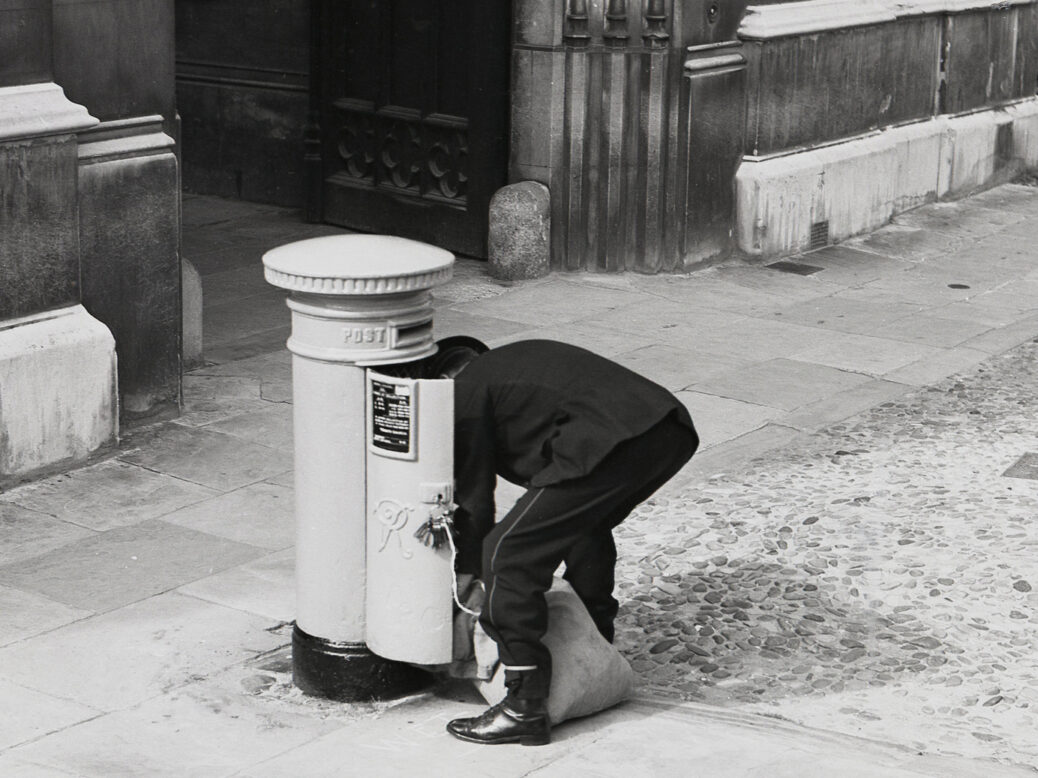
Hurrah for Tom McTague’s discovery of Britain’s best-kept secret, Shropshire. For nigh on 30 years, our family has regularly rented self-catering apartments at Walcot Hall, owners of the Powis Arms. As well as trudging up to Bury Ditches, perhaps the editor, as a fellow zythophile, also walked to Bishop’s Castle to visit Britain’s oldest licensed brewery, the Three Tuns. Its pub used to offer a wide selection of their beers on draught. Sadly, on our visit a year ago, the pub (having been sold) had only one Three Tuns ale on draught, but an array of “popular keg beers”.
This, and other changes in Bishop’s Castle, are perhaps indicative of the decline in small British towns. Its remaining local butcher, Pugh’s, has been up for sale for a few years. Maybe it’s no surprise that in 2016 “Vote Leave” signs became part of the scenery. One such sign at the gate by the Powis Arms was a dubious “welcome” sign for our daughter’s wedding at Walcott. We asked, and it was agreed, that this be removed for the weekend – with little effect on the referendum’s outcome.
Steve Barton, Beeston, Nottinghamshire
County lines
Tom McTague refers to “the blue remembered hills” of Housman’s Shropshire idyll. They were indeed hills of his imagination because the poet was born in Fockbury, outside Bromsgrove, from where you can see the Worcestershire Beacon. Or, in plainer English, the Malverns. Housman was a Worcestershire man who borrowed Shropshire as a poetic prop.
Michael Henderson, Rochdale, Lancs
Gordon Brown’s call for justice
Nobody’s Girl, the desperately harrowing memoir of Virginia Roberts Giuffre, left me in no doubt that Andrew Mountbatten-Windsor had abused both his privileged position and Giuffre. Gordon Brown’s excellent call for justice reinforced my view and exemplified how the elite can lose their moral compass. Actions should have consequences irrespective of power, wealth or perceived status; this is core to our civilised society.
Julian Blagg, Cambridge

Gordon Brown’s excellent piece of investigating reporting on Andrew and Epstein surely makes him a perfect candidate for Private Eye’s Paul Foot award.
Bill Jones, Beverley, East Yorkshire
Gordon Brown’s Cover Story, while welcome, left me feeling it was a chance missed. His focus on the former prince Andrew seems to miss the point: the Epstein scandal exposes sexual abuse and other criminality on an industrial scale. Yes, Andrew has been exposed to be a truly repellent individual. However, dozens of other powerful men are also implicated. The Epstein scandal gives a once-in-a-generation glimpse into how real power works. I applaud the New Statesman for detailing Andrew’s behaviour, but the bigger story and, indeed, cover-up lies elsewhere. I hope for the victims that one day those guilty powerful men are held to account. Somehow, I doubt it, though.
Andrew Davies, Shropshire
Have your kale and eat it too
It may surprise Ruth Guthrie to learn that a Salad Project salad contains up to 863 calories (almost equal to my usual McDonald’s order of three cheeseburgers), while their most calorific “protein bowl” contains 1,164 (six calories shy of a Big Mac Meal of burger, medium fries and medium Coke). Contrary to what Finn McRedmond would have us believe, an “SP” salad tastes better than any number of cigarettes, but that may have something to do with the copious quantities of sugary dressing.
Matt Hawkins, London E17
A Gen Z self-diagnosis
Anoosh Chakelian touches on a real problem facing all young people. I’m a 24-year-old working as a doctor in Grimsby and have seen the effects of the changing labour market on my young patients and my colleagues. Not only are young people struggling to find fulfilling work: when they do, they find it does not afford them the freedoms of previous generations. Many young patients who come to me with depression are financially stuck in homes with unsupportive relatives, unable to move out due to rising rents and demands by landlords for guarantors. Traditional entry-level graduate jobs are being destroyed by AI. Even medicine and nursing degrees no longer guarantee employment. I know only a few doctors from my cohort who have work lined up in August, and many nursing graduates are being told that there are no jobs available. If hard work doesn’t help young people, and they are blamed for the resulting mental struggles, why keep pushing?
Dr Thomas Martin, Grimsby
Nature abhors a vacuum
I very much appreciated Pippa Bailey’s reflection on the data about young Gen Z women included in the Angry Young Women cover story. Anything that gives or suggests equivalence between the manosphere and young women’s reaction to it within a patriarchal, late-stage capitalist society is to ignore the great number of barriers young women in particular, with all of their multiple other identities, are facing. Women haven’t come up in a vacuum.
Marie Donnelly, Sunderland
From High-Rise to height raise
Edmund Gordon’s review of the strangely inadequate biographies of JG Ballard reminded me of a job I had in 1985. I was 25 and was put in charge of filming a series of lunchtime interviews with contemporary authors at the ICA. One was Ballard and I was awestruck.
I have since lost the VHS cassette of the interview, but of course someone has now posted it online. In it, Ballard, when asked about becoming a writer, says: “I wanted to become a psychiatrist – I was the patient I wanted to cure. But then I realised that being a crazy mixed-up kid… was my biggest asset – it was a resource that I couldn’t possibly squander on some analyst’s couch.” It seems unlikely that either of his biographers watched that 30-year-old interview. Perhaps the next one will and do him more justice.
Incidentally, one of the other interviews that year was between Martin Amis and Ian McEwan. When I took a photo of them for publicity purposes, Amis insisted on standing on the stage, while McEwan didn’t, so that they would appear the same height.
Gus Colquhoun, Somerset
Put that in your pipe
Rachel Cunliffe’s claim that phasing out the sale of tobacco threatens democracy overlooks a more serious injustice. Smoking remains the UK’s leading cause of preventable death. These are not abstract statistics but real people whose lives are cut short, often after years of ill health. The burden falls heaviest on those facing inequality.
Meanwhile, the primary beneficiaries of this status quo are tobacco companies, whose profits depend on addiction and harm. Framing measures to reduce smoking as an erosion of freedom risks overlooking who truly holds power.
Policies aimed at ending the cycle of addiction and disease are not an attack on democracy, but an effort to protect public health and reduce inequality. A society that allows preventable harm to persist unchecked is surely the greater concern.
Hazel Cheeseman, chief executive, Action on Smoking and Health
Pinch punchlines
Finn McRedmond taps in to a rich cultural seam in inviting us to “inhabit the mind and spirit of a lobster”. Older readers may recall the Pete Cook and Dudley Moore sketch about retrieving lobsters from Jayne Mansfield’s derrière; and there was the scene in Annie Hall in which Woody Allen and Diane Keaton try to retrieve a lobster from behind the fridge. Less well known is the scene in the 1980 western Tom Horn in which the hero, startled at being served lobster, says: “I’ll be darned. I’ve never eaten a bug that big before.”
Tom Stubbs, Surbiton, Greater London
Write to letters@newstatesman.co.uk
We reserve the right to edit letters
[Further reading: Angela vs Andy vs Wes vs Keir]
Content from our partners



Related

This article appears in the 06 May 2026 issue of the New Statesman, Tis but a scratch
Join the debate
Subscribe here to comment