
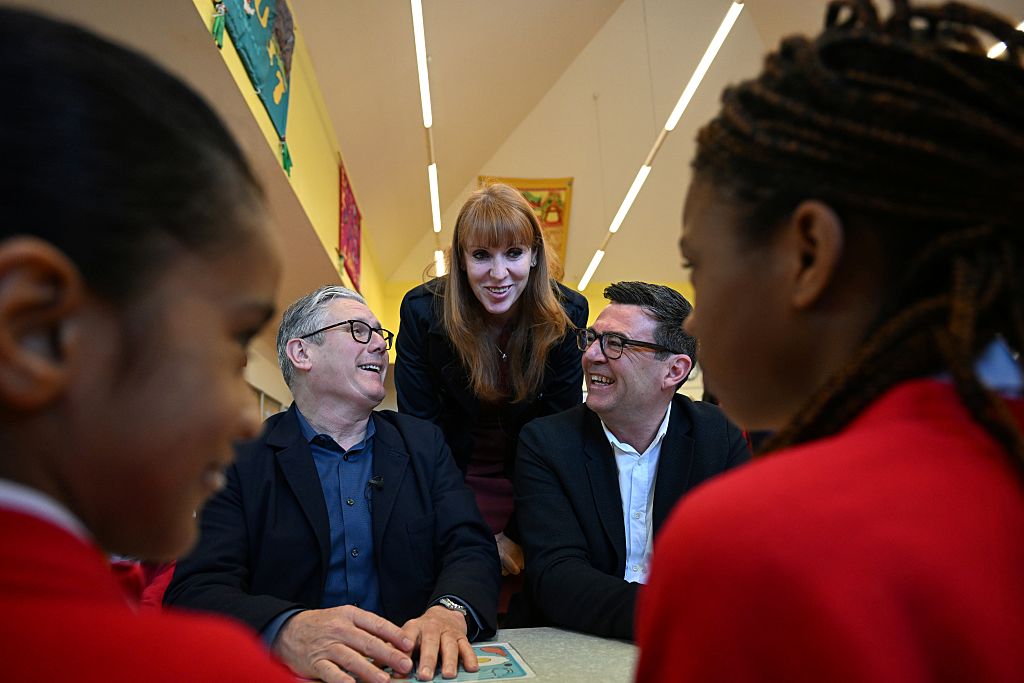
What is politics? Clichés are likely to abound in response to this question. The dirty pursuit of power, or the noble pursuit of the good life? It is, of course, both of these things and more. But for the purposes of the battle for control of the Labour Party, politics is now really just two simple challenges: a lesson in counting, and a test of character. Whoever masters both will emerge from the melee with the power to shape the future of the country.
Let us start with the numbers. It was Lyndon Johnson who declared that the first rule of politics was to learn how to count. This bon mot has been repeated so often that it has become cliché. Yet, as anyone who has read Robert Caro or watched British politics of late can attest, counting is vital. For good or ill – and with LBJ it was often both – democratic politics rests on the ability to build and maintain the coalitions necessary to win votes. For the Labour Party there are now four groups whose arithmetic really matters: the National Executive Committee (NEC), which decides who can stand to be an MP; the MPs, who will decide which of their number will go before members; the party members, who will decide which of these will win; and finally, the electorate who will one day cast their judgement on the outcome of this process.
According to most Labour figures I have spoken to, the central problem for the party remains what it always has been: there is no candidate able to command a majority among each of these groups – including Keir Starmer, who has lost the support of the electorate, a wound no prime minister can sustain for long, no matter how much they protest, Monty Python-style, that ’tis but a scratch. As one senior Labour figure put it to me: if things carry on deteriorating for the party at this rate, whether it is Starmer, Andy Burnham or whoever is in charge, “not even God could turn things around”.
In Westminster, Labour MPs have been jockeying for position ahead of the leadership contest that they expect to begin after 7 May. Each of the main candidates is weighing whether they have the numbers to succeed. Yet, the fundamentals remain: Wes Streeting believes he has the numbers among MPs to challenge the Prime Minister, but his rivals do not believe he can persuade Labour members that he is a suitable replacement. Burnham believes he has the numbers among the members and – uniquely among Labour’s leading figures – the electorate, but faces the seemingly impossible task of persuading the NEC he should be allowed to return to parliament.

Angela Rayner is likely to be a decisive figure. She has let it be known she will not stand aside should Streeting launch a leadership bid before Burnham’s return to parliament. While Rayner is not hostile to Streeting on a personal level, she believes his victory would be a continuation of what she sees as the Labour right’s disastrous control of the party, which she blames for the infighting that has led it where it finds itself today. Rayner is determined to see a leader who can unite the Labour Party.
But she is also known to be sceptical of the idea that the members of the NEC who rejected Burnham’s attempt to return to parliament in January will allow him back now. Rayner – who, like Lyndon Johnson learned the art of politics not in the classroom, but on the shop floor – is clear that there is still an overwhelming Starmerite majority on the NEC that would block Burnham’s return.
And so, the question turns to Rayner’s own ambitions. Those who have spent any time with her recently insist she is not naive about the numerical challenges she faces to secure the leadership. Privately I am told she describes her support among Labour MPs as “broad but shallow” – admired by many but loved by none. Just as importantly, she is clear eyed about her own divisiveness in the country at large, where she is loathed by as many on the right as loved on the left.
This is where character comes in. Politics is not merely counting, but having the instincts to seize opportunities, and to make virtues of vices. Those around Rayner have been struck by her confidence. Privately, she talks of the “two Ps” she believes necessary to succeed in Westminster: politics and personality. The politics, as she sees it, is the ability to reach across factions, building bases of support to get things done. She is unafraid to stand on her record as deputy PM, driving through new workers’ rights in the face of cabinet opposition.
But more important is the personality, the character, which – by implication – she believes is missing in the current occupant of No 10. According to those I have spoken with, Rayner believes modern politics demands characters who are unafraid of being divisive, of making enemies and even of nurturing them. The theatre of Donald Trump dressing down those he opposes has not gone unnoticed among her team, who believe the executives of water companies deserve similar treatment. Though Rayner bristles at those who dislike her for her upbringing or accent, she does not resent those who hold her in disdain for her politics. Indeed, she believes it would be a source of strength in power. She is also prepared to risk it all.
Rayner has spoken before about her son, Charlie, who was born at 23 weeks in 2008. She was told that he had a 1 per cent chance of survival. Whenever Rayner is told she has no chance of winning, or that Labour is finished, she retorts that if she has even a 1 per cent chance of proving them wrong, she will take it. It would then be up to others to take theirs.
[Further reading: Keir Starmer puts his fists up]
Content from our partners

Related

Join the debate
Subscribe here to comment