
W here is the heart of England? Traditionally, its centre is said to lie in the village of Meriden in Warwickshire. Geographically, though, England’s “true centre”, as Peter Ackroyd puts it in his history of the country, Foundation, is 20 miles further north, over the border into Leicestershire, on the land of a farm called Lindley Hall. Until recently, Ackroyd tells us, a family called Farmer lived there, which seems about right.
But where is England’s heart spiritually? This, it seems to me, is a more interesting question. Both these shires have a fair claim; lands of Shakespeare and Tolkien, Jasper Carrott and Jamie Vardy. TS Eliot believed the poetic soul of England lay further east, “half-heard, in the stillness” of rural Cambridgeshire. Yet, having returned from a weekend just outside of Shrewsbury, I wonder whether the real heart of England is in Shropshire.
I had only been to Shropshire once before. I went with my young children and so we got little chance to explore. This weekend, however, I was camping with friends and finally got a true sense of the place, understanding properly why AE Housman made the county his imagined idyll of “blue remembered hills”.
My friends and I stayed deep in this “land of lost content”, as Housman put it, camping in the garden of a pub called the Powis Arms (better than it sounds), where each morning we were woken by birdsong. My brother, armed with an app called Merlin – which identifies birds by their song, like a twitcher’s Shazam – detected robins and wrens, blackbirds and bluetits. My favourite call remains the coo-coo-coo of the wood pigeon. Am I alone in this? Mentioning this to one of my friends, he said the wood pigeon’s call is folk-remembered as “My toe bleeds, Betty”, which I think is probably the most English sentence imaginable.

The Powis Arms sits in the valley, below an Iron Age hill fort known as Bury Ditches. Trudging up to this lost settlement today is like time-travelling. Ditches, Ackroyd reminds us in Foundation, are signs of ancient life, often connected by a network of roads and trackways, many of which are still in use. As Ackroyd put it: “We still move in the footsteps of our ancestors.”
I was so taken by the county that I turned back to Housman’s A Shropshire Lad on my return home, rediscovering poems such as “From Clee to heaven the beacon burns”, which is a lament on both the costs of war and empire and those who died for Queen and country: “It dawns in Asia, tombstones show/And Shropshire names are read;/And the Nile spills his overflow/Beside the Severn’s dead.”
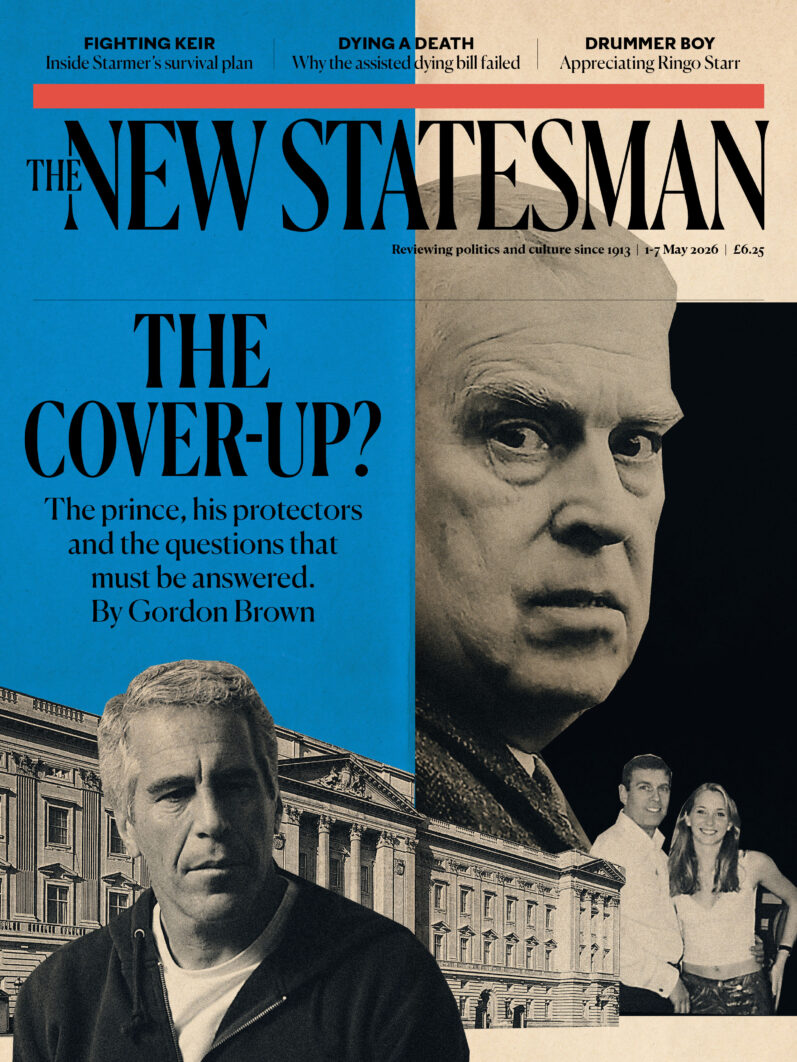
What a strange feeling it is to happen across these words, written to commemorate Queen Victoria’s Golden Jubilee in 1887, contrasting “the Queen they served in war” with “the land they perished for”. My colleague Will Lloyd reflected on such feelings of death and duty in his cover story earlier this year, and called for the end of the monarchy following the sordid revelations that had emerged in the Epstein files.
But, as Gordon Brown details in this week’s issue, the scale of Britain’s involvement in Epstein’s sex-trafficking conspiracy is still not fully understood, nor is the scale of Britain’s complicity and subsequent failure to investigate. The former prime minister’s intervention comes at an awkward time for the country, with the King in the US, trying to fix a broken relationship and the kingdom at home more fragile than its rulers care to admit. The Prime Minister, meanwhile, finds himself fighting for survival as the Epstein scandal continues to swirl.
And yet the institutional failure continues today, and if those responsible are not brought to justice for aiding and abetting the trafficking of young women into Britain for the perverted gratification of older, richer men, this country’s reputation does not deserve to recover. Brown is right that there should be no hiding place for anyone involved in this scandal. If Keir Starmer, Morgan McSweeney and all those implicated in the appointment of Peter Mandelson can be hauled before parliament to explain themselves, as has happened in recent weeks, then so too should anyone involved in the former prince Andrew’s long and tawdry entanglement with Jeffrey Epstein. And yes, in my view, that should include royalty.
[Further reading: Keir Starmer puts his fists up]
Content from our partners



Related

This article appears in the 29 Apr 2026 issue of the New Statesman, The cover-up?
Join the debate
Subscribe here to comment