
In early 2020, not long after Boris Johnson’s landslide election victory, I took a road trip through the American Midwest to try to understand the similarities between Donald Trump’s Rust Belt and the Red Wall constituencies back home that had just flipped Tory to “Get Brexit Done”. I started my trip in Indianapolis, before heading south towards Kentucky and then north-east towards Pennsylvania. I found in the United States something both intoxicating and mildly revolting, scrambling my own sense of things back home.
I was lately reminded of this trip after the New York Times columnist Ross Douthat observed, on a recent visit to Britain, that the UK had become so much poorer than ordinary America. Douthat’s comment caused quite a stir online, with many disputing the idea that the US had pulled away from Europe economically at all.
Travelling through the Midwest, it is certainly not the prosperity of America that takes the breath away, but the depth of its urban poverty. I have still yet to see deprivation in Britain anywhere near the scale of that in Ohio: whole neighbourhoods left to rot, houses abandoned, people out of their minds, lost and in despair. And yet, I find it impossible to disagree with Douthat’s central observation. Travel around the US and it is plainly, obviously the case that Britain has fallen behind, much as it is plainly, obviously the case that we have fallen behind much of Europe.
And it is not just small-town America, nor simply those vast stretches of pristine suburbia with the giant houses and giant cars parked inside giant garages. What struck me during my trip across this rusting, “left behind” corner of the US was the sense of commercial metropolitan wealth. I remember driving out of Pittsburgh and thinking that we didn’t have a single city back in Britain outside of London that felt as economically vibrant as this once struggling steel town. The only big city that came close was – and is – Manchester.

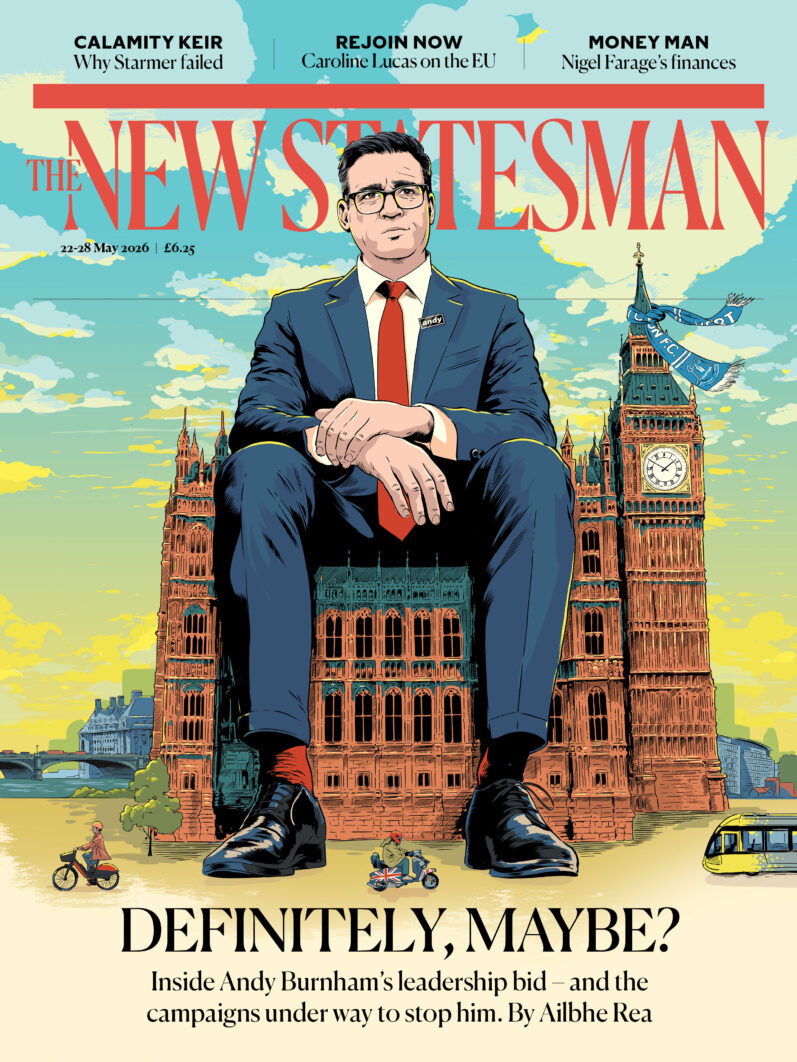
It is for this reason that Andy Burnham’s tilt on the premiership has such momentum. Whatever the underlying statistics say, the city feels like a success and therefore so too does its mayor. There is a self-confidence to the place, a sense of cultural capital. Perhaps, even, of hope. And yet, a feeling nags: is it real? Are the city’s skyscrapers the product of economic productivity or of foreign investment? Is Manchester the future, or is it – like New Labour – built on something that will not last? I fervently hope it is the former.
In David Edgerton’s The Rise and Fall of the British Nation, he makes what increasingly feels like the essential observation about modern Britain and the Thatcherite revolution that helped make it. While Thatcher wanted to make Britain’s industries great again, what she did in practice was bring global capital to Britain, inflating the City of London but not the regions that had once been the engine of national power.
Burnham is now (effectively) standing for the Labour leadership on an explicit promise to unwind this Thatcherite revolution: to “take back control” of the essentials of life and to reindustrialise the north. He wants to unite and level up the country, as another popular former mayor once put it. But he is also promising to do so without reopening the debate over Britain’s membership of the EU, nor the fiscal rules set down by Rachel Reeves.
Burnham will have to flesh out how he will succeed where all his predecessors since Thatcher have failed. To do so, he needs to answer the question that has proved beyond Keir Starmer: why is Britain failing? Much of Britain today is poor – not simply compared with London and the booming cities of America, but compared with the provincial cities of Europe. We do not have enough Pittsburghs, but nor do we have enough Munichs and Milans. Why? And why do we pay more for our debt than our neighbours who are more indebted than we are? Why has our politics become so fragile and fractious? And from where, ultimately, does this weakness stem?
It is the failure to offer any such analysis – or, rather, to accept even that something has gone fundamentally wrong in Britain – that has left Starmer’s premiership empty and drifting. Burnham cannot enter parliament in a month’s time without offering an answer of his own.
[Further reading: The long coup]
Content from our partners



Related



Join the debate
Subscribe here to comment