
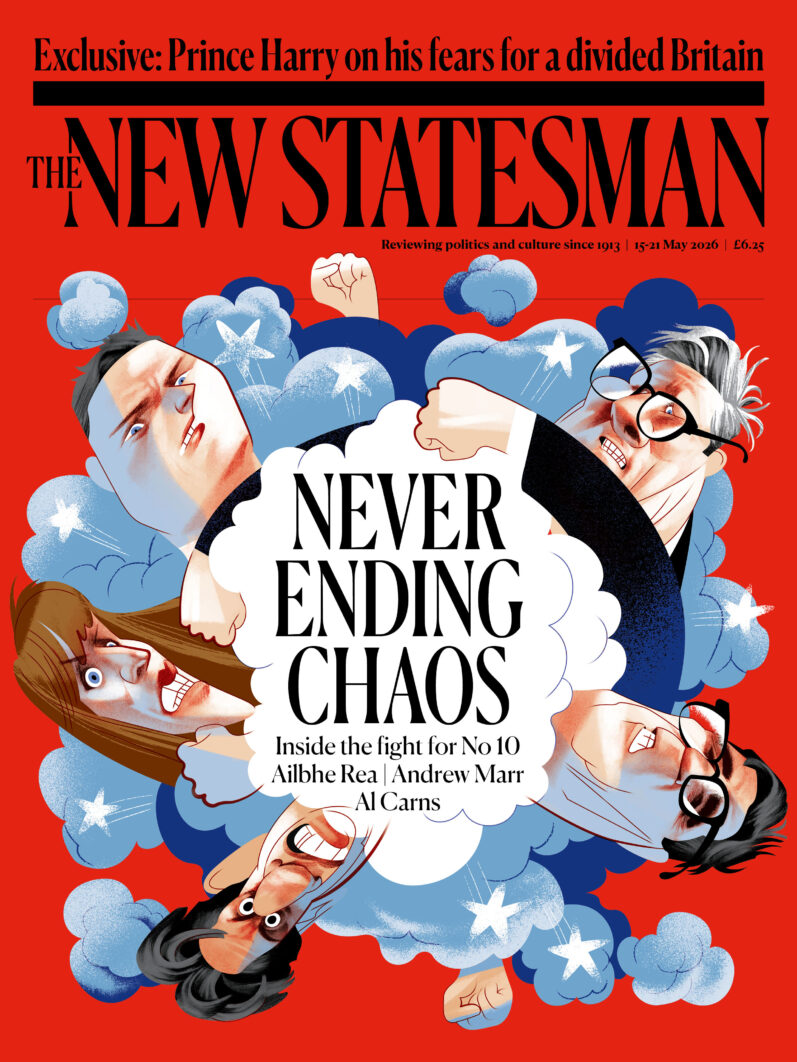
In September 1997, Tony Blair addressed the Labour Party Conference for the first time as prime minister. His approval ratings hovered at around 75 per cent. His majority stood at 179. The British economy was bigger than China and India’s combined. There was a sense of confidence about the country. This was, Blair declared, a “New Britain” which would be a “beacon” for the rest of the world. How darkly comic that promise now feels.
Almost 30 years later, no one thinks Britain is a beacon for anyone. While it is easy to look back on Blair’s decade in power as some halcyon time, there were warning signs for those willing to look. Real wages began to stagnate from around 2003. The BNP grew rapidly from 2004. In 2005, the then Bank of England governor Mervyn King cautioned that the “Nice” decade of non-inflationary continuous expansion was soon coming to an end. By 2008, after the global financial crisis, Britain had entered the 20-year spiral of disorder, confusion and decline from which it has not yet escaped.
For two decades, we have been trying and failing. First, we had Gordon Brown, who understood the world had irrevocably changed but could not persuade the public to let him manage the transition. Then came David Cameron, who thought he could cut his way to prosperity by reinflating the City of London with Chinese money, before he gambled it all on the Brexit referendum. The crisis then began to accelerate: first came Theresa May’s strong and stable-ism, which was anything but; then Boris Johnson’s levelling-up boosterism, Liz Truss’s fantasy economics, Rishi Sunak’s technocratic corporatism and, finally, Keir Starmer’s managerial return to the status quo ante. All failed, because the status quo was itself broken. And so, we find ourselves locked in a political crisis, while even greater economic calamity looms overhead.
Whatever the source of the country’s woes – from Brexit to the financial crisis or even, as is increasingly the view of Britain’s Reform-y right, “the Blairite state” – few doubt that something is fundamentally rotten at the heart of British politics. Twice in the past six years alone, the country has handed a sizable majority to a political party with the express demand that it end the chaos, only for the chaos to return almost immediately.

Has Britain become an ungovernable country, some wonder? A friend who once worked in No 10 sent me a message asking whether technology was to blame, poisoning the mood of the country to such an extent it was no longer compatible with parliamentary democracy. I must admit, such thoughts do cross my own mind. Does Keir Starmer really deserve the depth of animosity that he seems to elicit? Are his failures as Prime Minister really so great to demand his immediate removal from office?
And yet, his failures – like those of every prime minister since 2007 – are also real. When I interviewed Starmer for my first edition as editor of the New Statesman, I asked him what he saw as the central cause of Britain’s problems. Of all my questions, this was the one he struggled with the most. His answer, when it eventually came, was that the UK had become too short-termist and unstable. And that was why the government’s fiscal rules were “the foundational stone of what we’re doing”. Boil it all down, then, and the heart of Starmerism is not change, but stability.
In the coming weeks, if the markets continue to take fright at our volatility, Starmer may feel vindicated in this analysis. But his government itself is now structurally unstable. Only 100 or so Labour MPs declared their support for Starmer, and his cabinet can barely bring itself to back him. Cabinet government cannot function in such circumstances. It is surely beyond doubt that British politics is too short-termist. The instability at the heart of it, however, is not the cause of our problems, but the symptom of a deeper crisis. Britain looks as lost as its recent prime ministers. We do not know who we are, where we are going, or how we might get there. We don’t even seem able to agree where we’ve come from. Our economy blew up in 2007, our place in Europe in 2016, and our relationship with the US slowly over the past decade.
“Who do they cry for?” Gore Vidal apocryphally said as he looked on at the mass outpouring of grief for Princess Diana in 1997. “They cry for themselves.” Is something similar not true today? We rage at our leaders for their weakness and hypocrisy, lack of vision and direction. But, really, they are manifestations of our rudderless national drift.
[Further reading: Never-ending chaos]
Content from our partners



Related
Join the debate
Subscribe here to comment