
I am standing in the atrium of the British Museum, wondering if the hundreds of people milling around me have ever been in a museum before. Here is some advice for those apparently new to corporeality: the porticos and doorways are there to act as thoroughfares; that makes them bad places for loitering, and exceptionally bad places for shoelace-tying. More importantly, it means you are in my way. And I have work to do.
First, to check in on the light-fingered Earl of Elgin’s marbles. Or the Parthenon Marbles, were you so leftily inclined. (Still there, by the way.) Second, to seek out some lunch. It is important, you see, that we feed these tourists well, all 18,000 of them per day – lolling, dozy, witless and daft though they may be. This is our national shopfront, our second most visited attraction. Why bother to maintain this warehouse of imported heritage at all, only to then give up in the sandwich department? Standards across the board, please.
Until 7 June, you can attend a special exhibition here for free: “The Asante Ewer”. “One of the finest examples of late-medieval English bronze casting,” I am told. Given my considerable hinterland in late-medieval English bronze casting, I saw no harm in stopping by. It’s only one ewer – and given that “ewer” is just artefact-speak for “jug”, I suspect it will not take me very long at all. And somehow it took even less time than that. Onwards.
I speed-run the Mycenaean pots exhibit – there is nothing memorable, compelling, artistic or indeed functional about any of these hunks of clay. But there they all are, lined up pointlessly in a row. This does not stop one Japanese tourist from taking a picture of every single one. I want to stop him, to shake him by the shoulders, to wail incredulously: “I just don’t believe you think they are that interesting – I just don’t.” Out of Mycenae and into the future: I arrive in classical Greece. These pots are a lot better. Good news: maybe progress is linear after all!

Lunch is by Benugo – a British catering chain that pretends through minimalist branding and bad-tempered staff to be Scandinavian. And these people are ruthless imperialists: not only did they win the contract to feed the British Museum, but the Wellcome Collection, the Natural History Museum and the Science Museum too. Elsewhere in their swotty empire? The V&A and St James’s Park. Given Benugo’s position on the front line of British cultural export, it had better impress. Don’t make me get haughty about standards again.
It’s in the atrium, less “café” in the traditional sense (lacking walls, and other expected infrastructure), more “kiosk”, with an attendant smattering of long tables and benches. I inspect the menu: yup, that’s museum fare all right. Apricot cake (no thank you, I am not 70); egg salad sandwiches; generic “muffin”. In the eyeline of the Egypt exhibit, Benugo also offers a “pyramid cake” (clever, do the Rosetta Stone next). To my right I am watching a man who, surrounded by the world’s great treasures, is reading a copy of the Economist. He’s on the China section – a dispatch from Hong Kong’s looted Chinese antiquities market. Buddy, if you’re into looted antiquities, get your head out of that magazine and look around.
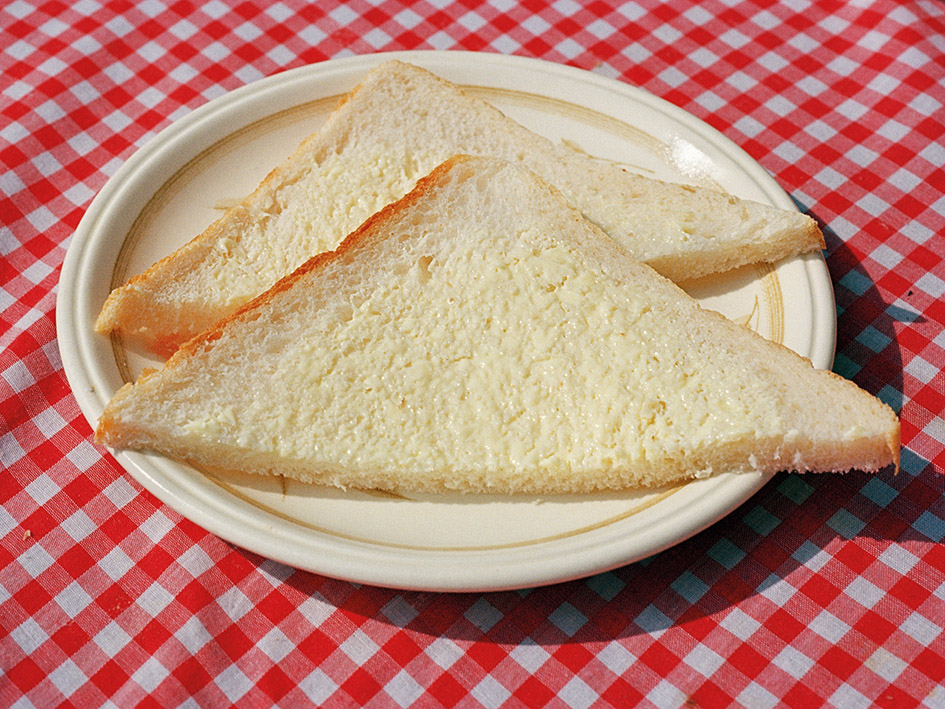
My lunch is a bottle of water and a coronation chicken sandwich – I take it outside and eat it cross-legged on the floor, just like the 25 seven-year-olds on a school trip around me. The bread is dry, as though it too were baked 3,500 years ago in a Mycenaean clay oven. Otherwise, fine. Not much to write home about, but then again if I had travelled cross-border to come to the British Museum and wrote home about a sandwich and not, say, the Centaurs and the Lapiths, then I might be concerned for my cultural education.
My advice is this: eschew the Benugo. Deny them their hegemonic ambitions, and wander into Bloomsbury for lunch afterwards. It is one thing to squirrel away the Elgin Marbles in a fluorescently lit side room 200 metres from Tottenham Court Road. But getting crumbs on Athena would just be rude.
[Further reading: Call Her Daddy has it all]
Content from our partners



Related
Join the debate
Subscribe here to comment