
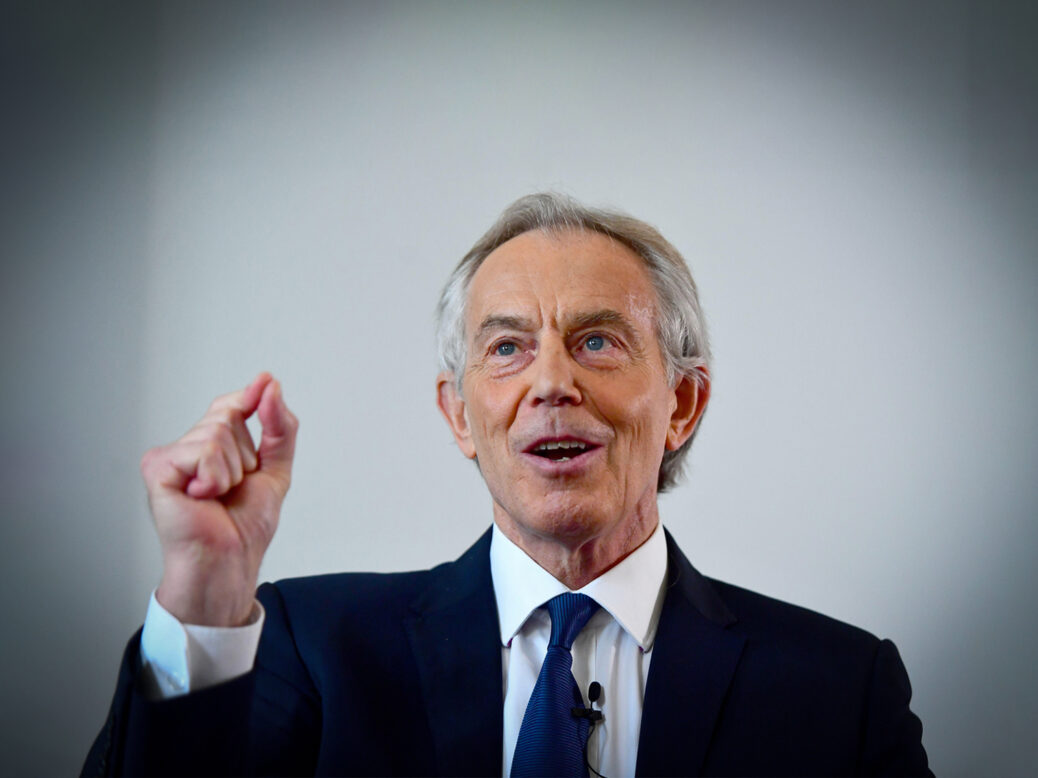
In the autumn of 1999 Tony Blair was attending the opening of a nursery when he was confronted by an elderly woman holding a sign. The sign was an early expression of a view many people would come to hold over the following decade. It read: “Blair, you are a c***”.
The reason this “typical sweet granny”, as Blair remembers her in his memoir, My Journey, was annoyed was that under his government, the state pension was due to rise by the rate of inflation, which had just hit its lowest point in 36 years (1.1 per cent); the result was that the sweet grannies were going to get an extra 75p per week, which they thought was stingy (even though it was the same increase in their spending power they’d had in previous years). The encounter led to Blair’s well-known observation that “Your average Rottweiler on speed can be a lot more amiable than a pensioner wronged, or, to put it more accurately, believing they are wronged.”
Well, the grannies might want to get their placards out again, because as of this morning, Blair is campaigning not only for the “triple lock” – which guarantees pensioners’ incomes rise at least as much as workers’ pay, if not more – to be removed, but for the whole system to be replaced by a new “Lifespan Fund”.
Reform of the pensions system is one of the biggest problems in British politics. It is hugely expensive – £146 billion in the last financial year – and much of that goes to people who don’t really need it. Keeping it as a constantly uprated universal benefit is projected to cost a further £85 billion a year (in today’s money) by the time today’s youngest workers retire (assuming they haven’t all been replaced by robots).

The Lifespan idea is more like a private pension. People would still build up their entitlement through National Insurance payments, or credits if they’re not working. Each year of contribution would add half a year of state support to their account, up to a maximum of 20 years of support.
However, people would also be able to use some of their Lifespan money early – for example, when Blair’s friends in the AI industry put them out of work – and while this would have “safeguards”, it would mean some people might reach retirement age entitled to only ten years of support. They might then have to reply on a futuristic version of Pension Credit called “lifespan top-up”. What could go wrong?
Ah, but the idea of “retirement age” would also be consigned to the past. Under the Blairspan scheme, people would use an app – perhaps the icon would be a little cartoon Tony, holding a coin – to see how much money they would be entitled to when they retired. Then, when they realised it was a pittance, they could grudgingly decide to put in another decade in the Amazon fulfilment centre.
The principle this represents is a transfer of risk. The current state pension is a gamble for the government, in that if you live longer, you’ll cost the state more money. The Lifespan scheme, as the Tony Blair Institute puts it, “would allow people to choose when to retire, instead of everyone being tied to a single State Pension Age”. This means the person using the pension has to make the gamble, as they do with a private pension: the later you retire, the higher your income will be – but then if you get squashed flat by a bus after a year’s retirement, you’ll be kicking yourself.
There’s another principle which reduces the financial risk to the state, and potentially the cost of the system, which is what looks like a form of means testing. “The annual pension someone received would depend not only on the size of their fund,” the TBI explains, “but also on their age and health when they converted it into a pension. This would be done on an actuarially fair basis, using population data and information from an NHS digital health record.” It is certainly possible that future governments could get into all sorts of fights over what counts as an “actuarially fair” amount to give to different groups – the Waspi women are an example of how long people will engage in a fight for pension income to which they’re clearly not entitled – but some form of means testing seems inevitable in a system this expensive.
But if that’s what you want to do, why all the fuss to construct a fancy new system? Why not keep the triple lock – which is also important to current workers, because it decides what they’ll get in retirement – and just stop paying the state pension to people who have private pensions in excess of a million pounds? (Or some form of slightly more sophisticated taper, as we use in the tax system.) This would save vast amounts of money that is currently given to people who absolutely don’t need it. This would also provide the opportunity to get rid of National Insurance at 8 per cent and increase income tax by 5 per cent, and to be straight with the public that the state pension is not a collective investment scheme, it’s just part of the system of taxation and benefits.
Those genuinely wealthy pensioners would fume at the loss of their Champagne money, but they’ll manage; they’ll certainly have the money to make a nice new sign.
[Further reading: The cover-up?]
Content from our partners



Related


Join the debate
Subscribe here to comment“This would save vast amounts of money”: it would be helpful, and more convincing to give a figure so that we could put it in context with the £146 billion.
I hate sweeping generalisations based on a single characteristic. I’m a pensioner with a good income who is ready and willing to get less and give more, provided we have a humane social security system for those of all ages who need it.
I recall being told by a Treasury official that a reason governments of all stamps have never made an effort to explain to people that NI is just a jobs tax and that the money is spent immediately, not saved up for your future pension, is that the common misperception makes people less unwilling to pay it. The sort of thing that bites you in the end, if true.
I don’s suppose that this will impact in the current generation of pensioners (boomers – me) and by the time it kicks in boomer numbers may well have fallen significantly, perhaps removing the financial stress from the state pension system. So, is this really just a way to make people work longer, whilst the same old same old affluent folks can sit back on their yachts, sipping cocktails/champagne (choose your own trope) gloating over the crucified elder work force?
I’m 75 and retired. I get £12,570 a year state pension, and a small top-up which brings my annual income to £14,000
I wish Tony Blair would show me how to live well on this.