
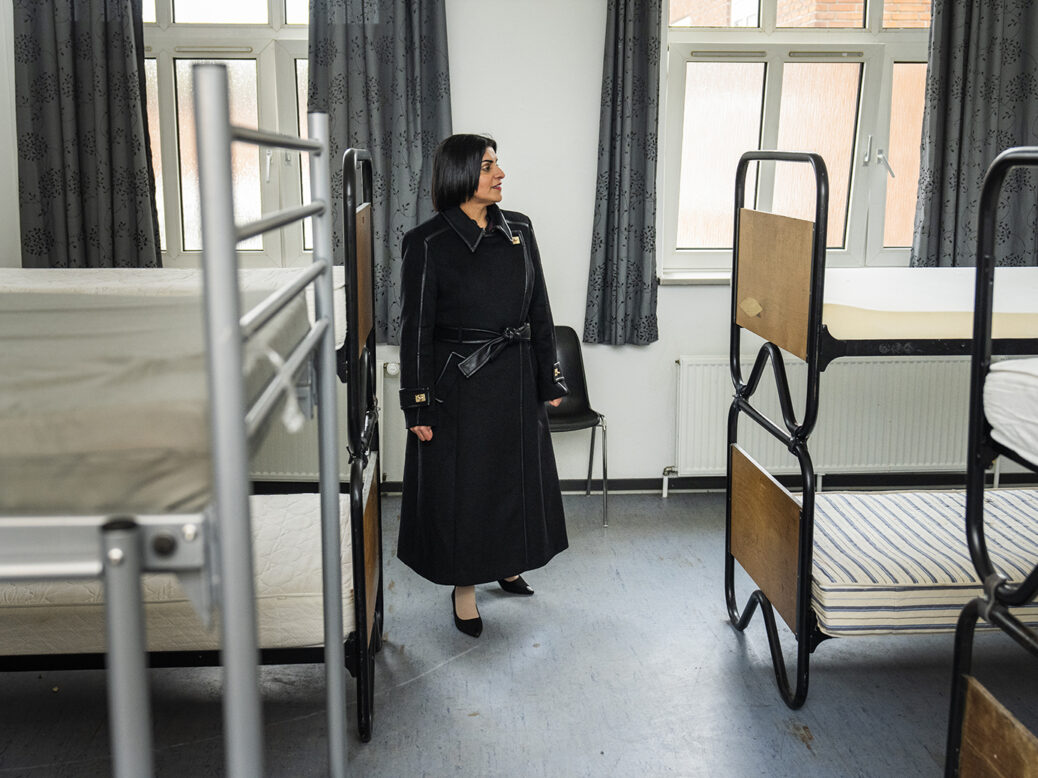
They used to say that, at the Home Office, the walls were made of dynamite. The department has long been notorious for combining some of the most sensitive areas of policymaking – asylum, immigration and civil rights – with a propensity for front-page making scandals and the curtailing of high-flying ministerial careers – Amber Rudd, David Blunkett, Charles Clarke.
Now Shabana Mahmood holds the post with the added difficulty of being a Labour Home Secretary tasked with bringing down net migration and reducing the asylum backlog. Her latest package of proposed reforms have caused a slow-bubbling revolt on the backbenches, with Angela Rayner branding one of Mahmood’s headline proposals – a doubling of the qualifying period for Indefinite Leave to Remain from five to ten years – as “un-British” and contrary to notions of fair play.
Whether her package will survive contact with Labour backbenchers in a Commons vote remains to be seen. Another question is whether it would outlast a potential change of Prime Minister.
Given Mahmood’s approach has proved controversial, not least among Labour MPs, any contender for the party leadership may choose to define themselves against her approach in order to both win support among the selectorate of MPs and party members, and claw back progressive voters who have defected to the Greens and Liberal Democrats. New research from British Future, a non-partisan think tank, suggests that Mahmood’s approach would not help a new leader consolidate Labour’s core support.

The think tank’s latest Immigration Attitudes Tracker measures the “positive trust rating” of various political figures on the issue of immigration. The latest data shows that Keir Starmer has a positive trust rating of +25 among voters who consider voting Labour (60 per cent of this group say they trust him, compared to 35 per cent who do not).
Mahmood, however, has a negative trust rating of -6 among these potential Labour voters, with 40 per cent expressing trust in her approach to immigration and 46 per cent expressing distrust. Interestingly, Mahmood is more trusted among members of the public who say they are unlikely to or would never vote Labour. Among these voters she performs better than Starmer. British Future’s research shows that 59 per cent of people who would consider voting Labour are in favour of a shorter wait for settlement than the new ten-year route recently announced by Mahmood. Around half, or 48 per cent, express a preference for the current five-year route to settlement to continue.
The general public remains divided on the issue of settlement. Some 21 per cent of those polled told the think tank that they are in favour of Mahmood’s extended ten-year path to settlement, while another 23 per cent said the wait for settlement should be even longer or “never” granted (the policy of Reform UK, which wants to abolish the concept of Indefinite Leave to Remain entirely). But 46 per cent of the public said they favoured shorter timelines for settlement.
Mahmood’s critics have already taken the research as evidence for their case. Tony Vaughan MP, a barrister and leading backbench critic of the Home Secretary, said British Future’s findings show that Labour’s currently immigration stance “drags the debate further away from our values and the solutions the country actually needs”.
Responding to the Immigration Attitudes Tracker, Vaughan said: “Britain needs an immigration system built on both control and compassion – but current policy isn’t seen to deliver either. The government’s current language and approach drags the debate further away from our values and the solutions the country actually needs. Take the proposed ten-year baseline route to settlement: it shows hostility to the very workers we need, while costing the state for years to come and undermining our communities.”
Sunder Katwala, Director of British Future, said: “This is a striking contrast for a Home Secretary in her first year in the role: the tough voice has cut through but with unintended consequences. The attitudes research suggest this may well be a combination of tone of voice and policy choices too. The risk for the Labour government is of a ‘reverse goldilocks effect’ – when draft settlement proposals, under which many people wait 15 years, or even 20 for refugees, are much harsher than many of those still considering Labour would like, yet still not tough enough for many Reform voters on the right.”
But the picture is confused by another batch of research from YouGov, released on Wednesday, which showed that 44 per cent of Labour Party members – the selectorate in any leadership contest – support the party’s current stance on immigration.
Any new leader would inherit the same politically difficult decisions that led to Keir Starmer’s declining popularity. One of the first items in their in-tray would be making a decision on whether to stay the course with Mahmood’s reforms or scrap them in favour of a more liberal approach.
[Further reading: Reform unveils its challenger to Andy Burnham]
Content from our partners



Related

Join the debate
Subscribe here to comment