

Rumours of the death of first past the post (FPTP) tend to be greatly exaggerated.
Proponents of reforming the UK’s winner-takes-all approach to voting – a system not used by any other European country except Belarus – have had their hopes raised and dashed many times over the decades: the Independent Commission on the Voting System established by Tony Blair and chaired by Roy Jenkins, Gordon Brown’s promise of a consultation, the ill-fated Alternative Vote (AV) referendum in 2011.
But something is shifting. Recent elections at both national and local levels have thrown up results that increasingly call into question whether FPTP is fit for purpose. The parliament that resulted from the 2024 election was the most unrepresentative ever in terms of how people actually voted: with Labour winning two thirds of parliamentary seats with just a third of the vote. The dominance of the two-party system, under strain for decades, is now at breaking point. In the 1950s, 95 per cent of votes were cast for one of the two main parties; in the 2024 general election, that had fallen to 58 per cent, with subsequent polls suggesting Labour and the Tories are now struggling to get 40 per cent of support combined.
The locals of May 2025 were the first in history to see five parties – Labour, the Conservatives, the Liberal Democrats, Reform UK and the Greens – on at least 10 per cent of the vote. That throws up strange results, such as a candidate in Cornwall winning a council seat on just 19 per cent. Or, to look at it another way, just 16 per cent of councillors in 2025 were elected by a majority of those who turned out – down from 65 per cent in 2021.

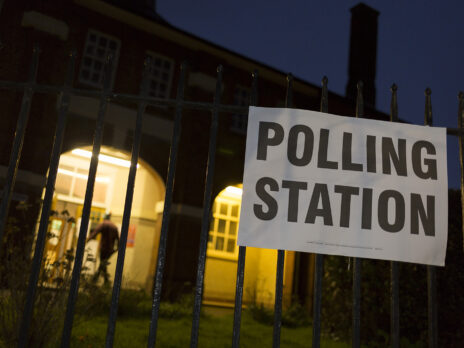
This year looks set to be even more chaotic. Widely seen as a crucial test for both a historically unpopular Labour government and a Conservative Party that has yet to recover from a seismic defeat less than two years ago, polling day is a test for first past the post too. And one it looks doomed to fail.
“These locals will show that in England, we’re in a five-party system,” says Alex Sobel, Labour MP for Leeds Central and Headingley and chair of the APPG for Fair Elections. In Scotland and Wales, and in some councils where groups of independents are expected to win strong support, that rises to six. He adds that we are likely to see a wave of councillors claiming victory on 20 per cent or less. “Is that representative? Does that give them a mandate? One in five, of people who actually bothered to turn out to vote? That’s a difficult sell in democracy.”
“Thursday will expose a voting system that no longer fits modern, multi-party politics, producing increasingly chaotic elections. It is now becoming the norm for politicians to be elected without majority support, and tiny shifts in votes are having a disproportional impact on who governs,” agrees Alberto Smith, director of policy and public affairs, the cross-party campaign group for proportional representation.
“We’ve had the locals on our radar as a pivotal moment for this conversation,” I am told by another source deep within the campaign to rethink Britain’s voting system. “It’s going to become increasingly clear that the system is not sustainable. The government must wake up before the wheels come off.”
“The two things you want to see from an electoral system are that seats match votes, and that you can form stable governments,” Sobel tells me. “First past the post delivers neither of those things. It hasn’t delivered seats matching votes for a very long time – so the thing people have been holding onto is stable government. But in the recent period it hasn’t even delivered that.”
The last genuinely stable government, proponents argue, in terms of policy platform and ministerial turnover, was in fact the 2010 coalition – demonstrating that coalitions are not as chaotic as we are led to fear. Since then, the UK has seen a government with a razor-thin majority paralysed by factions, a hung parliament, and two seemingly landslide wins which quickly proved far less secure than polling day suggested.
The key question regarding changing Britain’s centuries-old voting system is not why – proponents have been rehearsing arguments about proportionality since the start of the 20th century. It is: why now? Three factors have led campaigners to believe that the time has come.
The first is the public. In 2011, voters decisively rejected the idea of moving from FPTP to an Alternative Vote system, supposedly settling the issue of voting reform for a generation (even if proponents argued that AV was itself not a proper PR system). But the polls say otherwise. YouGov’s tracker since 2019 has shown almost half (45-48 per cent) of Brits support moving to proportional representation, compared to the quarter who want to keep FPTP. Broken down by party, PR has clear majorities within supporters of Labour, the Lib Dems and the Greens, as well as a plurality of Reform voters. It is only among Tories that FPTP comes out on top, and even then, it’s a close contest.
It is unlikely to be a coincidence that public support has risen as more parties have broken onto the political scene. Which brings us to the second factor driving the pro-PR campaign: the emergence of a European-style multi-party landscape. With Reform on the right and the Greens and Lib Dems on the left, electoral reform can no longer be dismissed as a cause associated with a particular party or faction.
In a recent New Statesman interview, Green leader Zack Polanski attributed his decision to join the Lib Dems in 2015 to a desire for PR. Polanski has been a member of the Make Votes Matter campaign for PR since 2018. Only two years ago Nigel Farage used to rage about FPTP being “outdated” and “not fit for purpose”, while Richard Tice said when he was leading Reform that the party’s aim in 2024 was to get enough votes to pressure a new Labour government into changing the voting system. Reform leaders may have cooled on the idea of PR since the polls started suggesting they could be the largest party in parliament under the present system, but the very existence of an insurgent party splitting the right-wing bloc has focused minds.
Political scientists are sounding the alarm. In February, a letter signed by over 50 academics warned that the present system enables “results that appear random and arbitrary”, with “a real possibility that they are now exaggerated to a degree never seen before in our democratic history”.
“This fragmentation hasn’t come out of nowhere, it’s been building for 60 years,” says Alex Zur-Clark, parliamentary organiser for Labour for a New Democracy. “What is different is it’s reaching a tipping point. This problem isn’t going to be ignored away, Labour needs a plan.”
Or, as Sobel puts it, “It’s not temporary. It’s becoming cultural.”
But it is not academics, fringe parties or members of the public who have the power to change Britain’s voting system. That power rests with the government – and governments that win majorities with FPTP are by inevitably reluctant to let it go.
Why would a government that won the biggest Labour majority in history want to rethink the mechanism that achieved that? The answer, perhaps, lies with Labour MPs.
Anna Dixon entered parliament in 2024, but like many of that cohort has been active in Labour party politics for decades. She recalls attending Labour Party Conferences in the 90s, where events in favour of PR were “on the very fringey fringes… the big hitters in the party were all at the FPTP events.” Contrast that to last year’s Labour conference, where the PR rally was “probably one of the busiest and biggest fringe events there”. Andy Burnham was the star speaker. “There’s nothing more unstoppable than an idea whose time has come – and PR’s time has come” the mayor of Greater Manchester told an adoring crowd.
Burnham is not the only one of today’s Labour “big hitters” who have at some point voiced support for electoral reform. Johnny Reynolds, Wes Streeting and Ed Miliband have all been in the pro-camp at various points in their careers, while Lucy Powell confirmed her support for Proportional Representation during the contest that saw her elected Labour’s deputy leader last year.
This government has already changed the way mayors are elected back from FPTP (a reform the Conservatives made in 2022) to the supplementary vote system. “Clearly the government don’t have 100 per cent faith in FPTP because they changed the mayoral system back”, Sobel points out.
He continues: “Opinion in Labour Party in favour of FPTP is vanishingly small.” Indeed, the trend within the wider party has been apparent for some time. At its conference in 2022, Labour backed a motion for PR, thanks to the support of constituency Labour parties and two-thirds of affiliated unions. Labour’s National Policy Forum the following year formally came out against FPTP, recognising that the system was driving “the distrust and alienation we see in politics”.
That support can already be seen within the PLP itself. Launched just a year and a half ago, the Fair Elections group is the largest APPG in parliament, with 160 members, most of them Labour MPs or peers. In December 2024, a ten-minute-rule bill calling for proportional representation unexpectedly passed in the House of Commons, with 59 Labour MPs voting in favour with Lib Dems, Greens, and other parties – including three from Reform. Just 50 Labour MPs voted against alongside the Tories. Labour MPs within the APPG talk about a “generational shift”, with the 2024 intake much more open to electoral reform than their parliamentary elders.
“We shouldn’t be afraid of a fairer voting system,” says Mike Reader, a 2024-intake Labour MP on the APPG. “Our party exists to give people power. We shouldn’t be set on a voting system that ignores millions of people. We in the Labour Party should be championing making sure people feel heard.”
Twinned with this shift in ideology is the cold, hard reality that despite the majority won by Keir Starmer in 2024, the present system no longer favours Labour.
Stewart Wood, now Baron Wood of Anfield, was a close adviser of both Gordon Brown and Ed Miliband and is one of nine Labour peers on the APPG. “It has always been mad, in my view, that we have a FPTP electoral system that massively incentivises or even requires tactical voting to work, yet it is an expellable offence to vote for any party other than Labour or call for electoral cooperation,” he tells me. “We have the spectre of an ostensible omerta on pacts and tactical cooperation, while clever campaign strategies like Morgan McSweeney’s 2024 campaign do exactly that tacitly under the radar.”
The 2024 “anyone but the Tories” (alternatively dubbed “who do you hate most?”) strategy masterminded by McSweeney has resulted in hundreds of MPs with majorities that could easily be wiped out by the same forces that destroyed the Tories two years ago.
“It’s the end of tactical voting,” says Dixon. “The way we’ve managed to win under a FPTP system was that we persuaded people in a five-party ballot that there’s only really two in play. That’s no longer the case.”
This is why this set of local elections are so important. Labour looks set to be heading for an existential night, losing councillors across its heartlands, from places like Sunderland and Runcorn in the north of England, to deep red London boroughs like Haringey and Keir Starmer’s own patch of Camden. It is also on track to lose Wales for the first time since the foundation of the Senedd, possibly slipping into third, while 2024 hopes of winning back Scotland have been utterly dashed.
Might this be a reality check for a government with an eye on the next general election? Seats that two years ago looked rock-solid red are now not only in play, but on the verge of turning green, turquoise, orange – or any number of other colours. Suddenly a government that won a big majority under FPTP is at risk of being shredded by the voting system. As the polling guru John Curtice recently noted when discussing whether FPTP would continue to benefit Labour and the Tories: “Those who live by the sword can die by the sword”.
For campaigners, the first step in not dying by the sword is setting up a national commission to look into electoral reform, testing if the current system is fit for purpose and suggesting an alternative if not. The Representation of the People Bill which brings in other reforms to Britain’s electoral system is currently report stage – there is hope that it could be adapted post-May to include such a commission.
“My message to colleagues and to the leadership is it is now or never in terms of urgency,” says Dixon. “Understandably, Downing Street’s mind hasn’t been on this. After these elections, lots of people will try to blame the results on the unpopularity of the government or on our policy platform. A different message would be: actually, this is about the fact people have lost confidence in democracy. They don’t feel represented, and that is the biggest risk in Britian to our society.”
Sobel adds that launching a commission would also help the government win back the trust of backbenchers and the wider Labour party. “Members would feel more listened to – this has got such overwhelming support among ordinary members. And in the PLP it would send the message the government is listening and reflecting the reality on the ground.”
So is this time different? The results this week will be pivotal: in demonstrating the UK’s fractured electoral landscape, crystallising the path for Reform getting into government, and revealing just how much Labour’s support across the country has disintegrated. But there is one final reason why the conversation within the Labour Party has changed in recent years.
“The popularity of electoral reform among a rising number in the Labour fold is based on a desire to keep Reform out, a strategy for harnessing a stable pro-European majority, and the principled desire for votes outside of a few dozen marginal constituencies to matter – a sincere belief in democracy participation being a quality we should support,” Wood tells me.
“But it is also about something else. A worry that when Labour wins occasionally under FPTP, it spends its time in government hugging its right-wing flank. The incentives for FPTP are for Labour not to lose its right, and that skews Labour governments away from what its members and campaigners think a Labour government is for. The hope is that PR would enable Labour in power to govern with voters other than floating Tories in mind, and cement a more progressive Labour-led government.”
There is growing frustration within the Labour Party that the strategy of 2024 and the broad but shallow coalition it achieved has made the government less stable, without the mandate needed to take decision that could be unpopular, leaving them “dancing on the head of a pin when it comes to policy” as they chase votes on the right. If Labour losses this week are as bad as predicted, it could calcify the desire for a change in direction.
With the party – membership and MPs alike – all hoping for a chance to tack leftwards, whether with this leader or another, could it be that PR’s time has finally come?
[Further reading: Angela vs Andy vs Wes vs Keir]
Content from our partners


Related

Join the debate
Subscribe here to comment