
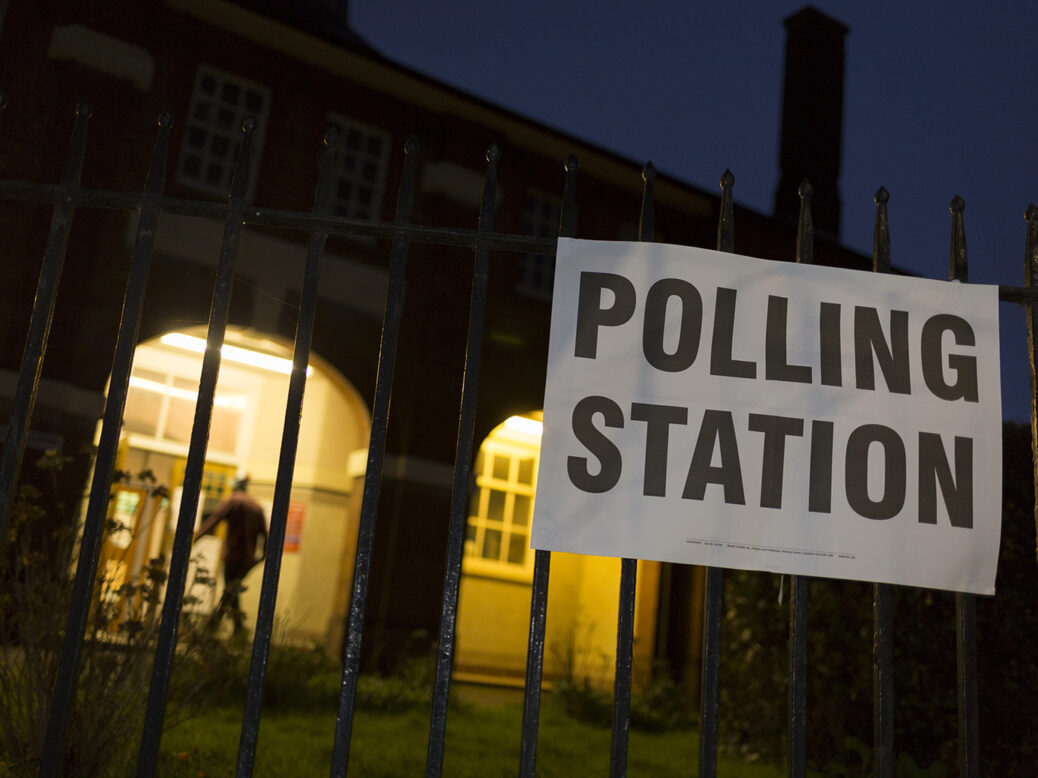
Local elections do not matter, and whoever you elect will act in the same sad way as their predecessors, under the same constraints that make local government an impotent arm of the centralised British state.
Even councils that seemed to have done everything right are now failing. Barking and Dagenham was a crucible of Starmerism. After the British National Party temporarily became the local opposition in the mid-2000s following demographic change and widespread dismay with the Labour council, a young Morgan McSweeney cut his political teeth door-knocking with Labour activists to lost voters. By the mid-2010s, the council’s answer to that political shock was material. Inclusive growth: borrowing, building, partnering with developers at scale and, for a time, building more affordable housing than any London borough.
And after a decade, child poverty in the council dropped from 43 per cent to 42 per cent. Median pay went from above the England average to below it. Simultaneously, median private rents shot up, now consuming over half of local people’s pay on average. The council’s 2025 verdict on its London inequalities rankings: “generally not improved since 2017, or in a few
cases it has got worse”. As council leader Dominic Twomey put it to me, “We leave people behind every single day.” Speaking with Cameron Geddes, who first became councillor in 1986, the council is faced with an impossible choice. Build at council rent and the project’s viability is poor; build at intermediate rent and the maths works out. Either way, families get left behind, and in 2025 there were 4,253 households on the council waiting list. “It’s not a value judgement,” Geddes added. Indeed, the issue here is the one facing thousands of councillors across Britain: they hold office but not power.
A century ago, councils built houses, ran trams and buses, owned utilities, employed thousands and raised most of their own revenue. Herbert Morrison’s London County Council ran more than 70 hospitals, the trams, the fire brigade, the parks, and built council estates on a scale unimaginable today. Local government was where the state met the street, where strangers learned to govern themselves, and where collective life took institutional form: a genuinely place-based political life. Today, councils administer social care and collect bins. Local democracy has been replaced with skint service delivery.

The consequences are obvious. In Wisbech, a deprived market town in the Cambridgeshire Fens, I asked some of the locals to suggest items for a micro-museum of the present. One man gave me a postcard he’d made. On it was an old Georgian building, the facade of the local council office all but worn away. It is now an emergency drug and alcohol clinic, in an area with widespread homelessness and a huge waste incinerator being built beside schools and farms that no local institution has the power to stop.
In Gateshead, where I’ve been working with family caregivers for some time, we recently closed the local carers association after 30 years, after its funding was cut by the council. A walk along its mostly derelict high street, from the broken concrete flyover to the grand Victorian town hall boarded up for more than a decade, says far more than any bulletin from the LGA.
Every councillor blames national government: Labour blame Conservatives, and everyone else blames Keir Starmer. They are right insofar as successive local government acts have hollowed out local rate-setting and in-house council services, the means by which local councils in the past could influence and direct local government. They are wrong in that by invoking national politics they give voters no basis to take seriously their performance or lack of at the local level.
Austerity is the go-to explanation. Central government funding for councils was cut by 55 per cent in real terms between 2010-11 to 2019-20. But with a longer view, what has taken place since the 1980s is the centralisation of political power from local to national government. The 1988 Local Government Finance Act stripped councils of independent revenue. Compulsory competitive tendering, introduced in 1980 and extended throughout the decade, forced councils to put services out to market. Since then, they’ve gradually been stripped of control over education, libraries, culture, business, tourism, housing, leisure, and now, under Labour, much of their planning discretion over speculative housebuilding is being eroded further. The rump that’s left is largely overseen by party activists, many with admirable enthusiasm but often little experience or training, paid a pittance for a demanding and misunderstood job, voted in on tiny turnouts to nod through budgets.
Adult and children’s social care now absorbs 78 per cent of councils’ income from council tax and general funds. That covers child protection, placements for children in care and support for older and disabled people. Send and homelessness are mostly counted elsewhere, but the statutory pressures pile higher. What remains is less than 22p in the pound for libraries, litter, high streets, youth services, roads and the rest: the things most voters actually see.
Yet the answer from successive governments has been not to fund local government but to reorganise it. In 2009, David Cameron promised that “the Conservative Party wants nothing less than radical decentralisation, to reach every corner of the country”. Across the country, separate regions have been dragged into weird amalgamations under a devolved mayor, often with the bribe of unlocking additional transport funding. Many are elected with vanishingly low turnouts – Andrea Jenkyns with under 30 per cent for Greater Lincolnshire, or Paul Bristow with 33 per cent turnout for Cambridgeshire and Peterborough, whose actual powers are a mystery to most voters. Devolution in England has largely resulted in a paradoxical centralisation of powers, creating a new administrative layer with champagne responsibilities (strategic transport, infrastructure) and lemonade budgets, and with little in most cases to show for it.
Who benefits from the abolition of local government? The centre. It serves the Treasury, who can retain control of budgets while having local figureheads mop up blame downstream. National governments get to take credit for popular things and devolve blame for unpopular ones.
And in a perverse way, the impotence of local government suits the Greens as much as it does Reform. Both treat the town hall as a billboard for national politics, where failure in local office can be pinned on Downing Street because there’s nothing local left to fight for. In Gateshead, a Green Party leaflet last month signed by Zack Polanski promised to cut bills and raise wages, reverse Labour’s cuts and protect public services – none of which are in the gift of the town hall. The left’s failure to take local democracy seriously – an institution with its own purpose, internal goods, practices and historical life, not merely a stepping stone or protest vehicle – is part of the problem, not an answer to it.
In places like Wisbech, what’s filled the vacuum are volunteers, food banks, the coffee morning that draws 120 older people because there’s nowhere else to gather. Individually, the efforts are admirable; structurally, it’s disastrous and unsustainable.
Suppose serious attention was paid to empowering local government. Strong councils could build their houses and emergency housing at scale, run buses, own land, raise taxes locally for local priorities, set rents, close illegal high-street businesses, run properly funded skills and apprenticeship programmes between colleges and employers.
More than that, councils would be something – institutions with their own democratic purpose, not subcontractors of central government. Westminster has failed, and made local government pay the price. Until that changes, the question on the ballot paper is the wrong one.
[Further reading: Britain is still breaking up]
Content from our partners


Related


Join the debate
Subscribe here to comment