
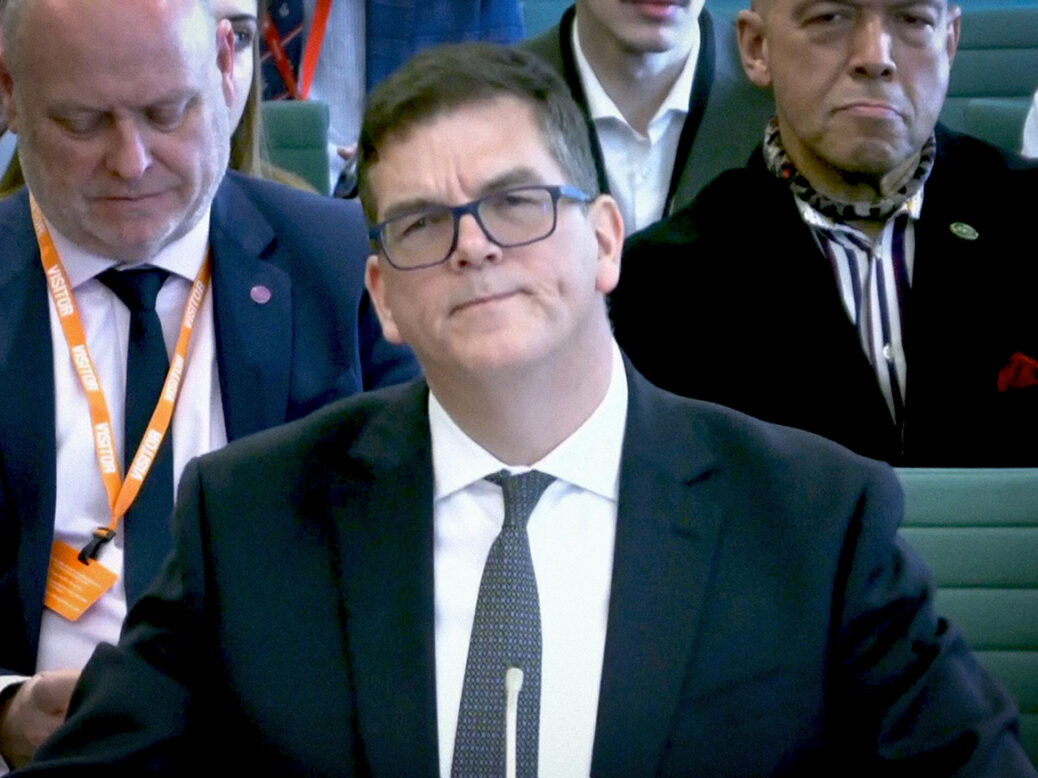
The question of where the story of Peter Mandelson goes next, if anywhere, was always going to be settled this morning in the Boothroyd Committee Room of the House of Commons, where Olly Robbins is speaking to parliament’s Foreign Affairs Committee, chaired by Emily Thornberry. Robbins was sacked on Thursday after he lost the confidence of Starmer and Foreign Secretary Yvette Cooper over his decision to grant Mandelson developed vetting status despite his failing the vetting procedure, and then deciding not to tell any ministers, including the prime minister.
Despite his long career in Whitehall, Robbins’s reputation has been attacked in the past week as he took the rap for this latest twist in the Mandelson affair. But after reports that he is fighting back and even considering legal action against the government, fireworks were expected.
Robbins has gone on the attack with a series of revelations about the approach towards Mandelson’s appointment at the top of government. He claimed this morning that the Foreign Office was under “constant pressure” from the private office in No 10 to get Mandelson to Washington, DC, with “very frequent” phone calls asking, “Has this been delivered yet?” This, he said, occurred in his first month as Foreign Office permanent secretary in January 2025, after the PM’s decision to appoint Mandelson had been announced. In the interests of discretion, he would not say who in Downing Street’s private office had made these calls. On the question of the former chief of staff Morgan McSweeney and his possible involvement, as a protégé of Mandelson, Robbins said he simply did not know where the pressure in No 10 was coming from.
Of the attitude from No 10, he said there was “never an interest in whether [Mandelson would be cleared to go to Washington], but only in when”, and that there was a “generally dismissive attitude” to vetting, with “the focus … on getting Mandelson out to Washington quickly”.

He also revealed that there was a view among senior figures in the Cabinet Office that there was no need to vet Mandelson in the first place because he was already a member of the House of Lords and a privy counsellor (given his previous service as a cabinet minister). The Foreign Office, Robbins said, pushed back against this.
Robbins’s argument this morning was full of the classic civil servant’s nuance. He said that while he was under pressure from a No 10 operation that was determined to give Mandelson the ambassador’s job, he nevertheless acted with integrity in granting Mandelson’s developed vetting, given it was a “borderline” case in which mitigations could be put in place. If he had not acted as he did, Robbins suggested, it may have been possible that Mandelson went to Washington without any thorough vetting at all, given the views of the Cabinet Office and the No 10 private office. He told of a situation before Mandelson’s developed vetting was granted in which he had already had freedom to roam across Foreign Office buildings, access to IT and even sight of higher-classification briefings.
Robbins has largely stuck to the facts in this appearance but strayed into opinion when asked why the PM would have ignored the advice from former cabinet secretary Simon Case to vet political appointments before announcing them. “Maybe he thought, this is a very well-known character; I’m making a risk judgment,” Robbins speculated. Once again, this saga returns to the question of the Prime Minister’s judgement and and why such lengths were taken to get Mandelson to the Washington embassy.
This piece first appeared in the Morning Call newsletter; receive it every morning by subscribing on Substack here
[Further reading: The Great British defence con]
Content from our partners



Related

Join the debate
Subscribe here to comment