
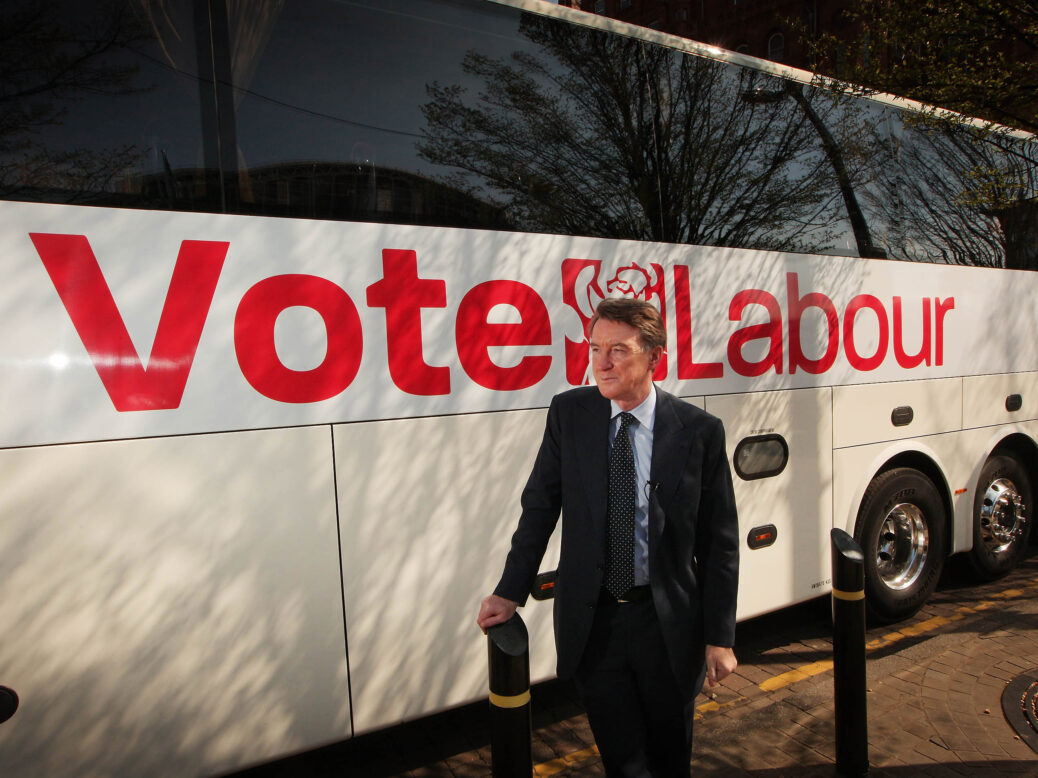
Oli Dugmore: Over the last few days, journalists have been scouring through the three and a half million pages of the Epstein files released on Friday by the US Department of Justice. Dan Neidle, journalist and tax lawyer, used his investigative skills to uncover some of the most explosive details relating to former business secretary and Labor peer Peter Mandelson. Mandelson strenuously denies any wrongdoing.
Dan, could you just give us an idea what was happening in Britain around 2008, 2009? What was the political scene?
Dan Neidle: So, this is a time when we’d had the initial financial crisis. Lehman Brothers went under in September 2008. I saw from my office window whole lines of people carrying boxes out of the building.
Almost everyone hated and blamed the banks. And this is when we see Mandelson almost acting like a fifth column inside government on behalf of Wall Street banks. It’s pretty astonishing now. If that had been public large at the time, there would’ve been almost revolution in the streets. He was lobbying against his own government.

And he was a hugely influential person. I rather admired him. I can’t remember if that admiration lapsed after his first or second resignation, but there was absolutely a time when I admired him and I thought that he’d saved the Labour Party.
OD: What could someone like Epstein do with the information Mandelson was leaking? How might it be useful? Why would he be interested in receiving it?
DN: My theory is that Epstein passed valuable gossip that he obtained in unethical and perhaps illegal ways. That was his power. He didn’t need to blackmail Peter Mandelson. He barely paid him any money. It was $75,000. Mandelson had a £2.5m house at the time. It wasn’t very significant to him. It’s about the access, the flattery, the power, working in both directions.
OD: One of the really revealing things that I found looking through the emails is that I think there’s an apparent respect that Epstein has for Mandelson. I mean, he clearly likes him, he sees someone who’s a bit of a mover and a power broker and someone who gets things done.
DN: I haven’t seen him slagging Mandelson off anywhere.
OD: In 2009, four months after the leaks we’ve been discussing, chancellor Alistair Darling unveils this one-off 50 per cent tax on bankers’ bonuses. You found documents in the Epstein files, which seem to reveal Mandelson privately advised JP Morgan on how to fight back, and the phrase that’s getting a lot of pickup is he suggests that they “mildly threaten the Chancellor”.
And you believe this may be linked to a reported call at around the same time from JP Morgan chief executive, Jamie Dimon, to the chancellor.
DN: On a tax like this, you would kind of expect a business secretary to be lobbed by the banks and to discuss that with the chancellor.
It’s kind of the business secretary’s job, but the whole way in which government is supposed to run is that this should be done openly. That is not how Peter Mandelson did it. On 15 December, Epstein asks Mandelson some details about the tax. He kind of pushed Mandelson.
Mandelson was dealing with bank lobbyists in an undisclosed private capacity, but it’s not terrible. That then changes on 17 December. We are just seeing the tip of the iceberg, but we see an email from Epstein to Mandelson where he says: “Should Jamie [Dimon, CEO of JP Morgan] call the Chancellor one more time, and Mandelson writes “yes and mildly threaten”.
And then Epstein writes, “can we speak?” We don’t know what they spoke about, but the business secretary, a senior member of the cabinet, is advising a foreign bank to threaten the British government to reverse British government policy.
OD: For the record, Mandelson strenuously denies any and all wrongdoing as relates to criminal offences in relation to these leaks.
In March 2010, Mandelson’s principal private secretary sent him a note about a meeting between the chancellor of the exchequer and Larry Summers, at the time US Treasury Secretary. It included new banking regulations and taxation that Summers wanted to see discussion of how America could engage with France and Germany.
Five minutes after receiving it, Mandelson forwards it to Jeffrey Epstein.
DN: That was pretty astonishing because now what’s happening is that Mandelson is leaking US government secrets to Epstein.
Jim Pickard of the Financial Times found some more emails just before this one. Epstein had been briefing Mandelson on how to lobby Summers.
OD: This isn’t the only instance of sensitive information from the heart of government being exchanged between Mandelson and Epstein.
Mandelson emailed Epstein about three hours before it became public knowledge that Gordon Brown was resigning. What advantage would Epstein have knowing that information?
DN: I mean the ambitious thing to do is try and trade off it or find people who trade off it. I don’t know how possible that was. But Epstein can now say, “I have a source in the heart of government who tells me Brown is going.” And about five hours later he’ll be proved to be right. That’s a valuable thing. This is a very unusual relationship.
If you look at the leaks from No 10 to Epstein, they’re only coming from Mandelson. The other people who were involved, many of them have said how shocked they are. Generally the world doesn’t work that way and it’s a bit dangerous if we say, “ah, this just shows they’re all at it”. Because what you’re doing then is you’re letting Mandelson off the hook.
You’re actually giving him a defence if this does come to trial, because he can say, “I was just behaving the way everyone else was”. That’s not how people behave, not how people are expected to behave. If you’re in a bank or a law firm, an accountant or a charity, and you did this, you’d be sacked. And government’s no different.
OD: There’s also the payment of $25,000 to Mandelson, which we know almost certainly was made because we can see it in Epstein’s accounts. Mandelson hasn’t quite denied it.
He says he doesn’t believe he received a payment. That is not a denial. Hey, did you receive £25,000 from Epstein?
OD: No. Dan, did you?
DN: No. That’s what a normal person says.
OD: Can we expect more revelations over the coming week?
DN: The thing about the Epstein files is they’re a disorganised mess and they’re really hard to search, and that means we’re going to see stuff dribbling out of them for days, weeks, months.
And there could easily be stuff in there which just dwarfs everything we’ve seen.
This is an edited transcript from the New Statesman podcast. Full the full episode, listen here
[Further reading: What Jeffrey Epstein knew about money]
Content from our partners



Related


Join the debate
Subscribe here to commentAs with Blair, why are surprised about Mandelson?