
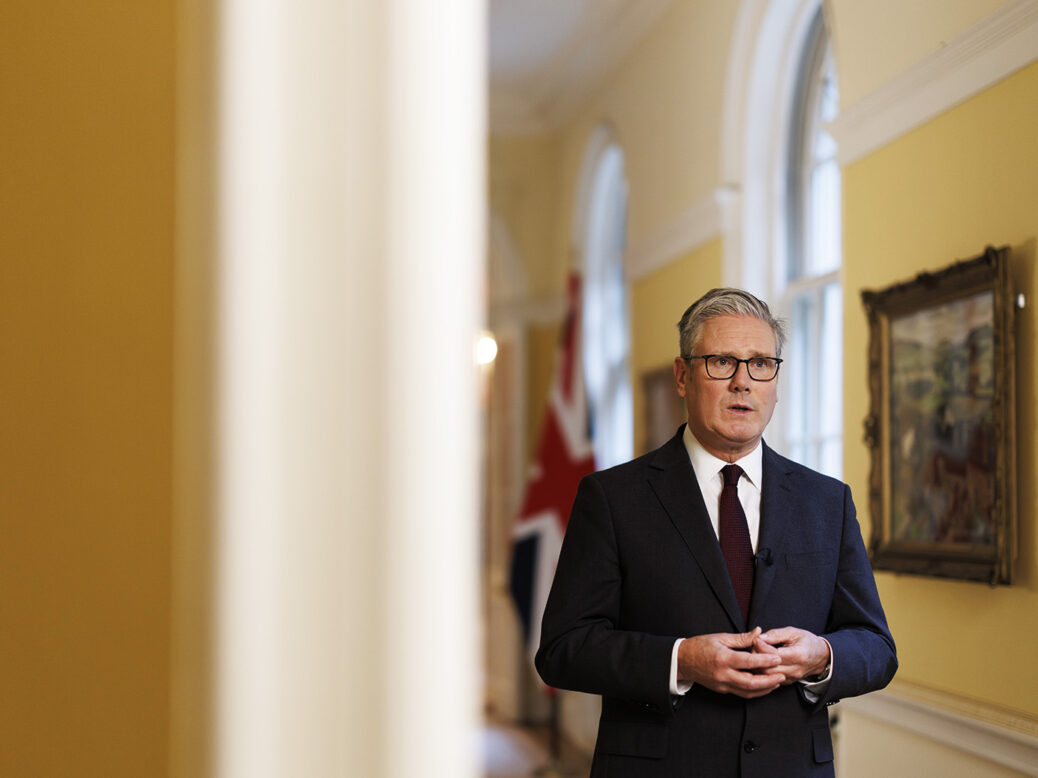
Keir Starmer knows the power of a wedge issue. When he was in Jeremy Corbyn’s shadow cabinet in 2018 he used Brexit to put himself between the then Labour leader and his supporters. “Nobody is ruling out Remain as an option,” he declared from the party conference platform in an ad-libbed remark that drew a standing ovation and enraged Corbyn’s team.
Now, before Labour assembles in Liverpool for conference this Sunday, Starmer is seeking to ensure he does not suffer the same fate. As he announced the UK’s decision to recognise Palestinian statehood, the Prime Minister spoke of a “moral responsibility to act” to keep the “hope of long-term peace alive”. But this was also a decision driven by politics. More than a third of the cabinet, including David Lammy, Yvette Cooper (now Foreign Secretary), Shabana Mahmood and Ed Miliband, privately pushed for recognition and over 130 Labour MPs signed a letter to Starmer demanding the same.
Recognition alone won’t satisfy the PM’s critics: expect Starmer to be challenged on whether he believes that what is unfolding in Gaza represents a genocide (the position now taken by Sadiq Khan and Ed Davey). But the decision represents a further toughening of the UK’s stance – ministers also point to the suspension of around 30 arms licences, the imposition of sanctions on two Israeli cabinet members, and the abandonment of trade talks with Israel.
It isn’t only on the totemic issue of the Middle East that Starmer has acted. Last week, the long-promised Hillsborough law was introduced to parliament, meaning that public officials who cover up state-related disasters will face up to two years in prison. For Starmer, who greeted four Hillsborough family members outside No 10, this is a highly personal cause: an example of what he means by putting government “on the side of working people”.

But again, politics is in the mix. In July Andy Burnham warned that parts of Whitehall were “fighting hard to preserve the status quo” after an initial deadline for the bill of 15 April was missed. Had Starmer failed to deliver by the time Labour reached Liverpool – the city where the Sun is still boycotted over the Hillsborough disaster – outrage from Burnham and others would have ensued.
Then there’s the Employment Rights Bill. There was much talk of that being diluted after a reshuffle in which Peter Kyle took on the business brief while union allies such as Justin Madders were discarded. But Starmer has privately reassured MPs of his commitment to a bill that he believes is “good for workers, good for businesses and good for the economy” (with the government duly voting down House of Lords amendments). Once again, a potential conference flashpoint – this time with union general secretaries – has been averted.
Tensions endure: a motion submitted by Mainstream, the new soft-left group, backing the abolition of the two-child benefit cap has been barred from debate. But even here, the government is giving ground. At the weekend, Bridget Phillipson, Starmer’s preferred candidate for Labour’s deputy leadership race, declared that the policy was “spiteful”, adding that its abolition was “on the table”.
There’s a clear pattern here: a Prime Minister who often found himself on the wrong side of his party in his first year – over winter fuel payments, welfare cuts and his “Island of strangers” speech (eventually U-turning on all three) – is determined not to do so again. As rivals circle, Starmer is prepared to show Labour a little more love.
This piece first appeared in the Morning Call newsletter; receive it every morning by subscribing on Substack here
[See also: Your Party is a mess. That doesn’t mean it’s dead]
Content from our partners



Related
Join the debate
Subscribe here to comment