
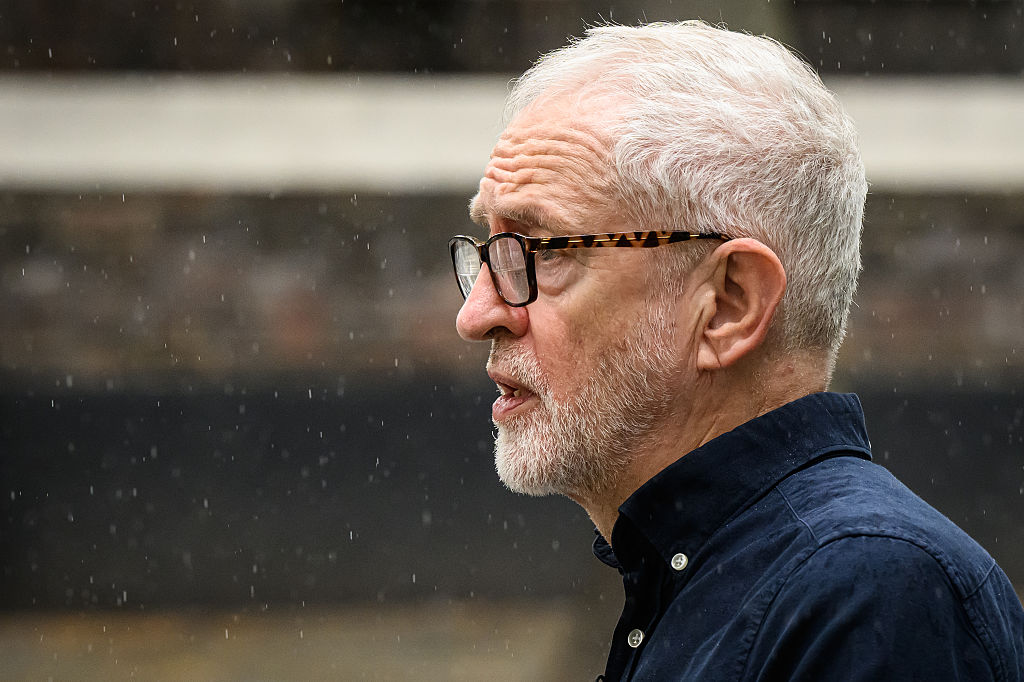
The folklore is on the money. The left does splits like the England women’s football team does penalty shoot-outs. Historically, vital issues have often been at stake when the British left squabbles – supporting a war, reform or revolution, class or identity politics. Now: membership systems! Your Party is bringing something new to the… party.
Last week’s eruption, which blew apart the unity of the new socialist electoral challenger launched by Jeremy Corbyn and Zarah Sultana to considerable enthusiasm, will not have surprised those following the project closely. Tensions have been simmering between the two principals and their respective teams from the moment the committee charged with organising the new party voted to ask both to serve as co-leaders in July.
Sultana immediately and unilaterally broke the news, without advising a reluctant Corbyn who was deeply angered at what he believed to be manoeuvres behind his back.
Since then earnest efforts have been made to bridge the gulf. The main issue has turned on who should oversee and control the party’s launch. The broad committee that had been driving the project was wound up at the insistence of the Corbyn camp. Authority was then devolved to the six MPs grouped in the Independent Alliance – Corbyn, Sultana and the four elected last year, mainly on Muslim votes and overwhelmingly on the Gaza issue.

This may not have been the best plan, given that the latter four had little experience in socialist politics and could scarcely be presented as representative of the wider left. Nevertheless, they have the status of parliamentarians.
Sultana argued for a broader, more balanced committee. Efforts at mediation never really got past first base and grievances accumulated on both sides. Sultana felt excluded and marginalised, while Corbynites fumed at her New Left Review interview which criticised aspects of the Corbyn leadership of Labour from a more left-wing position. Trans rights, entirely inevitably, became a flashpoint.
The pair are very different characters, yet they could barely be separated on any substantive political issue. Two exchanges in the Commons over the summer highlighted the unity and the contrast. In one, a statement on Gaza, Corbyn powerfully highlighted the government’s inaction over the genocide. Sultana, then still sitting on the Labour benches, wanted to know how then-foreign secretary David Lammy slept at night.
In the other statement, Corbyn, as he has done all his life, spoke up against welfare cuts hitting the poor. Sultana asked Rachel Reeves whether it was appropriate for someone who accepted free clothes from a millionaire to be cutting allowances for the neediest.
Obviously, any party can and should accommodate both approaches and more besides. But the project, even as it accumulated hundreds of thousands of supporters, substantial funds and very encouraging polling, buttressed by large and enthusiastic meetings across the country, plunged deep into irresistible force and immovable object territory. The division could have catalysed around a number of issues, but it finally turned on the membership system or, more exactly, control of the money raised thereby. Sultana’s unilateral launch last week was aimed at pre-empting her own exclusion but was, in any sober judgement, rash. It was not, however, aimed at securing control of the money herself, which would simply have gone into an existing party account, rather than a new one apparently being contemplated. If there were any hopes that the immovable object would accept this fait as indeed accompli, or at least raise concerns privately, they were soon disabused.
From then on, neither faction had any strategy other than escalation, painfully expressed in a series of statements culminating, as so often, in calling in lawyers or state authorities, at which point serious politics packs its suitcase and leaves the building. Cue hysterical laughter and lame old jokes from Keir Starmer supporters and right-wing pundits who seem to have seen no movie except Life of Brian. Maybe cue a wry smile from the Green’s new leader Zack Polanski, who many on the left feel is playing a blinder.
But there are two grounds for hope that something may yet be salvaged from the rubble. One is that the camps have tentatively reached out to each other, with “de-escalation” the word of the moment. The other is that the initiative for a new socialist party looking to fill that vast space in politics to the left of a Labour government in thrall to Donald Trump, committed to a war economy at the expense of welfare, morally compromised by support for Israel, increasingly authoritarian and hog-tied by self-imposed fiscal rules, may have passed the point of no return.
The grassroots have been mobilised and once aroused, seem in no mood to let the blunders of MPs or the intransigence of leaders snatch the moment away. They will likely force a way forward. So something will still get over the line, albeit less than it might have been and certainly scarred internally and compromised in public opinion.
Since Thursday’s debacle there have been tears, desperate appeals, growing anger and a sense of futility. I have received dozens of anguished messages since. The one that stuck most is from a woman I only slightly know, living in the London suburbs.
“We have a 15-year-old involved here… a Jewish lad. He rang me the night that all this broke, nearly in tears, asking why they were making such a mess of it, and why they couldn’t just find what they had in common and put aside their differences just to make this work. This morning, he rang to say that he was attacked in school yesterday, by three kids with belts, who were berating him because he would not say that he supported Charlie Kirk. His school… have done nothing. This is what is at stake. They need to separate their personal feelings from the hope that exists among ordinary people for something that will stand up to the wave of right-wing darkness that threatens to envelop society and scar our young people.”
For the British left, the last few days have made real Nick Hornby’s finest line – it’s not the pain that kills, it’s the hope.
[See also: The revenge of the left]
Content from our partners



Related
Join the debate
Subscribe here to comment