
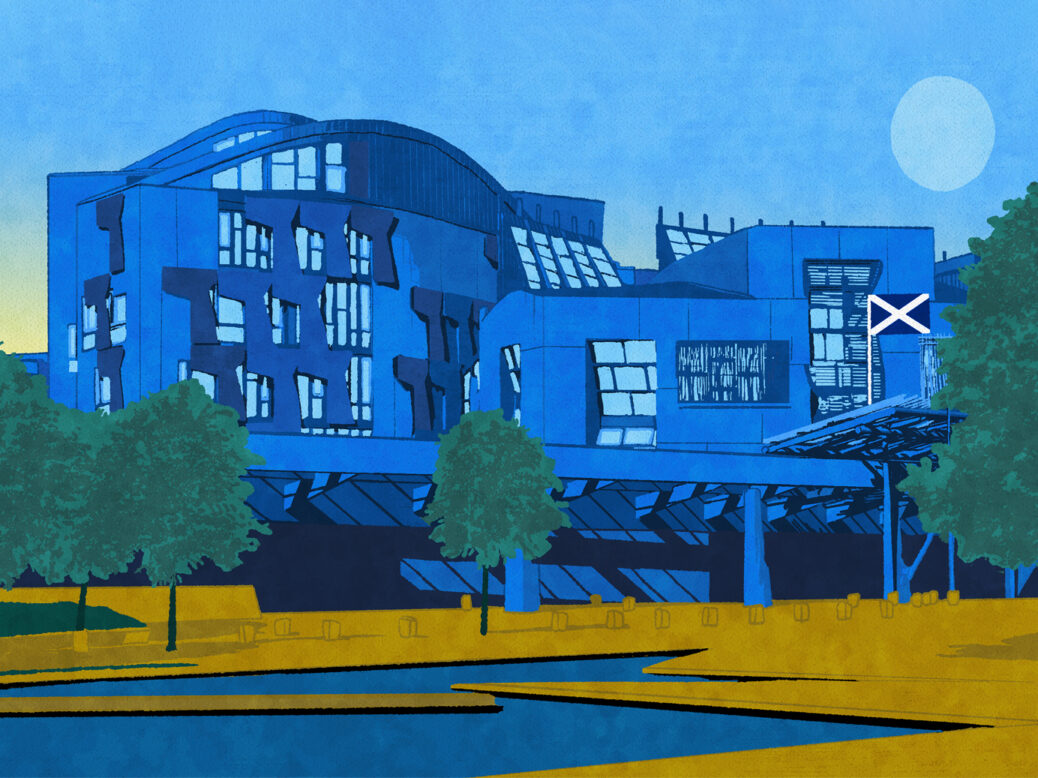
A new Scottish parliament, and a familiar story. A convincing SNP election victory. An SNP first minister elected in the Holyrood chamber and then sworn in at the Court of Session. A new SNP cabinet posing for photographs on the steps of Bute House. Work underway to produce yet another SNP Programme for Government. A new motion on independence to be placed before the parliament. The opposition parties in abeyance for a further five years.
Given the quarter-century in power that the Nats have been granted by the Scottish electorate, it can be increasingly hard to see Scotland as much more than a one-party state. The nation certainly seems to have a type, a confirmed favourite: welcome to Natland. No matter the level of scandal surrounding them, no matter the level of highly visible, highly damaging policy failure, no matter the scheming strategies and tactics adopted by their rivals in the hope of unseating them, the SNP win. Then they win again. And then they win again.
True, 2026 may not mark the most overwhelming triumph in the party’s history. Their share of the vote was much reduced on 2021, and they were helped by a heavy split in unionist support due to the rise of Reform. But this far into their spell in government, the fact that the SNP are still winning – still dominating – is surely cause for reflection. The gap tells its own story – 58 seats for the Nats, just 17 each for Labour and Reform, miles back in joint second place. There isn’t even a clear main opposition party now. At First Minister’s Questions, Anas Sarwar and Malcolm Offord will take weekly turn-about asking the first questions of John Swinney.
If the SNP is the only show in town, if this is what we have been given, then we must hope for some highlights. Swinney announced his cabinet this week. It’s possible to see many of the same old faces, even if they have been shuffled between jobs, and release a weary sigh. Here we go again, more of the same. I’m too long in the tooth, have been disappointed too often over the years, to expect much from modern politics. My centrism is both unfashionable and often scorned. Governments don’t get elected by people like me these days. The energy is elsewhere.

But, somehow, I can never quite quench the optimism that comes with each new parliament, each new cohort, that smart promotion here, that intriguing elevation there. So there are some things about the new ministerial team that catch my eye. The main one is Ivan McKee. McKee was Kate Forbes’s closest ally in government. Forbes regrettably stood down as deputy first minister and an MSP at the election, but she was the one true, convinced champion of business, economic growth and entrepreneurship in the cabinet. McKee is the other person in government who has shown similar conviction. A former businessman himself, as a junior minister in the last administration he developed a plan to rationalise the size of government, curtail public spending and introduce a more pragmatic approach to what is affordable.
This, after all, is the main challenge confronting Swinney. The Scottish government faces a £5bn annual gap between spending and revenues in this parliament. This should have been the key debate between our political leaders throughout the election campaign – it will be the central fact of our politics in the second half of this decade and arguably beyond. Instead, it was barely mentioned, as the main parties focused on the usual unachievable bribes and giveaways. More than anything else, this has shone an unforgiving light on the frustrating immaturity of Scottish politics and the Holyrood parliament. The fiscal numbers are not made up, they are unavoidable, and will soon have to be faced. And yet the electorate has been left unwarned and unprepared for the tough choices that lie ahead.
This is why McKee could prove the key appointment. He intends to achieve efficiencies and savings of £1.5bn. The Scottish Fiscal Commission has said it is unsure, given the approach to public spending taken by the SNP so far, that this is likely to be delivered. McKee’s elevation to the cabinet at least suggests Swinney is beginning to accept the need for some punishing choices in the coming months and years. The First Minister should empower his colleague to do what we all know needs to be done.
Stephen Flynn as Economy Secretary is another interesting choice. The former leader of the SNP at Westminster is a bullish figure and an excellent parliamentary performer, and is often tipped as Swinney’s most plausible successor. He has never run a department before, though, and now must show what he can do on the policy front. His beat includes the transport portfolio, which has been a constant source of trouble for the Nats (ferries, dualling the A9). Will he come a cropper? Is that Swinney’s intention? And will he, as an Aberdeenshire MSP, continue to champion the oil and gas industry? One hopes so.
There are further signs of life at Holyrood. Kenny Gibson, who despite being an SNP MSP, was an impressively independent-minded chair of the finance committee in the last parliament, has been elected as Presiding Officer, Holyrood’s equivalent of Speaker. He defeated the SNP leadership’s preferred candidate, loyalist Claire Haughey, in a secret ballot of MSPs, which suggests a refreshing spirit of rebelliousness among at least some of the new intake. Gibson intends to shake up the rules that govern Holyrood, empowering the legislature at the expense of the executive. This is long overdue. Another improvement: committee chairs will now be elected by MSPs rather than chosen by party leaders, which will hopefully deliver more Kenny Gibsons.
So this may still be SNP Scotland, still Natland. But there are some signs that Holyrood might at last be allowed to grow up a little. It’ll be better for us all if Swinney doesn’t always get his own way.
[Further reading: Keir Starmer is a dishonest man]
Content from our partners



Related


Join the debate
Subscribe here to comment