
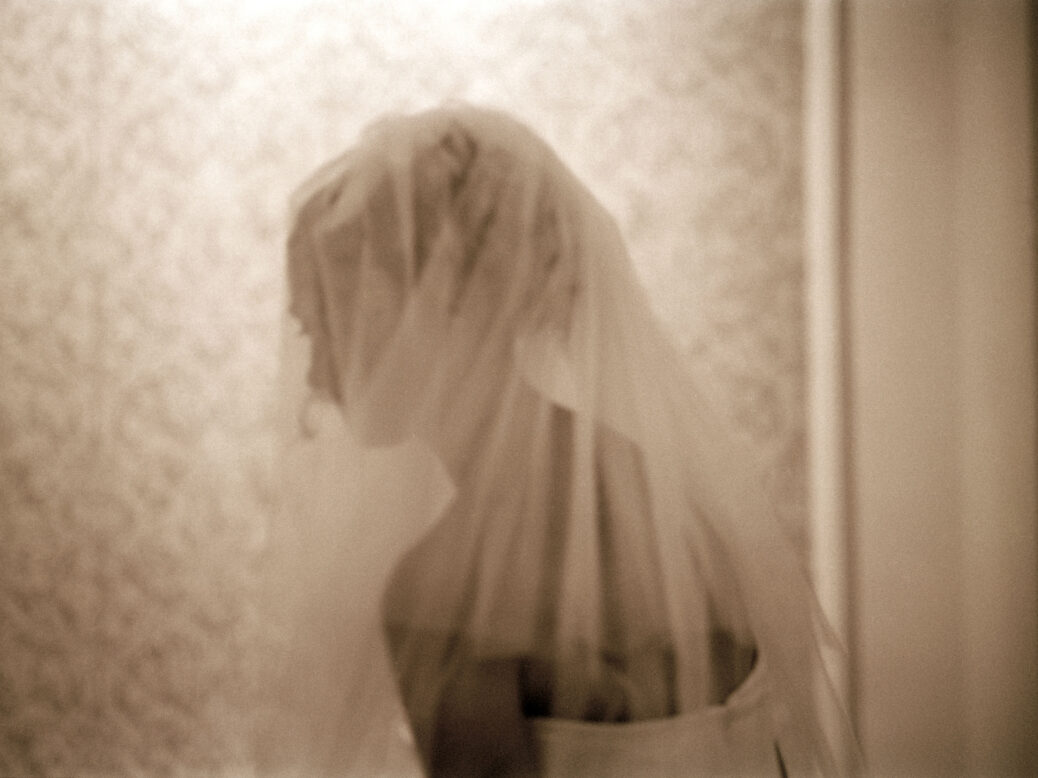
It is a tale as old as the Great Depression: an unscrupulous man needs money. He charges passers-by to watch young couples dance. Many are only pretending to be couples. They get free room and board, but only in ten-minute intervals every two hours; the last couple still staggering around will win a cash prize. Audience numbers creep down. To increase revenue, the promoter offers two contestants a sham wedding, while spreading a rumour that another is a wanted murderer. The couples try for weeks to get noticed by sponsors, film directors, and talent agents. One disillusioned woman has turned up in a last-ditch attempt at stardom. The experience makes her a full-out nihilist. She isn’t getting meaningful attention from anyone who matters, she’s perpetually exhausted, and to top it off, the men around her behave just as badly as they would in private. When no prize appears, she decides there is nothing to live for.
They Shoot Horses, Don’t They? was a proto-existentialist novel in 1935 and a film in 1969. If it had a 21st-century realisation it would be the reality franchise Married at First Sight (Mafs), an attention-grabbing, surveillance-laden, faux-marriage endurance “experiment” series filmed in Britain, America and Australia. Onscreen husbands meet their wives for the first time at the altar; the couples go on honeymoons abroad before moving into apartments together, testing the strength of their partnerships week-to-week and arguing their way through Real Housewives-style dinner parties with other participants. They receive televised advice from a panel of counsellors, dating coaches and psychotherapists. Only the strongest couples remain at the end of each series.
Channel 4 has been airing the British franchise since 2015. A new BBC exposé suggests it has a dark side. Three Mafs “brides” say they were sexually abused during the course of filming. Ex-contestant Shona Manderson, who first appeared on the show in 2023, says her onscreen husband ejaculated inside her without her consent. Another participant, who has chosen to be anonymous, says her onscreen husband subjected her to violent sex during the course of the show and threatened her with acid when she complained. Her barrister has suggested safeguarding failures on the part of Channel 4 and the show’s production company, CPL, which also produces Love is Blind and 90 Day Fiancé UK. Both say they were unaware of the full extent of the woman’s situation at the time.
Another anonymous participant says her husband sexually assaulted her in her sleep. On another occasion, she initially said no to sex but went along with the act after he insisted. The show’s psychiatrist later informed her the act was rape. “I didn’t want him to be angry at me when the cameras came,” she said to the BBC. She presented the accusation to CPL and Channel 4 after filming had ended, but before the series went on air. Her mental health declined as the broadcaster included the couple in the televised cut. Channel 4 has said she did not ask to be left out of the series.

The broadcaster has since removed the show from streaming services. As of Wednesday morning, however, there were still hours of Mafs UK content on the official 4Reality YouTube channel, which promises “everything drama, sass, and iconic pop culture” from the broadcaster’s archive. Some videos have titles like “35 minutes of nonstop married at first sight uk drama” and “nearly an hour of constant drama from the married at first sight uk days out” [sic]. Several contain arguments between Manderson and her onscreen husband.
After ten years on Channel 4, we might reasonably conclude that the blind marriage “experiment” has failed. Only a tiny proportion of Mafs UK couples are still together, with some series boasting a 0 per cent success rate. A real-life matchmaker operating along Mafs lines would struggle to get website testimonials, let alone thousands of yearly applicants.
The openly advertised “nonstop drama” is probably the clue; Mafs is not in the business of starting healthy relationships. A source with some proximity to the show details the casting process. Instead of matching the most likely couples in a thousands-strong entrant pool, producers focus on individuals, searching through applicants to find “the best characters and the most interesting people.” The sift is standard for reality TV, which relies on strong personalities to maximise potential blow-ups. An external specialist then chooses “love matches” from the considerably shrunken group. Sometimes contestants drop out at the last minute, leaving their original partners with unsuitable substitutes.
The process can create friction. Some participants are unattracted to each other. Others disagree on fundamental questions, such as whether to have children in the future. Onscreen counsellors almost always encourage participants to remain on the show, sometimes when they wouldn’t stay with a real-life partner. The BBC ran a feature in 2024 with several qualified counsellors, all of whom said the televised therapeutic advice did not meet industry standards. This is hardly a major concern on drama-obsessed reality TV. “The format falls apart,” my source says, “without making people stay when they’ve said outwardly that they don’t want to.”
The show’s focus on drama might have put its participants at risk. Entrants are naturally vulnerable. They want to find love and they want to be famous. Suddenly they’re living one-on-one with someone they met a few weeks ago; this may not be good for their mental state.
“[Participants] have an intimacy therapist,” my source says. “They have Intimacy Week [where couples are asked to share fantasies and coached into embracing physical touch]. It’s just a part of the show, that they will be intimate. You can see they talk about it – ‘Did you have sex on your honeymoon?’ – and some people feel insecure that they haven’t.”
Mafs is watchable because it breaks with modern romantic norms. But those norms exist for safety’s sake. If you sense “red flags” on an untelevised first date, you can choose not to take the relationship into the private domain. Sometimes you can even ghost the other party – while the practice has had bad press, there is no better way to be free of routine sexual expectations.
The Mafs format both pressures people into unsuitable relationships and presents sex as a matter of course. There was no real way to restrict its harm to women; you cannot risk-assess a sexual relationship, or hire an intimacy coordinator to make sure no damage is done behind closed doors. It is difficult to think of the tears shed and cash expended in making real life follow the contours of fiction. There will most likely be a gap in Channel 4’s programming this September. Perhaps the broadcaster should fill it with a soap opera instead.
[Further reading: PinkPantheress’ unreal Britain]
Content from our partners



Related

Join the debate
Subscribe here to comment