
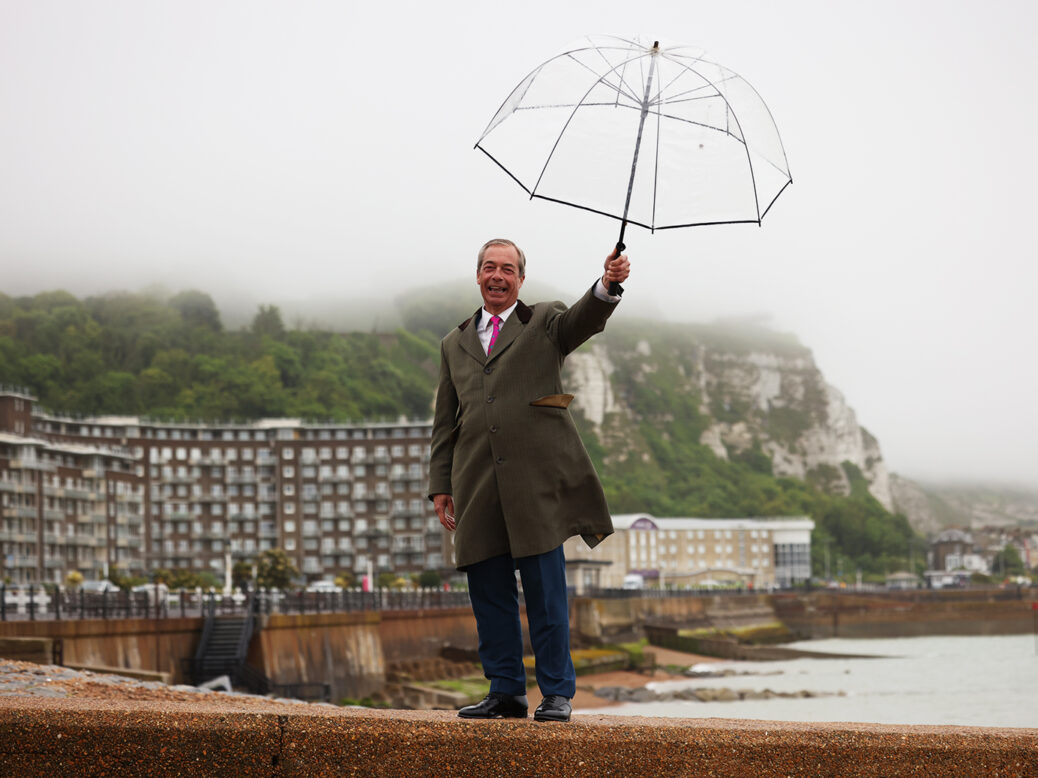
Nigel Farage is in the news again over his financial affairs. A report from the Sunday Times claims that the Reform UK leader received a “web of undisclosed gifts” from George Cottrell (or “Posh George”, as friends affectionately call him). It’s a story, along with Farage’s £5 million gift from Christopher Harborne, that Reform’s rivals will be eager to push. But does it actually harm him?
Materially, the scandals risk a parliamentary investigation by the standards commissioner that may, if all goes wrong for Farage, result in a suspension from the House, a recall petition, and a by-election in the Clacton constituency.
There would be little doubt Farage would win that (he’s presently polling at 67 per cent in the constituency). Putting that aside then, what are the wider repercussions for Reform, and the campaign to defeat them?
There are two approaches to campaigning. One is to rally your vote. And the other is to depress your opponent’s.

This is a story I suspect will do more to rally the progressive vote than depress or take out the Reform vote. Farage’s honesty issue has plagued him and his brand for more than a decade. Even up against Starmer, rock bottom in the opinion polls today, Farage polls worse for being an honest man, at 29 per cent to 33 per cent.
This story will widen that gap. The question is: does it matter?
It matters if you’re a politician appealing to all voters. But Farage isn’t appealing to all voters. (A perhaps rude awakening for the Robert Jenricks and Danny Krugers of Reform-world.) He’s appealing to a select stratum of voters.
The Farage appeal isn’t that he’s an honest man. His traits spoke for him in 2014 just as well as they do now in 2026: he’s a figure capable of speaking to what people think, is seen to be in touch with the public (a view 45 per cent of us have today) and holds a consistent favourability score of 25 to 30 per cent.
And over the years little has changed. In 2013 Farage averaged 30 per cent satisfaction with the public. In 2014 it was 35, and in 2015 it was 32. All this as the country grew to know him, and all this not far off where he is today, shows little ebb and flow. Farage has a low ceiling, but a pretty high floor.
It does not alter the signal traits voters who clamour for Reform are taken in on. The question then isn’t whether these scandals will turn off Reform voters, but how many people will turn out to stop him.
[Further reading: Will Nigel Farage be forced to fight a by-election?]
Content from our partners



Related


Join the debate
Subscribe here to comment