
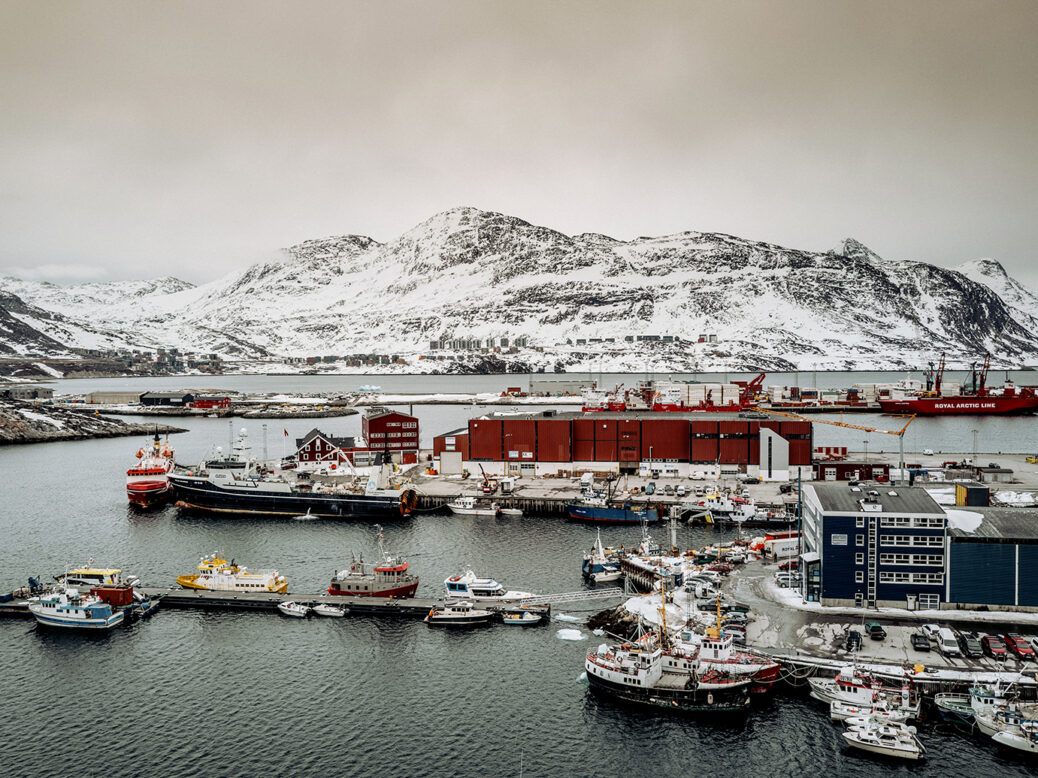
Returning to Washington on board Air Force One on 4 January, Donald Trump boasted to reporters about the success of the US military campaign in Venezuela and indicated that Greenland could be next. “It’s so strategic,” Trump said. “Right now, Greenland is covered with Russian and Chinese ships all over the place. We need Greenland from the standpoint of national security.”
In the days since, US Secretary of State Marco Rubio has told congressional lawmakers that Trump plans to buy Greenland, an autonomous territory within Denmark – a founding member of Nato. (Both Greenland and Denmark insisted it is not for sale.) The White House press secretary, Karoline Leavitt, said acquiring Greenland was a “national security priority”, stressing that military force was “always an option.” One of Trump’s closest aides, Stephen Miller, went further, insisting that the US “should have Greenland” and warning, “nobody’s going to fight the United States militarily over the future of Greenland.”
The New Statesman interviewed Kenneth R Rosen, author of the newly published Polar War: Submarines, Spies, and the Struggle for Power in a Melting Arctic (Profile), about the strategic calculus behind Trump’s threats and the intensifying great power rivalry in the high north. (The exchange has been lightly edited.)
Katie Stallard: Given your research, how seriously do you take Donald Trump’s apparent determination to “get” Greenland for the United States?

Kenneth R Rosen: At this point I wouldn’t discount anything the president says. I would take the outright desire to claim Greenland seriously.
Trump has repeatedly insisted the US needs Greenland for “national security” – setting aside questions of morality and international law for one moment, what is the strategic case for US control of Greenland?
It seems to me that Trump believes there is some value to the rare earth and subsurface materials that Greenland is known to have. Those materials are found in everything from electric vehicles to missile defence technology. The US already maintains a presence in Greenland, at the Pituffik Space Base; one of the things my reporting underscores is that a base like that, situated in the Arctic and America’s northernmost military outpost, is falling into disrepair thanks to climate change. It is also under-utilised in its potential for missile defence and surveillance capabilities.
Couldn’t the US achieve all this under the terms of its existing treaty with Denmark?
Absolutely. I don’t think that’s being discussed enough. That avenue, though, would have remained open were it not for Trump’s bellicose rhetoric. That opportunity, for now, seems to have vanished.
Trump says Greenland is “covered with Russian and Chinese ships all over the place” – what is the reality, and is he right to focus on an increasing Sino-Russian presence in the Arctic?
There are no Russian and Chinese ships “all over the place” in Greenland. There are, however, multiple instances over the last several years when Chinese and Russian military vessels have crossed into the US Exclusive Economic Zone off the coast of Alaska. And we can also look back to the days when China launched a purported research balloon that floated across America’s Arctic territory.
You quote a Norwegian naval officer in the book commenting that, “Putin is saying, ‘I’m the boss in the Arctic,’ and he is.” How do Russia’s capabilities in the region, and the emphasis Putin has placed on Arctic security, compare to the other leading powers?
Russia has revived dozens of Cold War-era bases across its Arctic coastline. It operates regularly in the waters off its Arctic coast and is proficient, practiced, with launching and utilising its fleet of more than 50 icebreakers. Whether the US needs as many icebreakers is beside the point: the one or two we do have simply aren’t sufficient vessels, even for scientific, let alone military, operations.
Scandinavian and Nordic countries are far more prepared, and have been for years. Their increase in defence spending and detailed attention toward their northern defences are precisely why the US should rely on its allies, not alienate them. This doesn’t seem to register with Trump.
Do you see similar indications that China is placing more importance on the region with its claims to be a “near-Arctic” power and “Polar Silk Road” initiative, particularly now that climate change is reshaping the region’s maritime trading routes?
China has sought to make inroads, for sure, but Western nations have been good about keeping suspected “dual use” facilities (those that could be used for surveillance under the guise of scientific studies) and Chinese funding out of their Arctic regions.
As far as trade routes go, China recently signed a deal with Russia to further develop what they’re calling the Northern Sea Route as part of that Polar Silk Road initiative. But we can’t forget that Putin is keenly aware of China’s global ambitions and, I would guess, does not want China to be able to stake a meaningful claim to the Arctic.
Putin won’t let that stop him from collaborating with China, however.
Trump has mocked Denmark in recent days for adding “one more dog sled” to boost security in Greenland, but as someone who has spent time with both US and Scandinavian military units in the course of your reporting for this book, what did you learn about their respective capabilities and what would presumably be lost if the US dispenses with its regional allies?
An additional dog sled team on the Sirius Patrol, the naval unit Trump was referring to, is a bit of a misdirect. From my time with foreign militaries it became clear that US forces do not have the same capabilities, in terms of surviving the cold (like the sled dog team) or even appreciating the nuances of operating at higher latitudes. Sleds or snowmachines are the best form of transit, things often break, weapons don’t work as intended, and that’s just not something the US – having been embroiled in wars in much warmer climates for the last 20 years – has experience with.
That’s what we’d lose. That knowledge-sharing. That interoperability.
Now, were Trump to note that the Danish Royal Navy’s capabilities are lacking and could be bolstered through American defence projects, I wouldn’t have a disagreement there.
What options do Denmark and Greenland realistically have for pushing back against Trump? Is Stephen Miller right to say that “nobody is going to fight the United States militarily over the future of Greenland”?
With such a provocative comment, I’m sure Putin is thinking, ‘Right, and who’s going to fight Russia in Svalbard [a Norwegian archipelago in the Arctic]?’ Or President Xi is thinking, ‘Right, and who’s going to fight us in Taiwan?’ It sets a horrendous precedent that emboldens the very authoritarians that are directly contra-posed to global order and peace.
I believe Denmark and Greenland have many levers and political and diplomatic goodwill that they can summon… Pardon my caginess.
Twelve months from now, how likely do you think it is that Greenland is under US control?
I’m no Cassandra. But if it were to fall under US control, it would be to the detriment of the Greenlandic people, the Nato alliance, and to American standing on the world stage.
Is there anything else you think is missing from the current debate over Greenland’s future?
Yes. Since my book was primarily one focused on defence, I didn’t have an opportunity to delve more fully into the Arctic’s indigenous populations and what they stand to lose, or gain, least of all the Greenlandic people.
They have been seeking independence, and making headway in this project since at least 2008, so that they might achieve self-determination. Their voices should be placed on the centre-stage. They are dealing with two historically colonial powers when once they only had one. And if Western nations can’t coalesce around a way to support Greenland’s ambitions, then every nation will be implicated in its destruction.
[Further reading: Europe’s American Dream has become a nightmare]
Content from our partners



Related


Join the debate
Subscribe here to comment