As the world prepares to gather in Brazil for COP30, the stakes for the climate could not be higher. Last year wasn’t just the warmest year on record; it was the first time that global temperatures were 1.5 degrees above pre-industrial levels.
Over the past decade, city leadership has moved from the sidelines to the centre of the global climate response. What began in Paris in 2015, when cities were first recognised as indispensable partners in delivering the Paris Agreement, continues this year in Brazil as hundreds of mayors join governors and regional leaders for the C40 World Mayors Summit – part of COP30’s Local Leaders Forum.
C40 Cities is a group of nearly 100 of the world’s largest cities united in tackling the climate crisis in a just and equitable way. Those living and working in C40 cities—over 900m people—account for almost half of global GDP.
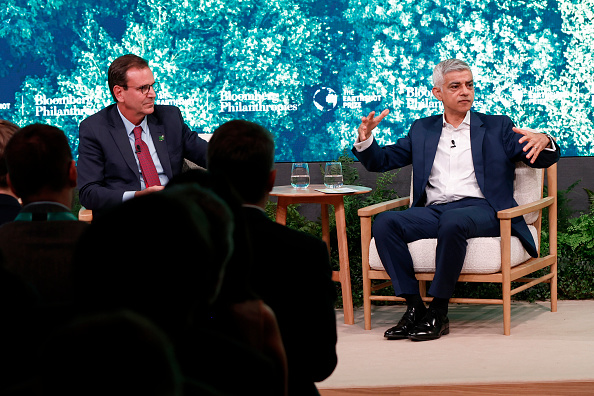
This is not the usual C40 gathering. It marks a historic moment: mayors will come together alongside other subnational and national leaders, supported by Bloomberg Philanthropies and the political leadership of Brazil, to showcase proven results and the kind of urgency that’s too often missing at the international level.

The situation we find ourselves in could not be more serious, yet some leaders are still refusing to listen. Some are rejecting the science outright or spreading falsehoods to distract us from the need for action. Others accept the facts, but simply aren’t prepared to change their ways, choosing instead to chain us to dirty and dangerous fossil fuels. Last year, global coal consumption reached record levels.
Faced with the denial and delay, it is all too easy to despair. In Brazil, though, global mayors are taking a stand. In this crisis, we see an opportunity: to build a new coalition of leaders – from mayors through to heads of state – who are prepared to do what it takes to protect the people we serve and the planet we share.
If that coalition is to succeed, the world’s cities will have a pivotal part to play. From heatwaves and wildfires to floods and rising food prices, cities are on the front lines of the climate crisis. Home to more than half of the world’s population and accounting for three quarters of its energy use, their size also gives their leaders the power to drive forward far-reaching global change. In Brazil, we’re ready to use it.
In the last 25 years, it’s mayors that have been getting on with the job, delivering bold, ambitious policies that make a difference. In London, the world’s largest clean air zone has brought levels of toxic nitrogen dioxide within legal limits – nearly 200 years before the experts said we would. In Rio, a Rapid Bus Transit system has slashed emissions while connecting hundreds of thousands of passengers to jobs, schools, and essential services every day. Through initiatives like Breathe Cities – which both of our cities participate in – we are joining forces with leaders across the globe to deliver ambitious new air quality policies, speed up decarbonisation, and build more sustainable, liveable cities.
Around the world, a chorus of sceptics are claiming that efforts to combat the climate emergency will weaken our economies and make our people poorer. These policies are proof that they couldn’t be more wrong. Combating climate change isn’t just good for the planet; it’s a chance to bolster our economies with green industries and secure, well-paid jobs for working people; to bring down bills with clean energy and save lives by protecting people from soaring temperatures and toxic air. In other words, this is a once-in-a-generation opportunity to build a greener, fairer, and more prosperous world. We must seize it.
C40 was founded twenty years ago as a group of cities dedicated to doing just that. We believed that the sheer scale of the climate emergency demanded a different kind of global response – a response that refused to recognise borders as limits on our ambition. Since then, we’ve pioneered a new model for collaboration rooted not in negotiation, but in action. Thanks to the practical, popular policies we’ve implemented there are now more than 21 million good green jobs across 81 C40 cities – evidence that we’re on track to meet our target of 50 million by the end of 2030.
They say optimism is infectious. Perhaps that’s why, in Brazil, C40 will play a bigger role on the global stage than it ever has before. At the COP30 Local Leaders Forum, hosted by Bloomberg Philanthropies and COP30 Presidency, our goal is simple. Rather than vague commitments and abstract ambitions, we’ll be demonstrating real results. By sharing what we’ve delivered and what we know works, we’ll set out a pragmatic path to meeting our climate goals – a path that offers people hope for a better future, rather than fear for the world that future generations will inherit.
For far too long, climate negotiations have moved at the pace of the slowest member, and our people have paid the price. Confronted with signs of climate breakdown all around us, it’s clear that the way we work together has got to change. In Brazil, it will. Looking back in decades to come, we believe that this year’s COP will mark a turning point: a moment when the world recognised that the cost of collective inaction is far greater than the cost of losing a few leaders along the way. The time has come for a new kind of coalition – one that is ready to move further and faster than ever before. The world’s cities stand ready to rise to the challenge and be part of that vital charge.
Content from our partners
Related