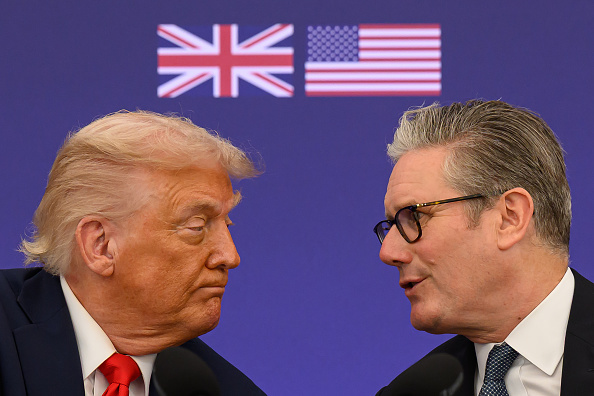
This week, we took the first step in a legal challenge which we hope will force a change of heart in government towards its pharma “deal” with the United States. Signed with Donald Trump in December, Keir Starmer heralded the agreement as a diplomatic triumph, removing the threat of US tariffs on British pharmaceutical exports for three years.
But beneath the headlines lurked a dark truth: it comes at a price that will be paid by thousands of NHS patients. Undermining the NHS’s price control mechanisms and locking in a rapid increase in spending over the coming decade will add billions every year to our drug bill. With no new funding coming from the Treasury, this cost will have to be covered from the already insufficient NHS budget.
To suggest this is any sort of deal for the UK is laughable. Why would a country with a globally admired set of policy instruments – instruments that have consistently ensured the UK gets better value for money on medicines than most – have the reform of that system dictated to it by the country with the highest prices and most deadly and dysfunctional pharmaceutical pricing system in the world?
The deal commits the UK to the weakening or dismantling of multiple elements of our carefully constructed web of access, pricing, and cost control safeguards. At the heart of this model is the National Institute for Health and Care Excellence (NICE). Established in the late-90s, NICE has been a ground-breaking body which assesses both clinical and cost effectiveness before making independent decisions on what gets approved for use on the NHS. By only approving medicines which are ‘value for money’, NICE – combined with the NHS’s power as sole buyer in the UK – effectively keeps a lid on notoriously high medicine prices and forces the biggest drug makers to negotiate lower costs.

Big Pharma has hated NICE since inception. They deeply resent the constraint it places on their profits, and the signals it gives to the rest of the world about what drugs are worth what they’re charging. They’d much prefer something closer to the US, where new medicines, protected by a thicket of monopoly rights, are priced at whatever these corporations can get away with any price they like.
Big Pharma saw Donald Trump’s return to power as an unmissable opportunity. They convinced him effective price controls in other countries are the reason prices are so high in the US. With voter anger over unaffordable medication rising, Trump and the pharma giants went into overdrive in a coordinated push to drive up drug prices across the world. The NHS and NICE were top of the list.
The industry piled on the pressure by withholding investment from Britain. By the end of 2025, a handful of corporations had pulled £2bn in what looked like a clearly orchestrated campaign. It was nothing less than an attempt by industry to blackmail the UK government. Combined with Trump’s tariff threat, and aggressive lobbying by the US ambassador, it worked: the government caved.
The US-UK pharma deal is an extraordinary text, more an agreement to pay tribute than a genuine two-way trade deal. Our government promises to increase the threshold which NICE considers ‘value for money’, as well as committing to double the proportion of GDP spent on new medicines within ten years. You will be hard pressed to find credible, independent health experts who think this is going to improve the health of the UK, or save the lives of more NHS patients.
Trump, meanwhile, simply promises not to impose medicine tariffs for three years. In reality, the loopholes in his tariff plans mean most would never have been levied anyway.
But our price control mechanism will be changed forever. Experts warn by 2036 the deal will have cost us £64bn. With no new public funding to offset the losses, health economist Karl Claxton estimates it will lead to tens of thousands more fatalities every year, predicting that, by 2033, “the excess deaths from this deal will be greater than Covid”.
Unsurprisingly, the government has tried to sneak this deal through parliament with the least possible scrutiny. Even by the standards of trade deals, which suffer from a major democratic deficit, the process of agreeing the pharma deal has been atrocious. The text was released on Thursday night before Easter weekend, during parliamentary recess. There has been no debate, no vote and we’re not even allowed to see the government’s impact assessment.
But the government did have to change the law in order to empower the Secretary of State to direct NICE to change its value for money thresholds. This undermines the independence of NICE so crucial to its effectiveness. Can we still be assured that its decisions are being driven solely by what’s best for the NHS or patients, rather than a whole range of other issues – like a drug company’s threat to close its UK operations, or keeping on the good side of whoever is sat in the White House?
This lack of accountability is the ground for our legal challenge. The government has altered the intent of primary legislation setting out NICE’s function and independence, with secondary legislation in a way we believe to be unlawful. It has done this to avoid the scrutiny it knows will shed light on the truth of this deal. Indeed, only last August a minister told parliament that “the price the NHS pays for medicines will never be on the table for any trade agreement”.
We hope that the government will back down, revoke the legislation and enable the debate and democratic process such a consequential change demands. If they don’t, we will ask the courts to reassert parliament’s rights.
It’s clear this deal must be reversed. But beyond this, the government must be honest about the health, economic, and security consequences of decades of policymaking which has been more responsive to pharmaceutical lobbyists than patients or experts.
There are alternatives that would make the UK healthier, safer, and better equipped to generate genuine innovation and benefit from the brilliance of our scientists.
This could look like the government devising a national plan for medicine research, development and production, or a proper pro-public health industrial strategy for pharmaceuticals. That will not come for free. But it is likely to be cheaper, fairer, and more productive in time compared to deepening our dependencies on the profit-driven greed of Big Pharma. We hope our legal challenge can be a small stepping stone to building a healthcare system in the interest of health, not corporate profit.
Content from our partners



Related