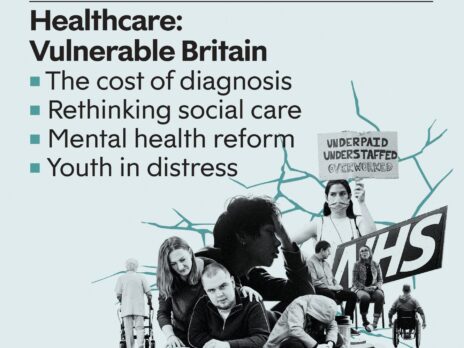
In late March, the government published the interim findings of its independent review into mental health conditions, ADHD and autism. Reactions were predictably polarised.
For some, the review appeared to validate fears that ministers were preparing to question the legitimacy of rising diagnoses. Others argued it showed a system being gamed by those seeking clinical recognition as a route to increased support and welfare provision.
The review, led by the clinical psychologist Professor Peter Fonagy, arrives at a moment when demand for both mental health and neurodevelopmental services has surged beyond what the NHS can comfortably absorb. Waiting lists for autism and ADHD assessments stretch into years in some parts of the country, while referrals to children’s mental health services remain far above pre-pandemic levels.
At the centre of the review is a politically explosive question: why?

The findings are nuanced enough to frustrate significant numbers on both sides of the debate. Fonagy does not argue that rising diagnoses are illegitimate. Instead, the report presents a system in which medical recognition is increasingly the price of accessing any help whatsoever.
“When support is tied tightly to diagnostic labels, demand for diagnosis will rise,” Fonagy wrote. “When early, accessible help is limited, difficulties escalate.”
One finding is that children and young people are increasingly pushed towards pursuing diagnoses in order to access support. That language was seized upon by elements of the right-wing press. “The review does not conclude that children are being ‘incentivised’ to seek diagnoses,” Dr Amanda Roestorf, director of research at Autistica, said of more sensationalist responses. “It highlights that demand is increasing in a system where diagnosis is the main path to support. The real issue is that people are waiting too long. Many are left without help for months or years, which can make things worse.”
That creates a chain reaction across the healthcare system. “We are concerned that people are increasingly being diagnosed in educational settings or self-diagnosing because the system that should be there to help them is overwhelmed,” acknowledged Dr Lade Smith, president of the Royal College
of Psychiatrists.
“They should be able to access support which can prevent their condition from deteriorating at much earlier stages from more appropriate social services, as well as assessments and care.”
Demand has risen sharply across multiple services at once: CAMHS, adult mental health care, autism pathways and ADHD assessment services. NHS waiting lists have struggled to keep pace. Private diagnosis providers have expanded rapidly through Right to Choose pathways.With diagnoses having become increasingly tied to access, diagnostic services now carry pressures far beyond medicine alone.
The review cites the erosion of earlier forms of support. Youth services have disappeared from many communities. Educational psychology services are overstretched. Social care systems remain under severe pressure. Schools are increasingly expected to manage complex emotional and behavioural needs with shrinking resources.
Under those conditions, clinical diagnosis can begin to function as a form of institutional recognition: proof that somebody’s difficulties are serious enough to count.
“The main message is that a whole systems approach is required across society – not just the NHS,” said Dr Sameer Jauhar, a clinical associate professor at Imperial College. “While we have encouraged people to talk about distress and mental health, we need to be more clear on what this actually means, and how this can be tackled at individual, family, school and societal levels.”
Fonagy’s findings suggest we otherwise risk creating an increasingly medicalised system in which distress, disability and social difficulty become channelled through healthcare services because other routes to support have weakened.
“It is positive the review places emphasis on shifting to a model that responds to people’s needs, rather than one that is overly dependent on diagnosis to unlock support,” said Alexa Knight, director of policy and influencing at the Mental Health Foundation. “This should mean appropriate support can be offered across the spectrum of distress, rather than dividing people into deserving or undeserving or waiting until issues become more acute.”
But headlines around people being “incentivised” to seek diagnosis have created tangible tension, even if they do not fully reflect the spirit of the report’s findings. “We have been concerned from the outset that this review could fuel the increasingly polarised debate about autism,” acknowledged Mel Merritt of the National Autistic Society. “Unfortunately, we are now seeing exactly that. Too much attention is being placed on questioning people’s motivations for seeking a diagnosis, instead of recognising the very real distress that people and their families experience.”
The politics surrounding the review have heightened that sense of conflict. Ministers have increasingly linked long-term sickness and mental ill-health to economic inactivity and pressures on the welfare system. Critics fear debates around “over-diagnosis” could easily slide into arguments about benefit dependency or exaggerated illness.
Wes Streeting said when launching the review that the government needed “an evidence-based understanding” of rising diagnoses and mental health demand. But the report lands in a country where trust in public systems is already fragile.
At the same time, NHS clinicians warn that the current model is becoming unsustainable. Mental health services remain under immense pressure, particularly for children and young people. The review suggests failures in early intervention may be pushing more people towards specialist clinical pathways later on.
The report stops short of recommending sweeping restrictions on diagnosis. Instead, its interim conclusions point towards earlier intervention, broader community support and less reliance on specialist medical pathways alone. The implication is that many problems currently arriving at the NHS in acute form might have been managed earlier elsewhere.
That would require investment far beyond psychiatry clinics. It would mean rebuilding youth services, improving school support, expanding community mental health provision and reducing the barriers people face before receiving help. It would also require a political willingness to treat mental ill-health and neurodevelopmental conditions as social and economic questions as much as clinical ones.
What makes the Fonagy review so politically combustible is that it touches a deeper anxiety inside modern Britain: too many people feel that support only appears once their distress has become medicalised. Diagnosis has become not just a clinical process but a route into legitimacy.
The review’s critics fear ministers may ultimately focus on reducing demand rather than rebuilding support. Its defenders argue the report is simply describing a system that has become increasingly reactive and crisis-driven. Both sides agree on one thing: the status quo is failing. And that failure is no longer confined to mental health services. It reaches into schools, workplaces, welfare policy and the wider debate about who receives help in modern Britain – and who is left to struggle without it.
Content from our partners



Related