
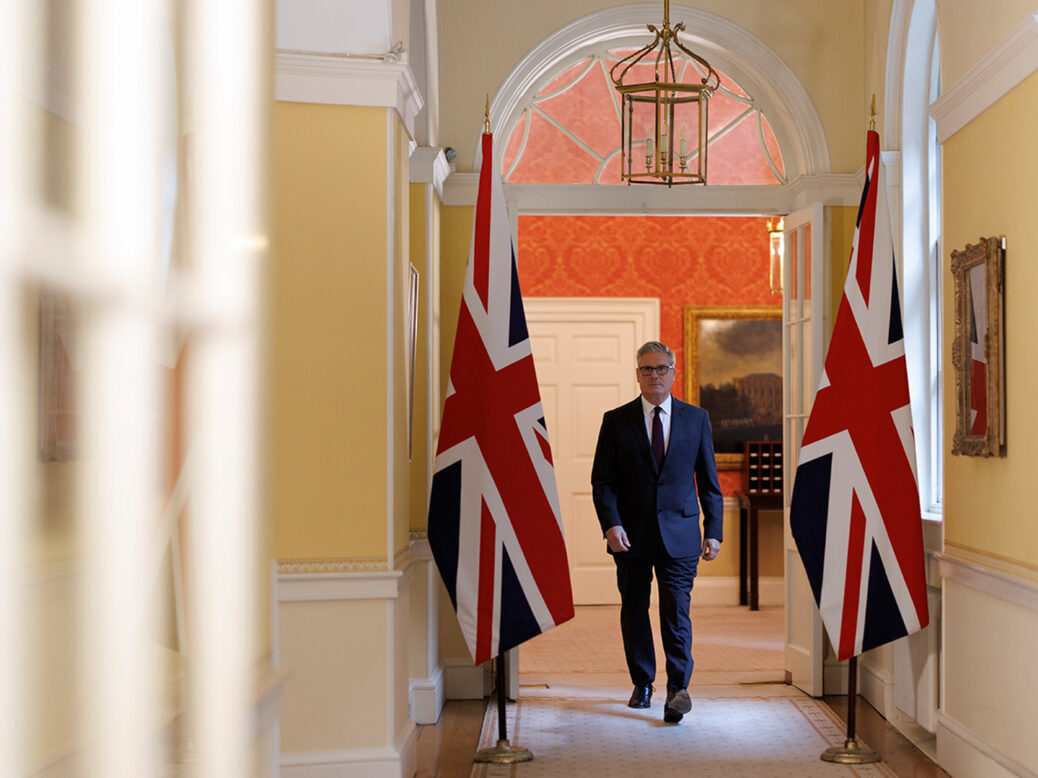
As Labour plotters circled Harold Wilson in 1969, the prime minister repelled them with his wit: “For the benefit of those who have allowed themselves to be carried away by the gossip of the past few days, I know what is going on. I am going on.”
Keir Starmer is unlikely to be so pointed in his Labour conference speech – he has served one year in No 10 to Wilson’s five – but the subtext will be the same: I am going on.
After recent events Starmer could be forgiven for despondency. But those who know him best speak instead of a man “fired up”, rarely more energised than when his back is against the wall. Starmer, a cabinet minister points out, has outlived numerous predictions of his political demise: the Hartlepool by-election and “beergate” among them. Why should he now accept the consensus that his premiership is doomed?
Yet the Prime Minister cannot simply shrug off his woes as “midterm blues”. Labour’s average poll rating now stands at just 18 per cent – 14 points behind Reform and two points behind the Conservatives – while Starmer’s own approval rating has reached a nadir of -50. For the first time, Ipsos polling shared exclusively with the New Statesman shows, voters are now split on whether Starmer or Nigel Farage would make the best prime minister (30-30). A restive public increasingly views Farage as a potential occupant of No 10 rather than merely a rebel leader.

Starmer understands the gravity of this threat and is preparing to confront it. He will use his conference address – work on which began at Chequers over the summer with former aide Paul Ovenden and his chief speechwriter Alan Lockey – to offer a “patriotic” vision of “national renewal” in contrast to Reform’s politics of “decline”. A Downing Street often accused of chasing Farage’s tail has no hesitation in naming what it believes he now represents: “ethno-nationalism”. As one aide remarks: “In the end, whatever intellectual coats the populist right put on, they’re always going to be blaming immigrants for decline, telling people that they’re losing because others are winning.”
Does this herald a liberal turn on immigration? Far from it. Starmer will also use his speech to assert that border control is not an optional feature of social democracy but fundamental to it. Perhaps the best exponent of this argument is Shabana Mahmood, the new Home Secretary, who told a recent staff meeting: “We can only be a tolerant, open, generous country when we are able to determine who can enter and who must leave. And I know that a country that can control its own borders is a far safer country for someone who looks like me.”
For Starmer and his team, the first deportations to France under the “one in, one out” scheme are part of a defining mission: to “prove that the state can work again”. And, crucially, that it can serve ordinary people rather than vested interests. The new Hillsborough law, which will impose criminal penalties on public officials who cover up state-related disasters, was driven through in the face of internal resistance from Whitehall. Here is an example of what Morgan McSweeney, Starmer’s chief of staff, meant when he spoke of “insurgent government” in the days after Labour’s election victory. One cabinet minister describes the Hillsborough bill as a “real shifting of power between the individual and the state”.
Back in July, after a year in government, Starmer lamented to his cabinet that Labour gets “96 per cent of things right” but focuses on the “4 per cent it gets wrong” (the opposite, he said, of the Tories). Rachel Reeves’s speech, written by the bookish social democrat Nick Garland (who crafted her Mais lecture), will seek to reaffirm Labour’s achievements while emphasising that £300bn of extra public spending was only possible because “we have been trusted by the country but also by the markets to live within our means”. Reform, she will warn, poses a threat to businesses as well as voters, singling out Farage’s vow to repeal the new EU trade deal as evidence of his anarchic intent.
During the New Labour years, at the height of the feud between Tony Blair and Gordon Brown, their conference speeches came to resemble a debating competition. But Starmer and Reeves are aligned: in the face of populist opponents from left and right, both insist that Britain is not “broken” and that, as Margaret Thatcher had it, “there is no alternative”.
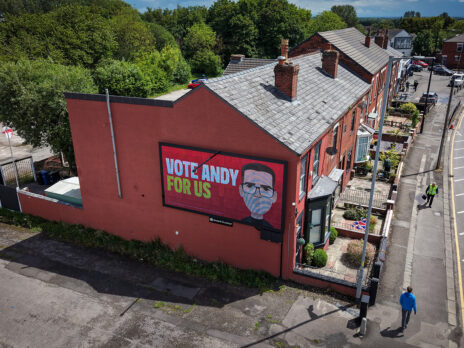
What of those who maintain there is? The dissenting voice at Labour conference will not come from within the cabinet but outside of it: Andy Burnham (who enjoys an Ipsos rating of +9 to Starmer’s -33, making him the most popular politician in the country). His soft-left pitch is one that the Prime Minister’s confidants now take seriously enough to confront.
“This isn’t about leadership of the Labour Party: if we were in opposition we could do that kind of thing,” says one Starmer ally of the prospect of a Manchester by-election followed by a convulsive leadership contest. “National security is dependent on a government that is performing; people’s lives are on the line, you can’t just take your eyes off the ball.”
This, then, is Starmer’s riposte to both Farage and Burnham: you are not serious people. His recovery depends on persuading both country and party alike that he and his team are.
[Further reading: Inside the Tony Blair Institute]
Content from our partners


Related
This article appears in the 25 Sep 2025 issue of the New Statesman, “Are you up for it?” – Andy Burnham’s plan for Britain
Join the debate
Subscribe here to comment