
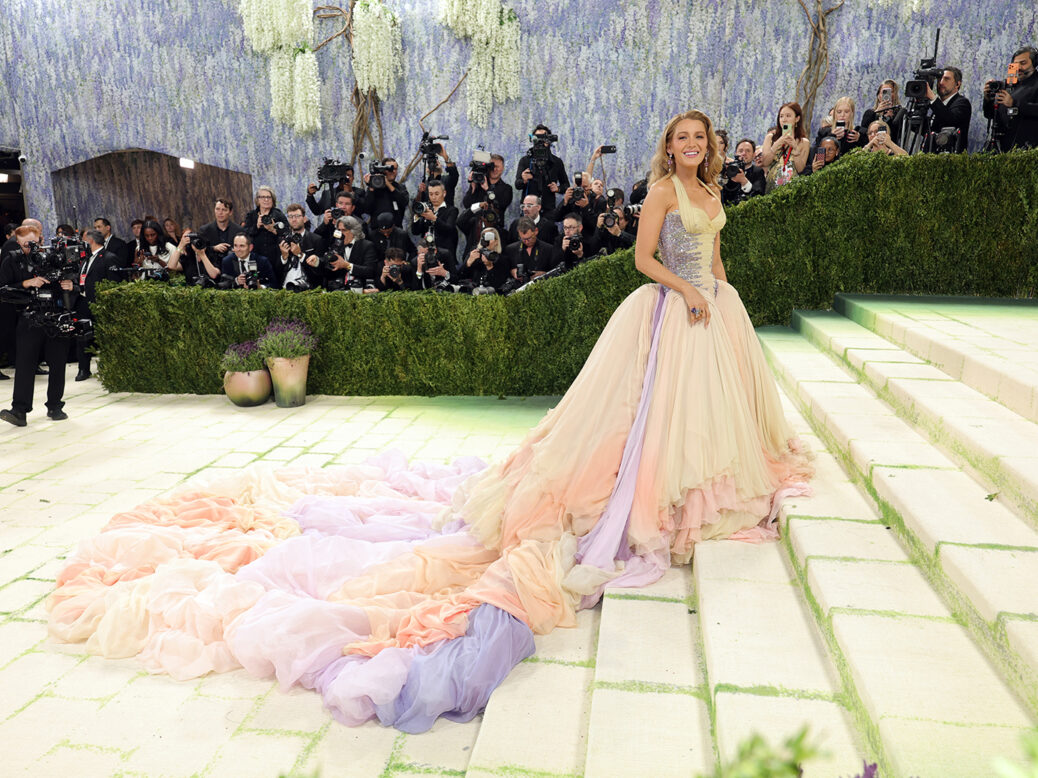
It has ended with them. “Blake Lively got absolutely no money in shocking Justin Baldoni lawsuit settlement,” read a Page Six headline 5 May, although you only had to read to the first sentence to learn that Baldoni also got nothing. Lively descended on this year’s Met Gala, which was held 4 May, in an archival 2006 Versace dress, dragging a 13ft-train and acting as if nothing had ever happened. Showbiz reporters are breathing a sigh of relief. The case lasted nearly two years, cost each millions of dollars, and eventually became too difficult to follow unless you were glued to social media.
The discord began when the two worked together on It Ends With Us, the blockbuster 2024 adaptation of Colleen Hoover’s TikTok-famous romance-cum-abuse novel. Lively both coproduced the film and starred as a florist inexplicably named Lily Bloom. The actor-director-producer-podcaster Baldoni helmed the production and starred as Lily Bloom’s abusive boyfriend, Ryle Kincaid. At the end of 2024, Lively sued Baldoni for sexual harassment, alleging a hostile work environment during production. She accused him (as well as his production company Wayfarer Studios and others behind the film) of subjecting her to details of his sex life, adding extra sex scenes that were reportedly not in the script, and employing a crisis management firm that had “embarked on a sophisticated press and digital plan” against her.
In December 2024, the New York Times reported on correspondence between Baldoni and executives of the crisis management firm he recruited, The Agency Group (often referred to as Tag PR). Findings seemed to suggest the firm was astroturfing, or planting defamatory narratives about Lively online and trying to pass them off as remnants of organic discussion. (An attorney for Wayfarer said in a statement to the New York Times at the time that the studio, its executives and public relations representatives “did nothing proactive nor retaliated” against Lively.) “Socials are really really ramping up…” said Tag’s founder, Melissa Nathan, in a leaked text. “It’s actually sad because it just shows you [that] people really want to hate on women.”
Meanwhile, Reddit’s female-focused, left-leaning gossip fora were filling up with Lively detractors, many of whom seemed keen to highlight vulnerabilities in her public persona. Lively was a denizen of Colleen Hoover’s America, an enclave of white, heterosexual “basic bitches” who had yet to grasp the political trajectory of the past five years. Feminism was on a Marxist-lite trajectory, but Lively was a trousered “girlboss”, shilling her haircare and ready-to-drink cocktail brands, Blake Brown and Betty Booze. She’d allegedly inserted herself into the MeToo movement without grasping the extent of her own wealth and privilege, which seemed to trump everything actually going against her.

The right caught the same drift. Pundit Megyn Kelly, who has been covering the lawsuit, spoke unfavourably about Lively at last year’s Conservative Political Action Conference (CPAC). The veracity of the case’s details were unclear, but the issues they represented were leaking into real women’s lives. “As a mother of three boys,” one commenter wrote under Kelly’s CPAC speech, “this case is important to me… this is literally one of my biggest fears for any of my sons to wrongfully be accused from a narcissist woman and destroy their lives simply because they can get away with it because we need to believe all women no matter what. We need to change that general perspective.”
These alleged PR campaigns are morally questionable and might be growing more common. In March, Chappell Roan was accused of having a member in her security team involved in an incident that left Jude Law’s daughter “extremely shaken” at a hotel breakfast in Brazil. (Roan apologised, and added that the man was not her personal security, and that she didn’t see the girl.) A later report found that some of the most prolific online commenters on the subject were bots. Meanwhile, other reports found a stream of bot-led commentary seeking to align Taylor Swift with Nazism. An investigation by Tortoise found evidence to suggest that Amber Heard was subjected to an organised trolling campaign during her defamation case with Johnny Depp.
We have created the perfect environment for all of this. Lively’s case suggests that no amount of fame or power can shield a woman from such circumstances. Talking about other people behind their backs is pleasurable and provides a sense of belonging. Yet our urge to justify it in Manichaean moral terms – to paint our viciousness as righteous – makes the possibility of smear campaigns so much easier. Lively has been hounded by both the right and the left, quite possibly for no reason. More women will suffer unless we let gossip be just that.
[Further reading: Beef season two: Rich people are, like, so gross]
Content from our partners



Related

Join the debate
Subscribe here to comment