
One of the most pressing concerns after the First World War was the problem of “surplus women”. The census of 1921 confirmed the numbers: there were almost two million of them, creating “a question so immense and so far-reaching that few have yet realised its import”, as a Times editorial warned. How was this newly enfranchised mass to be supported, occupied, or – perhaps hardest of all – placated?
Psychologists predicted dire outcomes from a surge of spinsterism, including the spread of “false views of life” by hordes of unmarried female teachers and a decline into “psychic sclerosis” for the women themselves, leading to possible criminality and lunacy. The rhetoric used against virgins was of rotting fruit, withering leaves and dry stream-beds, but the sexually voracious unmarried woman was also terrifying, and the woman who couldn’t care less was of course the worst. There seemed to be a lot of those; with the chances of finding husbands so drastically reduced, the pressure to marry was off, and suddenly a whole temperament – that of the contentedly unmarried woman – was able to “come out”.
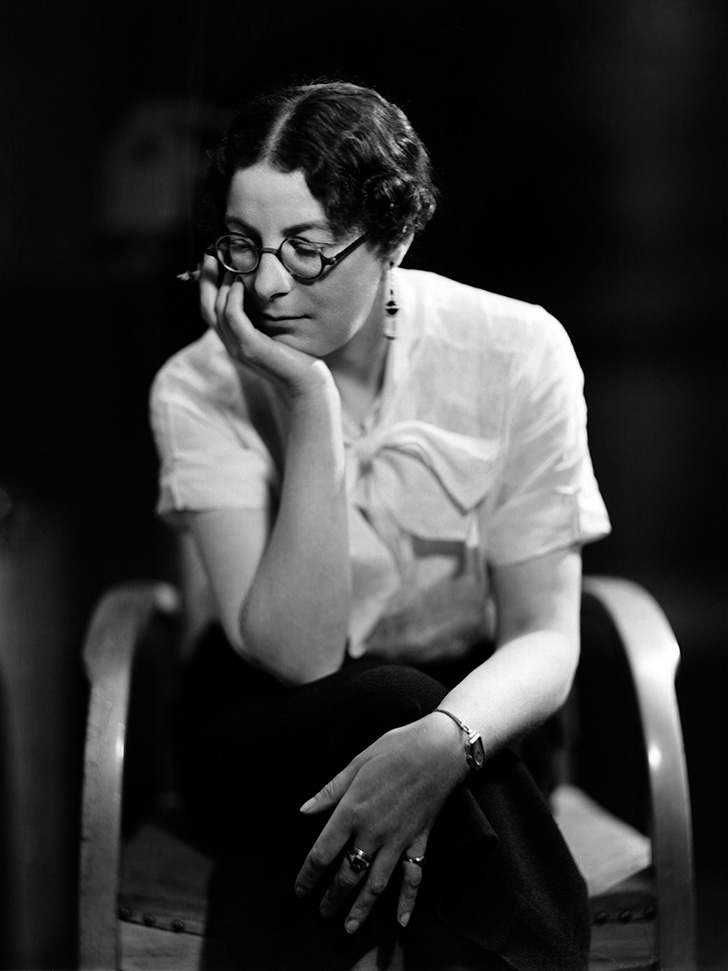
Into this defining moment stepped a debut novel by a 33-year-old musicologist and poet, Sylvia Townsend Warner, that caused a sensation in the first months of 1926. Lolly Willowes is the story of an overlooked middle-class spinster who passes through her marriageable years in profound indifference to the opposite sex, and whose nature is so subdued that although she has a modest income from her father’s will, and could, theoretically, “make a home for herself and take up something artistic or emancipated”, she prefers not to. What she craves is solitude, the freedom simply “to sit on her doorstep and think”, and to achieve it she ends up pledging her soul to the devil – perhaps the strangest answer to the woman question yet proposed.
Lolly is well into middle age when the main action of the book takes place and has been passed between her brothers’ households all her adult life, where she was vaguely useful. Her conversion to witchcraft is slow, coming at her through gloomy but powerful intimations, and a sort of out-of-body experience in a Bayswater greengrocer’s shop: “Her mind was groping after something that eluded her experience, a something that was shadowy and menacing, and yet in some way congenial.” When she announces to her family that she is going to live on her own in a remote Chilterns village, they dismiss it as capricious – “her remarks were as a rule so disconnected from the conversation that no one paid much attention to them” – but when she persists, they object strongly. “What you want is absurd,” her brother tells her, to which Lolly replies: “It’s only my own way, Henry.”

At first her life in Great Mop is peaceful; the neighbours are weird but it is the place that drew her, and a thrilling, “unhallowed” power in nature, which drives through the book and remains inexplicable. “Life becomes simple if one does nothing about it,” she thinks, only realising after she has been scratched by a scrawny kitten that in fact the village is full of witches and warlocks, and the kitten is her familiar. “She, Laura Willowes, in England, in the year 1922, had entered into a compact with the devil.”
Even as a witch, though, Lolly seems doomed to social failure. She hates her first witches’ sabbath, which reminds her of the Primrose League. Other people are always the problem, whether witches or not; when Lolly’s nephew comes to stay, the spirit of the place withdraws. Satan, when she does meet him, alone in the woods, is a cynic and an opportunist, “a little jaded by the success of his latest Flanders battue”, greedy for souls but profoundly indifferent to the outcome of any human activity.
A thoroughly surprising book, then, with a disconcerting message cloaked in charmingly witty prose. Who was the author? Like her heroine, Sylvia Townsend Warner was a rather solitary figure, known to the Bloomsbury Group through her friendships with the sculptor Stephen Tomlin and writer David Garnett, but not in their inner circle, nor wishing to be. At a dinner in May 1925 given for her by John Maynard Keynes to mark the publication of her first book of poems, Warner met Virginia Woolf, whose Mrs Dalloway had just been published, too; in her diary Woolf noted the younger woman “indeed… has some merit – enough to make me spend 2/6 on her, I think”. A cautious first judgement that never matured into friendship.
But one guesses that Woolf kept alert and read Lolly Willowes the following year, for her classic polemic, A Room of One’s Own (published in 1929), owes much to it, not just in incidentals such as the preconditions for female autonomy being “money and a room of her own”, but in the idea of trying to popularise feminist polemic at all. Lolly’s long statement to Satan at the end of the book (which Warner added at a late stage) sets out a clear and universal vision:
When I think of witches, I seem to see all over England, all over Europe, women living and growing old, as common as blackberries, and as unregarded. I see them, wives and sisters of respectable men, chapel members, and blacksmiths, and small farmers, and Puritans. In places like Bedfordshire, the sort of country one sees from the train… There they were, there they are, child-rearing, house-keeping, hanging washed dishcloths on currant bushes; and for diversion each other’s silly conversation, and listening to men talking together in the way that men talk and women listen. Quite different to the way that women talk and men listen, if they listen at all. And all the time being thrust further down into dullness when the one thing all women hate is to be thought dull… If they could be passive and unnoticed, it wouldn’t matter. But they must be active, and still not noticed… One doesn’t become a witch to run round being harmful, or to run round being helpful either, a district visitor on a broomstick. It’s to escape all that – to have a life of one’s own, not an existence doled out to you by others.
Warner had been influenced by Margaret Murray’s anthropological study The God of the Witches, but unsurprisingly it was the satanism in Lolly Willowes that grabbed headlines, along with Warner’s casualness about it. She looked conveniently witchy, “dark, dripping with tassels”, as Garnett described her, and, asked how she knew so much about witches, said, “Because I am one.” She clearly enjoyed toying with the “bugaboo surmises of the public” that the book satirises, and suggested to one journalist that the modern witch might use a vacuum cleaner instead of a broomstick for flight. There was going to be a revival of the craft, she declared, but without tiresome trials and burnings; “The government will present [witches] with OBEs instead. Witchcraft is not evil. It does not do half as much harm as philanthropy.” Under the stirring headline “Vicar denounces tendency”, the incumbent of St Jude’s, Hampstead, fought back against this with the warning that if there really was to be a renaissance of witchcraft as Miss Warner claimed, “more asylums will have to be built to hold the women who practise it”.
The book did brilliantly, especially in America, where it was the first ever Book of the Month Club choice. Warner went on to write six more novels, including Summer Will Show, set in the 1848 Paris revolution, and The Corner That Held Them, a tour de force about the Black Death. She also had a long association with the New Yorker, but was never so famous again. Her non-conformity always seemed to work against her – no two books were the same – but she also deliberately withdrew from London literary circles in 1930 when she set up home in Dorset with the young poet Valentine Ackland, and when later both women became active and ardent communists. She was in eclipse towards the end of her life in the 1970s, and when I tried to buy her works in the early 1980s, only one bookseller had heard of her, and that was as the author of something called “Lonely Willows”.
She’s back in print now, and ready to be recognised. One hundred years on, readers might enjoy the fantasy elements in Lolly Willowes, while understanding they are a bit of a distraction. This is a novel of the emptied interwar world, and women’s perilous position in it: “That’s why we become witches: to show our scorn of pretending that life’s a safe business.” It is also, as recent scholars have pointed out, a very queer book, with its emphasis on different forms of transgression. Much in it remains mysterious; the two scenes when the landscape seems to be calling out “Now! Now!” with overwhelming urgency: are these wake-up calls to spur Lolly into action, or desperate statements of fact – “This is it!”? Does Lolly die at the end? (I used to think not, but don’t know any more), and does it matter?
The first person to read Warner’s work, the publisher Charles Prentice, found “an eerie obscure force of emotion” in it “which comes thrusting up from some profound depth”. He was writing a memo about Warner’s poems, but it’s equally true of Lolly Willowes, which he then saw through the press. That “curiously compelling power” is present on every page of what in retrospect looks like one of the most eloquent and unanswerable novels of its century.
Claire Harman is the author of “Sylvia Townsend Warner: A Biography” (Penguin)
[Further reading: Francisco de Zurbarán gave form to faith]
Content from our partners



Related


Join the debate
Subscribe here to comment