
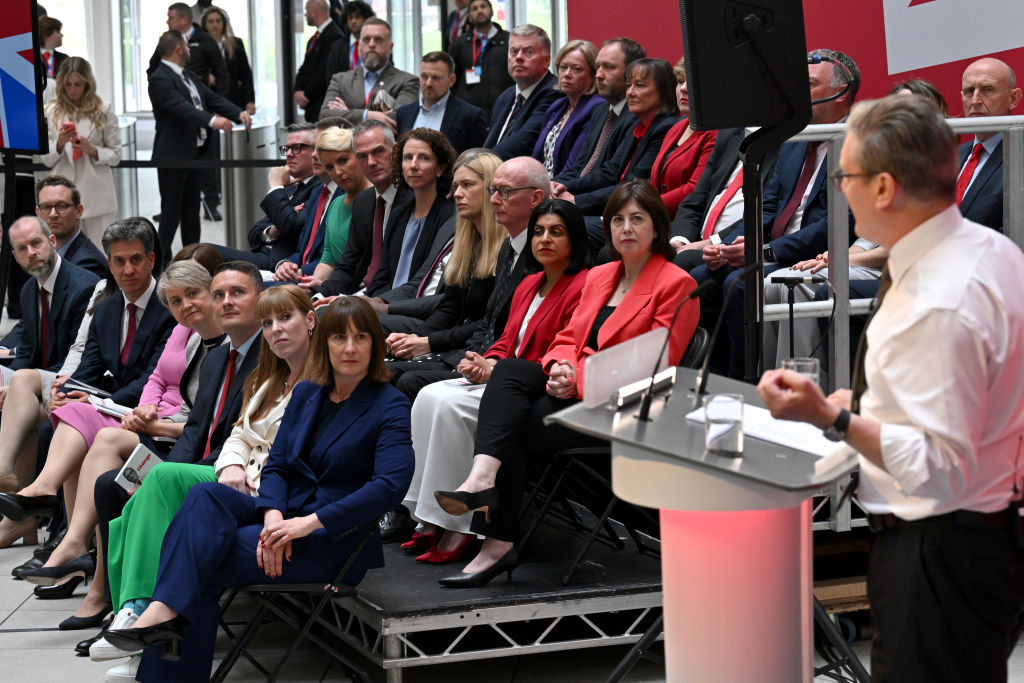
The truth of the matter is this: unless Keir Starmer steps down, the field of credible contenders to replace him will remain far smaller than the number of people interested in the job. Despite the Prime Minister’s historic unpopularity with the public, he is still more popular with the party faithful – at the last count – than most of his challengers. Anyone coming for the crown would need the backing of 81 Labour MPs to secure a place on the ballot. While there are certainly more than enough MPs who now want Starmer either to go immediately or to announce a timetable for departure, there is no guarantee that 81 or more would unite behind a single candidate.
When – or if – that challenger emerges, they will then face Labour’s rank and file, who, as we learned a decade ago, are often a very different kettle of fish from their colleagues in the Commons.
Firstly, a slim plurality – and in some polls a majority – now want their Labour leader to step down at some point in the near future. Of the 46 per cent who wanted Starmer to go, most preferred that it happen after the recent May elections. Those figures came from Survation polling conducted in April, and it is likely that sentiment has only hardened since.
But who would win?

If the parliamentary party were able to rally 81 or more MPs behind a single challenger – deciding that Starmer needed not merely to be nudged aside but openly challenged and dethroned – then the list of people capable of dethroning him would still be relatively short.
The first is the man who has yet to secure a route back into parliament: Andy Burnham. His exclusion from the Gorton and Denton candidacy likely cost Labour a by-election victory, and perhaps with it hundreds of council seats to the Greens and Reform. Burnham, however, appears far from finished. Amid rumours that ageing incumbent MPs could vacate their seats to allow him to contest a by-election, it is clear the Mayor of Greater Manchester believes urgency should define his next move. If he were to return to parliament successfully, it would almost certainly precipitate a leadership challenge to Starmer, one Burnham would likely win.
In such a contest, some 53 per cent of members would back Burnham compared with 37 per cent for Starmer. Notably, a majority of those who voted for Starmer in 2020 would now switch sides to support Burnham. Longer-serving members are especially emphatic in their preference for the Manchester mayor. It is only among those who joined since 2020, and among “occasional” campaigners, that Starmer retains a clear advantage.
But suppose Burnham fails – either because of opposition within the party and the National Executive Committee, or because external opponents, particularly the Greens, recognise his political value and would reportedly “throw the kitchen sink” to defeat him in a by-election.
Wes Streeting, whose allies and ministerial supporters in the Commons have reportedly been among the loudest voices discussing Starmer’s succession, would fare poorly with Labour’s rank and file. Just 30 per cent would choose Streeting against Starmer’s 42 per cent.
Ed Miliband – viewed by some as a more palatable fallback candidate for Burnham supporters if Burnham himself cannot make it back to Westminster – would lose narrowly, by 44 per cent to 41 per cent, though some earlier polling suggested he might in fact beat Starmer. In practice, such a contest may simply be too close to call.
Lucy Powell? Not a chance. Shabana Mahmood? Likewise. Angela Rayner, however, is a different matter altogether. She would inherit many of Burnham’s supporters as their second choice. In a head-to-head contest, she would defeat her former ally by 48 per cent to 37 – bringing the Starmer-Rayner pact of 2020-25 to a theatrical conclusion.
But a few notes of caution.
The figures cited here come from Survation polling conducted on behalf of LabourList in February, before both the Gorton and Denton debacle and Labour’s historic losses in May. That means the electoral landscape among party activists may now be even more volatile. If further defeats sharpen members’ minds, almost any plausible challenger could find a clearer path to victory.
The second and third caveats concern the manner in which any challenge to Starmer unfolds. As I write, Labour members on private WhatsApp groups are lamenting the spectacle of events, noting the striking – and embarrassing – resemblance to the Conservative leadership chaos of 2022. And, as Persuasion UK director Steve Akehurst argues, there is a risk analysts are underestimating Labour members’ instinctive loyalty to their leaders.
Where Conservative members were often ruthless in turning on leaders such as John Major, David Cameron or Rishi Sunak after electoral defeat or political rupture, Labour’s membership has historically been more restrained. Neil Kinnock was granted additional time after 1992. James Callaghan, similarly, was not immediately discarded after 1979. That relentless pursuit of power at all costs has never sat quite as comfortably with Labour’s largely middle-class activist base.
With the wrong – or perhaps simply the less-than-perfect – challenger selected by the parliamentary party, Starmer’s career may yet survive. Most members now regard him as an electoral liability in the face of the far right. Most members want him gone. But not at any cost.
[Further reading: Keir Starmer will be remembered as a pub quiz question]
Content from our partners



Related

Join the debate
Subscribe here to comment