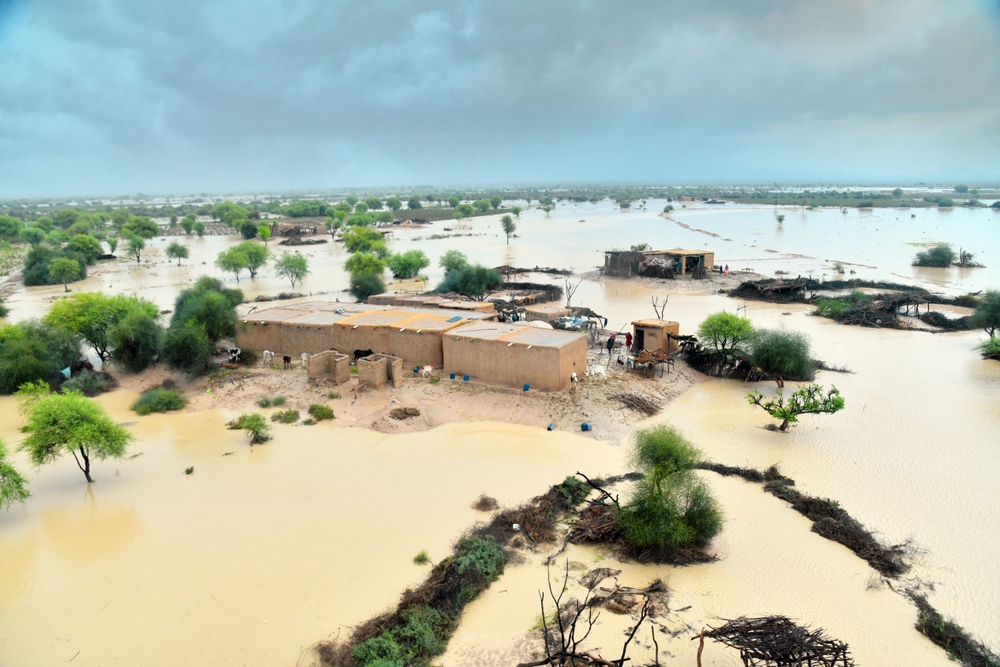
In 2021, researchers at the World Bank assessed the risk to Pakistan’s economy from climate change. In the worst case – a 4°C global temperature rise by century’s end – the economy was projected to lose up to 10 per cent of GDP by the end of this century.
Then, less than a year after the assessment was published, vast floods overcame the country, supercharged by climate change. When Pakistan’s government came to account for the damage, they found the hit to GDP had been more than 10 per cent. What the World Bank researchers had anticipated would come in 80 years had arrived in just one. This episode – which is recounted in Overshoot, a new podcast documentary on climate change – starkly highlights the increasing gap between assessments of the economic damage that will be wrought by climate change and the reality.
This gap also exists in the UK. It is particularly clear in financial markets. For example, in 2023, the Carbon Tracker Initiative found that the UK pensions industry is systematically underpricing the impact of climate damages on member portfolios. This finding was set out in the organisation’s groundbreaking Loading the DICE Against Pensions report, which shows how pension funds are risking the retirement savings of millions by relying on economic research that ignores critical scientific evidence about the financial risks of climate change.
Subsequent research has shown that this flawed investment advice is being widely relied on by local government pension scheme (LGPS) funds, as well as within the private sector. For example, English local authority pension funds routinely anticipate that, in a worst-case 4°C scenario, the impacts on portfolios will be minimal – around a 1 per cent reduction in annual returns over a 40-year period – and assuming ongoing GDP growth. Such a fall would be highly disruptive. Yet it is incongruent with the impacts of a 4°C scenario anticipated by scientists, which includes widespread damage to the food system, mass migration and the collapse of entire ecosystems. As the UK Institute and Faculty of Actuaries has warned, this would cause profound destabilisation of financial markets, with severe impacts on pension fund portfolios.

If this situation is allowed to continue, the consequences will be severe. We are concerned about three particular areas.
First, if the inadequacy of risk assessments is allowed to persist, they will be increasingly shown up by the reality of climate change, as in the case of Pakistan. This will surprise investors, who had been told the economic damage would be relatively small or restricted to developing economies. As ever in financial markets, nasty surprises lead to panic and to crises, wiping out value. The Pension Policy Institute has valued total UK pension assets at £3.2tn and, as such, an absolute cornerstone of the financial eco-system. So, the underestimation of climate risk by these firms clearly represents a threat to financial stability.
Second, the analytical models widely used by financial intermediaries (such as investment consultants) and many central banks also fail to capture the profitable upside for clean energy technologies. In the models, they are more expensive and less profitable than they have turned out to be. Clients like pension funds are therefore being told that the impacts of climate change will be small and that the opportunities from the now-exponential success of the low-carbon economy are also small. The opposite is true.
No wonder financial institutions might not feel incentivised to reallocate capital from the high- to low-carbon economy, as per the Paris Agreement. This is a particular problem for the UK government as it threatens to limit the transformative potential of their green growth agenda.
Third, continued inaction means that our ability to act could be steadily eroded. Research from the Strategic Climate Risks Initiative shows that “derailment risk” is growing. This is the risk that climate action is increasingly undermined by climate consequences. For example, escalating climate-change-driven disasters in low-income countries are sapping government budgets, crowding out funding for adaptation and increasing vulnerability. So, when the next disaster strikes, it costs more, creating a vicious cycle, which can derail climate ambitions. Similar dynamics are emerging in higher income countries, like how the dislocation caused by climate disasters in Europe has in some cases boosted the influence of climate-denying political parties. As the world heads beyond 1.5°C, financial institutions will have to manage the worsening consequences of climate change while also contributing to tackling its causes.
The UK has an opportunity to lead on the financial risks of climate change. In 2015, Mark Carney, then governor of the Bank of England, made a landmark speech warning of the threats to financial stability from climate change. Ten years later and the threats have never been greater, yet financial firms and regulators are not acting commensurately. Rather than a looming tragedy of the horizon, climate risk is now a clear and present danger for financial stability.
Although cross-governmental coordination has improved, overall financial policy and regulation is still failing to align with the UK’s ambitious net zero goals partly because there is no systemic risk approach. So, government and regulator risk assessments that inform financial institutions should fully include systemic climate risks. To better support green growth, the Treasury could do more to ensure that climate risks – including a discount on fossil fuel assets – are reflected in the capital requirements for banks to support low-carbon investments.
The Bank of England could initiate a review of monetary policy, with a starting point of the increasing frequency of cross-border climate-related shocks and the consequences for inflation. The Bank could also undertake and publish a stress test on plausible but extreme climate scenarios, including tipping points. The government should publish a response to the 2022 consultation on governance and reporting of climate risks in the LGPS.
In doing so, it should recognise how and why LGPS funds continue to underestimate the impacts of physical climate risk on their investment portfolios, as upcoming Carbon Tracker research will set out. Urgent policy action is needed. Otherwise, we face the prospect of derailment risk progressively undermining our agency. This should concern investors, policymakers and citizens alike.
Related