

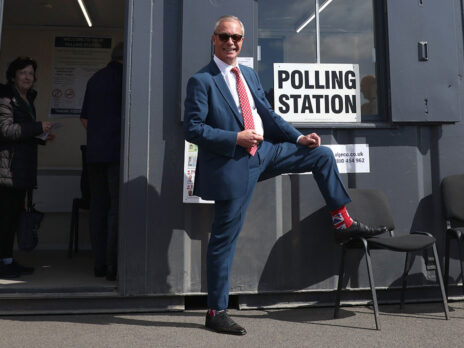
The results of the local elections are rolling in. Nigel Farage and Reform UK are on the rise. Labour’s electoral vote is collapsing in England, Scotland and Wales. Britain’s historical political realignment continues. Speculation in the media and parliamentary Labour Party about Keir Starmer’s future will reach fever pitch over the following days. But, for much of the electorate, changing Labour’s leader is a personality contest that will confirm the irrelevance of Westminster politics in their lives.
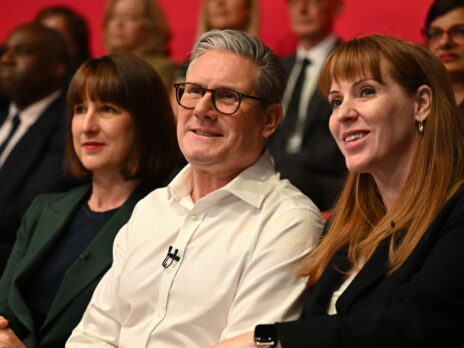
Keir Starmer embodies the failure of government in Britain. He is a Prime Minister in office but not in power. He has no political narrative to explain himself and his aims to voters. Without these, the government cannot orchestrate its own communications, its ministerial teams or its policy development. Nothing adds up except its disorientation.
The Prime Minister is proving to be the nemesis of the Labour Party, but the problem goes beyond his own political failings. Those who wish to replace him need a coherent alternative, a clear political position that will anchor them in the storm of events and crises and provide a political programme to govern by. All the leadership contenders – Wes Streeting, Angela Rayner and Andy Burnham – share the same problem as Starmer: they don’t have one.
We are living in the aftermath of the liberal market order which has been the governing consensus for over three decades. Its ideology and policy solutions no longer work in the emerging new world order characterised by great power rivalry, Maga nationalism and the rise of China. Its technocratic and incremental style of government has only reinforced the failing status quo in Western capitalist democracies. Labour and the Conservatives upheld this consensus and they are now trapped in the past, drained of energy. A generation of politicians, schooled in managerial politics, are unable to enact the reforms the country needs. They flounder in an unfamiliar and threatening world as the old multinational British state fragments.

Under the leadership of Margaret Thatcher, Britain led the world in liberalising its national economy, deregulating the financial markets in 1986 and opening up to global flows of capital. In 2001, China joined the World Trade Organisation. With its vast pool of cheap labour, the manufacturers of Western capitalist economies transferred their investments and factory production to the Guangdong Province and the Yangtze River Delta. The effects of globalisation laid waste to the old industrial heartlands of America and Britain while lifting hundreds of millions of Chinese out of poverty, precipitating the populist insurgency in the West. President Trump and the rising power of China emphatically brought liberal globalisation to an end. The so-called liberal rules-based order so celebrated by the Financial Times and the Economist is an illusion.
The war in Ukraine, and now the energy crisis caused by the Iran war, have exposed Britain’s continuing dependence on global supply chains and its vulnerability to global capital flows. For Britain, indebted to the bond markets, there are no easy routes to national economic recovery and no political party is willing to make the case for them.
The national mood is angry and melancholic. The sense that something of collective value has been lost – be it a familiar past, a promised future, a sense of belonging or broader purpose in life – has been ignored or disparaged by the legacy parties. Their denial of loss, their refusal to mourn, their erasure of political conflict, has helped to shatter their relationship with the electorate.
For the great majority of people, politics is about the way they understand their own lives, family traditions and personal ties. Christopher Achen and Larry Bartels write in Democracy for Realists (2016) that this emotional response begins with the question: ‘‘Where do people like me fit in?’’ And then, ‘‘Which party is for people like us?” Large parts of the electorate no longer know the answers to these two questions. At the 2024 general election, 40 per cent of the electorate did not even bother to vote.
We have reached the end of an era. Post-industrial, postmodern, post-Marxist, post-liberal: we are living in the shadows of old systems. Britain is becoming an imitation of itself, balkanised into nations, regions, and estranged communities while its centre falls apart. Ethno-nationalism and religious sectarianism have returned; there has been a surge in antisemitism. Mass migration and open borders have destabilised society.
What comes next? Since the vote for Brexit in 2016 Britain has been turning in on itself to confront its deep historic failures, moving fitfully towards a post-imperial nationalism. The task is the internal rebuilding of the nation – a prosperous and fair national economy, a modernised and effective government, and the reconstitution of Britain as a sovereign, democratic, multi-national state with a multi-ethnic people united by a shared national identity.
There is a view, now settled for many, that the generation of Labour politicians in power cannot rise to this challenge. That it lacks the leadership, lacks an underlying political philosophy and lacks the necessary instincts. Talk of a rainbow coalition of the liberal left, its energy inevitably in hyper-progressivism and concentrated among the highly educated in the prosperous cities and regions, will simply hasten Labour’s downfall. A contest for a new Labour leader may need to happen, but it is a distraction from resolving this central problem.
In a letter to his father in 1837, Marx wrote: “There are moments in one’s life which are like frontier posts marking the completion of a period but at the same time clearly indicating a new direction.” We face such a moment today. The people, the energy, and the ideas to revive our country already exist in communities and organisations across Britain, but they are on the margins of a political system which repels them. They want hope, and they are looking for direction and for leadership. They will go where they find it.
[Further reading: The former Red Wall falls to Reform]
Content from our partners


Related

Join the debate
Subscribe here to comment