
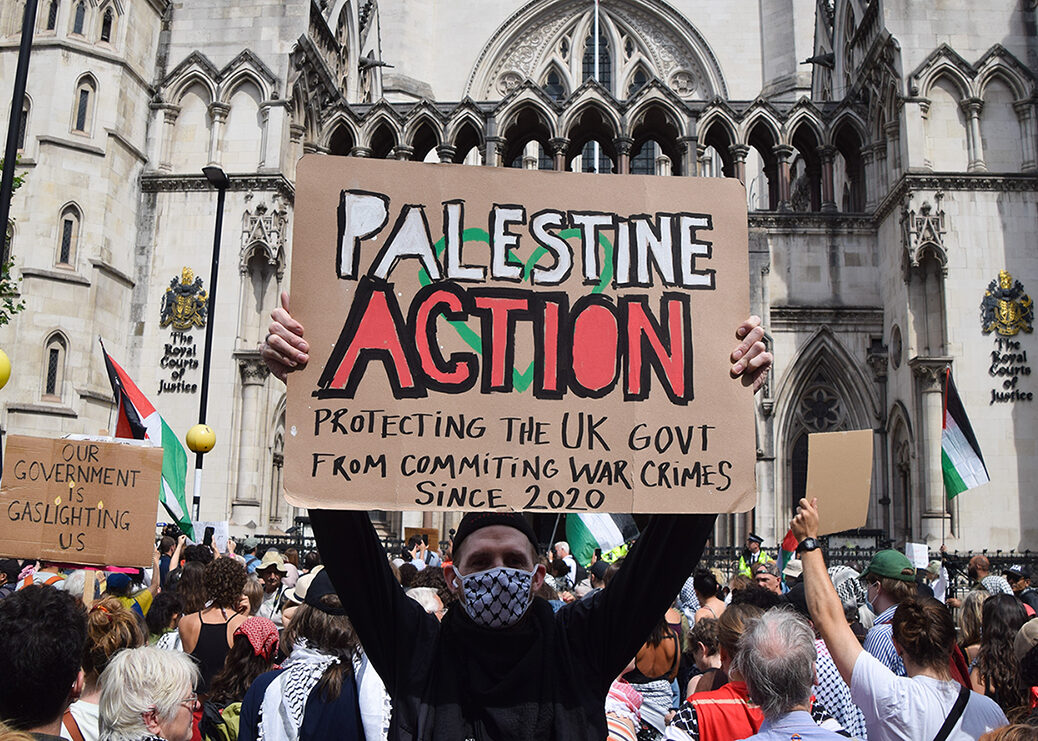
The proscription of Palestine Action has been judged unlawful by the High Court. What next? The decision, announced on Friday morning, has already triggered calls for the whole system of proscription to be overhauled.
Former Conservative minister Sayeeda Warsi told the New Statesman: “I welcome the courts’ decision to restore sanity in this issue. The decision to proscribe was both wrong and damaging for civil liberties in the UK and our reputation internationally. This ruling raises questions about the very process of proscribing organisations as terrorist. The 2000 plus arrests of supporters shows a lack of public confidence in the decision which had little parliamentary scrutiny. This formidable instrument – which criminalises membership and leads to the arrest of supporters – should only be used to protect the country against terrorism. If Parliament cannot be trusted to know the reasons for the decision, the Intelligence and Security Committee should review the evidence.”
Former Attorney General Dominic Grieve said: “The case shows that reform is needed to ensure a proscription regime that commands public confidence, that respects Parliament’s role, and that contains meaningful safeguards.”
Warsi and Grieve sit on the Independent Commission on Counter-Terrorism. The body last year recommended that the terror definition be rewritten because it is too broad. It has also called for “more careful parliamentary oversight and judicial scrutiny” of proscription orders, with specific criticism that the clause relating to damage to property is too loose. The Commission’s recommendations were widely interpreted as a criticism of the Labour government’s decision to proscribe Palestine Action last year following vandalism to RAF jets.

At the High Court on Friday the judge, Dame Victoria Sharp, said the ban had been “disproportionate”. She said: “A very small number of Palestine Action’s activities amounted to acts of terrorism within the definition of section 1 of the 2000 Act.”
“For these, and for Palestine Action’s other criminal activities, the general criminal law remains available. The nature and scale of Palestine Action’s activities falling within the definition of terrorism had not yet reached the level, scale and persistence to warrant proscription.”
While the judgment is embarrassing for the government, it will appeal and PA remains proscribed. Shabana Mahmood, the Home Secretary, has said she is “disappointed”. However if the proscription were repealed, it would get the government out of a hole. There have been some 2,000 arrests related to Palestine Action’s proscription. Many if not most of those arrested were pushing for jury trials.
The NS understands that Grieve and the Independent Commission will now lobby for proper parliamentary oversight of proscription orders. Under the current system, parliament is presented with a list of organisations for proscription but there is limited debate on the merits and demerits of each case. In summer 2025 Palestine Action was proscribed by the government along with the Russian Imperial Movement and the Maniac Murders Cult, a neo-Nazi group. The list of three was presented to MPs as an all or nothing list.
The Independent Commission is chaired by Declan Morgan, the former Lord Chief Justice of Northern Ireland. Other commissioners include Grieve, the former Conservative minister Sayeeda Warsi and the former Labour Cabinet minister John Denham. It was established in 2022 as an independent body to review UK terror laws. It has also called for an overhaul of Prevent.
[Further reading: Inside the Palestine hunger strike]
Content from our partners



Related

Join the debate
Subscribe here to comment