
Over the past several years, I have spoken about the consequences of a world in which outrage outpaces humanity – where fear and division are amplified faster than truth, and where people are too easily reduced to categories, identities or opposing sides. What concerns me now is how dangerously that same moral blurring is taking hold across parts of Britain.
There are moments when the values we hold are tested, not in principle, but in practice. Moments when staying silent is easier, but speaking out is necessary. I have always believed that we have a responsibility to stand against injustice wherever we see it, and to do so in defence of our shared humanity. That belief does not change with geography, nor does it yield to discomfort. It is precisely why I feel compelled to speak now.
At times like these, silence is not neutrality. Silence is absence. Too often, it is that instinct to stand on the sidelines that allows hatred and extremism to flourish unchecked. Britain has long prided itself on valuing reason over outrage, dialogue over division and civility over noise. At moments like these, those values matter more than ever.
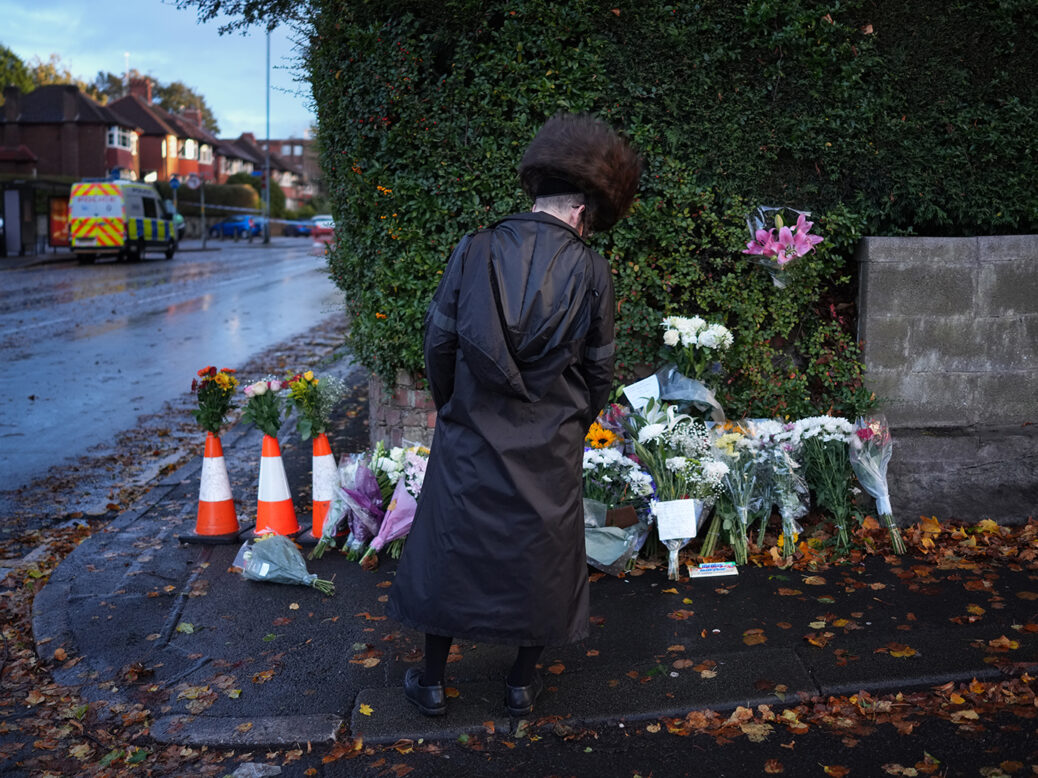
Across the country, we are seeing a deeply troubling rise in anti-Semitism. Jewish communities – families, children, ordinary people – are being made to feel unsafe in the very places they call home. That should alarm us, but also unite us. Because hatred directed at people for who they are, or what they believe, is not protest. It is prejudice. Recent incidents, including lethal violence in London and Manchester, have brought this into sharp and deeply troubling focus.

Across the globe, there is deep and justified alarm at the scale of loss in the Middle East. Images from Gaza, Lebanon and the wider region – of devastated communities and entire neighbourhoods levelled and reduced to rubble – have shaken people to their core. For many, the instinct to speak out, to march, to demand accountability, to call for an end to suffering – is both human and necessary.
But these two realities are being dangerously conflated. We have seen how legitimate protest against state actions in the Middle East does exist alongside hostility toward Jewish communities at home – just as we have also seen how criticism of those actions can be too easily dismissed or mischaracterised.
Nothing, whether criticism of a government or the reality of violence and destruction, can ever justify hostility toward an entire people or faith.
Public debate has, at times, become so polarised that positions are reduced to absolutes. There has been little room for nuance, deepening the confusion that fuels division. That debate has also ignored the diversity of views within Jewish communities, including many who are openly and publicly critical of certain state actions.
We cannot ignore a difficult truth: when states act without accountability, and in ways that raise serious questions under international humanitarian law – criticism is both legitimate, necessary and essential in any democracy.
The consequences do not remain contained within borders. They reverberate outward, shaping perception, inflaming tensions. Ceasefire after ceasefire has repeatedly failed, with devastating consequences for civilians.
The scale of human suffering continues to grow and demands sustained scrutiny and action from the international community. We have also seen the devastating loss of life among journalists in Gaza, undermining transparency and accountability at a time when both are essential. The onus falls squarely on the state – not an entire people. Such actions have nothing to do with Judaism.
If we are serious about confronting this, we must be honest about the conditions in which it grows – and clear about where anger is directed, and where it must never be allowed to fall. When anger is turned toward communities – whether Jewish, Muslim, or any other – it ceases to be a call for justice and becomes something far more corrosive.
I am acutely aware of my own past mistakes – thoughtless actions for which I have apologised, taken responsibility and learned from. That experience informs my conviction that clarity matters now more than ever, at a time when confusion and the distortion of truth are doing real harm – even when speaking plainly is not without consequence. It requires responsibility from all of us.
We cannot answer injustice with more injustice. If we do, we don’t end the cycle, we extend it. The only way to break it is to refuse to pass it on. That means being unequivocal: standing against anti-Semitism wherever it appears, while recognising that anti-Muslim hatred and all forms of racism draw from the same well of division. They must be confronted with the same resolve. It also means speaking out against the immense loss of innocent life without fear, but with care and responsibility.
[Further reading: Never-ending chaos]
Content from our partners


Related
This article appears in the 13 May 2026 issue of the New Statesman, Never-Ending Chaos
Join the debate
Subscribe here to commentSeriously! An article by Prince Harry?! When did the New Statesman decide it was no longer a serious political magazine? I missed the announcement.
I am no ‘subscriber’ to the Harry and Meghan show, but I find the reflexive dismissal of this piece disappointing. If this article had been published anonymously, it would be praised for its balance and clarity on a very difficult subject. To condemn the New Statesman for publishing it—without actually engaging with the arguments made—smacks of intellectual snobbery. Surely we value the quality of the writing over the status of the writer? If the content is ‘serious,’ the magazine remains serious. Let’s judge the work, not the byline.