
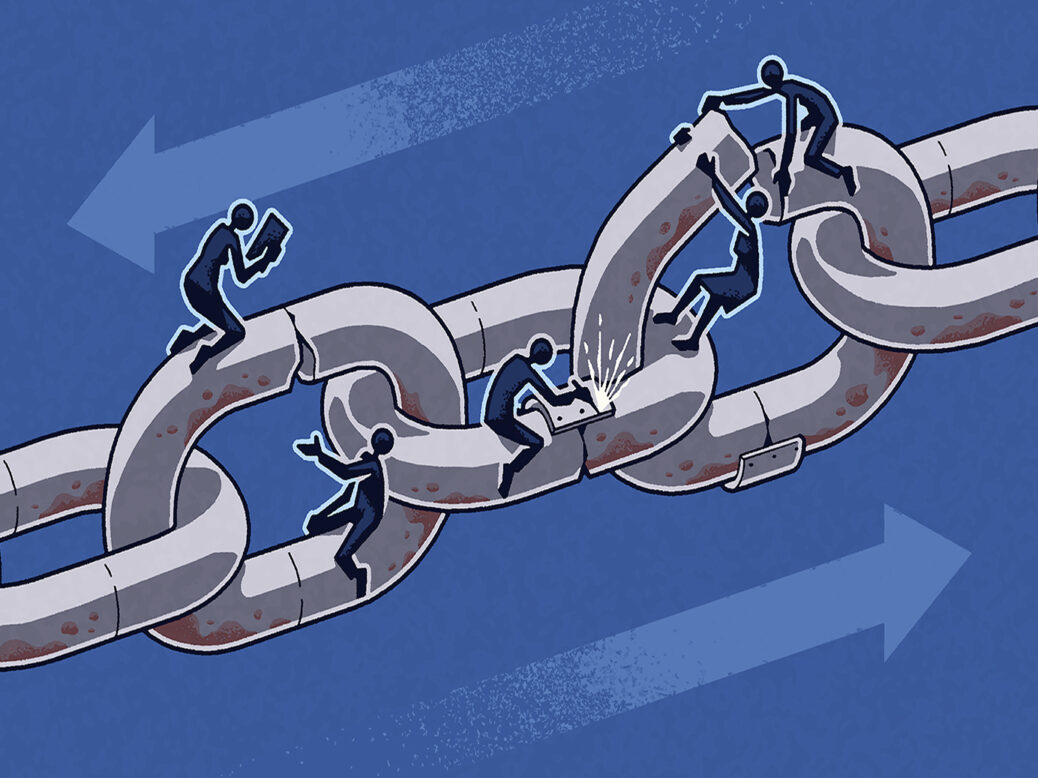
Long-promised reforms to crack down on bogus self-employment in the gig economy and beyond have been delayed by parliamentary “ping-pong” over wider employment reforms, the New Statesman has learned. One Labour MP warned delay “harms workers” and there are fears it leaves a major loophole in Labour’s package of workers’ rights upgrades. Some experts and MPs argue new burdens on employers increase the incentive to push workers into self-employment to avoid granting them new rights.
The government had pledged to consult on new definitions of employment and self-employment by the end of the year. But the Department for Business and Trade confirmed the target won’t be met, with timelines delayed due to the protracted passage of the employment rights bill. It is understood the government still plans to publish it as soon as possible next year. One sympathetic Labour MP called it a “cast-iron excuse”, noting new ministers also needed to get up to speed after September’s reshuffle. Others have speculated redefining employment risked making impact assessments for the employment rights bill too complicated.
Yet another MP said delays would make it a “flashpoint for next year”, with reforms a “big priority for the unions”. Meanwhile Andy McDonald, an early architect of Labour’s workers’ rights package as shadow employment minister, said ministers must make reform an “urgent priority this parliament”.
“Every delay to consultation delays implementation – and that harms workers stuck in bogus self-employment and weakens their rights,” he said. “Opponents are already making hay in slowing up the employment right bill.” Fellow MP Antonia Bance, a business and trade committee member, said Labour was delivering its plan to make work pay, but “that must include the consultation in order to take action this parliament on worker status”.

The delay comes in spite of ministers acknowledging the “urgency” of reform in July, and almost a decade after the Tories commissioned the Taylor Review. That was intended to address growing worries over sham self-employment in Britain’s booming gig economy. Author Matthew Taylor concluded that definitions of self-employment, employees and workers are “so ambiguous only a court can fully understand the basic principles”, requiring “encyclopaedic knowledge of case law”.
He proposed wide-ranging reforms to bolster and clarify vulnerable workers’ rights, from new legal definitions and tests to an online status checker. The Tories accepted his recommendations in 2018, then let them gather dust for an entire parliament. Labour picked up the mantle in its New Deal for Working People in 2021, vowing to clamp down on fake self-employment and roll workers and employees into a single “worker” status for “all but the genuinely self-employed”. All workers would accordingly get sick and holiday pay, parental leave and other rights.
Yet the latest delay will arouse suspicion on the left, as it’s not the first wobble. “Creating” a single status became “moving towards” one in 2023. Reforms didn’t make the manifesto. Ministers call it a “longer-term goal”, and only committed to consult pre-2026 under duress from peers in July. A more business-friendly minister, Peter Kyle, is now stewarding the reforms. Kyle declined to give a date for legislation when grilled by MPs last month. He said his priority was the broader bill.
Delay does more, however, than leave unresolved Britain’s “epidemic” of bogus self-employment, as Labour MP Justin Madders has called it. Madders, who spearheaded the reforms until September’s reshuffle, said recently the wider employment rights bill “will be undermined if we do not tackle this question of status”. He was echoing the business and trade select committee, which warned in February that more companies could resort to self-employment to “sidestep the measures” in the workers’ rights package. Lord Hendy, one of Britain’s foremost employment lawyers, similarly predicted last month that “employers will succumb to the incentive to re-categorise workers” as rights like unfair dismissal are extended. “The bill failed to confront the elephant in the room.”
Meanwhile a report by the Work Rights Centre charity last year said employers using zero-hour contracts may start “casualising their staff even more”, using self-employment to avoid new requirements to offer zero-hour workers guaranteed hours.
Policy manager Adis Sehic told the New Statesman reform “needs to be prioritised”, suggesting bogus self-employment was already rife among migrant clients in construction. It is now common in barbering, beauty and hairdressing too, according to one MP, meaning “no apprentices or maternity leave”. Another peer said earlier this year there was “some evidence” of recent national insurance hikes further exacerbating the trend. Sehic added: “It’s also bad for government because they miss out on crucial tax receipts.”
One academic has argued bogus self-employment is in the millions, leaving a tax gap in the billions due to lower tax and national insurance paid by freelancers. Fixing that tax imbalance was a further Taylor Review recommendation to tackle another incentive for firms to use self-employed workers. Even some champions of the “platform economy” are likely to be frustrated by delay. Tory peer Lord Hunt said earlier this year the lack of timelines and clarity meant “uncertainty reigns”, telling the upper chamber: “It risks holding back investment, stifling expansion and deterring new entrants into the UK market.”
A government spokesperson said: “Bosses should never seek to deny people their employment rights by claiming someone is self-employed when they are not, and if they do, workers can take them to an employment tribunal. The government is committed to consulting on employment status and will seek to address issues such as ‘bogus’ self-employment which enable worker exploitation and harm vulnerable workers.”
[Further reading: Andy Burnham may be blocked from parliament by gender balance concerns]
Content from our partners



Related



Join the debate
Subscribe here to comment