
Four rape gang survivors have quit the government inquiry’s victims liaison panel, voicing concerns about the process perpetuating “a cover-up”.
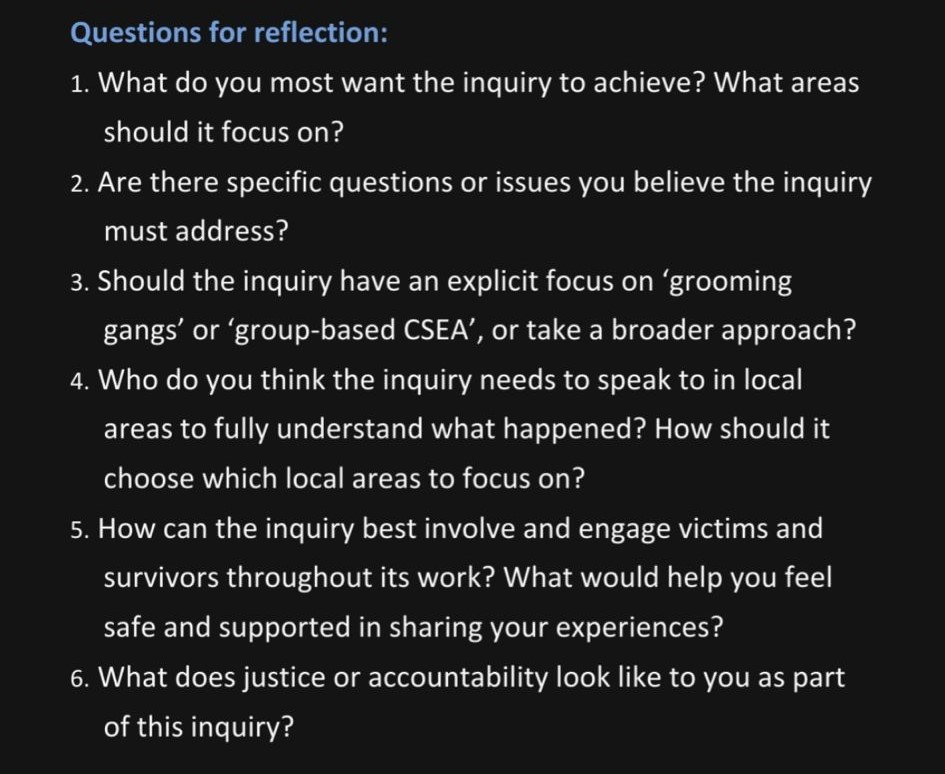
Fiona Goddard, Ellie-Ann Reynolds and survivors with the pseudonyms Elizabeth and Jessica resigned from their roles, after the names of the two shortlisted chairs were leaked. The two potential chairs have backgrounds in social work and policing – services that failed the girls groomed by these gangs. One, Annie Hudson, a social worker, has withdrawn from the shortlist, leaving Jim Gamble, a former police officer.
In her resignation letter, Reynolds wrote that she was “treated with contempt and ignored” and felt the inquiry was becoming “less about truth and more about cover-up”. She felt the survivors on the panel had been “manipulated” and accused the government of widening the remit of the inquiry to “downplay the racial and religious motivations behind our abuse”. Goddard and Elizabeth made similar points in their resignation letters.
Reynolds, 24, who lives in Barrow in Cumbria and as a child was raped by a gang of Pakistani brothers there, had been on the panel about a month before she stepped down. She told me how what she thought would be a “survivor-led” process very quickly began to feel “weird”.

She said around ten to 15 fellow survivors were sent confidentiality agreements and told not to speak to each other, their families or friends about any concerns, but to take them to the panel instead. They were also told not to speak to journalists and to inform the panel of media requests.
“We were left feeling very controlled,” she told me when we spoke over the phone the day she resigned.
Her partner had to take their children out of the house and stay out during one of the panel meetings, which happen over Teams.
“I quickly realised it was toxic and fearful,” she said. “I’ve been silenced before when I was involved in my abuse, and I’m not willing to go through that again.”
The survivors who quit the inquiry have spoken about meetings happening without their knowledge, and Reynolds described the set-up as “very secretive”, with conversations kept “top secret that shouldn’t have been top secret”.
Bullet-pointed talking points were sent ahead of meetings. The day before a scheduled meeting with the two potential chairs, they were told to send three bullet-pointed questions for them to answer.
“It was very, very scripted, and I don’t think a lot of us were comfortable with that,” she said. “I replied back and asked ‘is this mandatory?’ Because I don’t agree with that. They’ve then got 24 hours to sit on an answer. And that’s not fair, really.”
Survivors were only told about the shortlisted chairs a matter of hours before their names were leaked in the press, and therefore felt they were not given enough time to be consulted. “The minute that it was exposed that they were former police officers and former social workers, that’s when it started raising serious red flags for us,” she said.
Reynolds was also concerned about the woman leading the panel with the Home Office, Sabah Kaiser of the NWG Network – herself a survivor of child sexual abuse – who had written a piece in 2023 arguing: “The framing of childhood sexual abuse as a crime committed overwhelmingly by gangs of brown men against young white girls is destructive, distracting and irresponsible, but most importantly, it is not based on evidence.”
In Louise Casey’s review of the issue, she found “enough evidence available in local police data in three police force areas which we examined which show disproportionate numbers of men from Asian ethnic backgrounds amongst suspects for group-based child sexual exploitation”.
Goddard and Reynolds, however, felt the government was widening the inquiry’s scope beyond Asian grooming gangs into general sexual abuse and exploitation of children. “We were being pushed to accept a remit that downplayed the racial and religious motivations behind our abuse,” said Reynolds.
An email of consultation documents sent to panellists seen by the New Statesman asked them if the inquiry should “take a broader approach” beyond grooming gangs. When Phillips was asked over text message about this by one of the survivors who has since quit the panel, Fiona Goddard, the minister responded that “the reason for the question is because there have been differing views” and “it is not right for me to make that decision without it being formally consulted on”, in a response seen by the New Statesman.
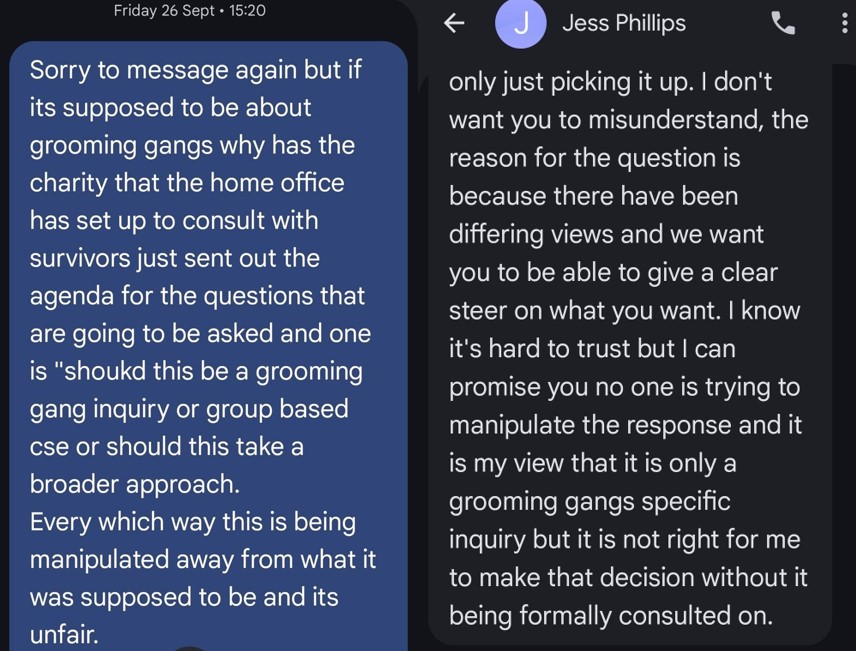
“It was ultimately gaslighting us into thinking we shouldn’t be saying anything about where our abusers came from, what ethnicity, it was really awful,” Reynolds added. “We were very scripted. We were very structured in what we had to say. It was meant to be survivor-led, but you felt a little bit like you were treading on eggshells. You didn’t really know what you could say, what you couldn’t say.”
The Home Secretary, Shabana Mahmood, has since insisted that the focus of the inquiry will not change.
Reynolds was also sceptical of the offer of £50 an hour payment for panellists’ time, saying it was a way to draw people in who had limited capacity to work because of the impact of abuse on their mental health, by offering them a way of being “able to live”. “Really, when you talk about it, it’s kind of like exploiting the survivors,” she said.
“We were used to give legitimacy to a process that’s shifting towards another cover-up.”
The safeguarding minister Jess Phillips has denied accusations of a cover-up and told the Commons that the government was “committed to exposing the failures” to punish “these appalling crimes”. She pointed out the difficulty of appointing people without links to services that let down these children, as “there is no institution in our country that hasn’t failed”.
She also claimed not all the victims on the panel felt the same way about the process. A meeting went ahead between the remaining panellists and the one chair left on the shortlist, Jim Gamble, earlier today where both sides were said to listen to each other’s perspectives.
The Environment Secretary, Emma Reynolds, has apologised over the government’s handling of the inquiry, telling Times Radio she was “sorry if they felt let down by the process”.
No decisions have been made on who will chair the inquiry, and Ellie-Ann Reynolds says it’s “a start” that Annie Hudson is out of the running. But alienating at least four grooming gang survivors is an ill-fated way to open a process that the government initially didn’t want to go ahead at all.
The Home Office has been contacted for comment.
[Further reading: How the Prince Andrew saga overshadowed Virginia Giuffre’s tragic life]
Content from our partners
Related
Join the debate
Subscribe here to comment