
The American “country club” has always been a bit of a blank in my mind. I’m familiar with phrases like “country-club Republican” – and from those I can tell it means a place where posh, established people hang out, and I’m pretty sure that the Philip Roth novella Goodbye, Columbus begins in a country club (you remember the scene, when Brenda alluringly asks Neil to hold her sunglasses as she dives into the pool). But when I try to picture it, I fill it with English things: croquet on the lawn, gin and tonics, thin sunshine.
It is simplifying therefore to learn, courtesy of the second series of Beef, that an American country club is basically a massive resort complex for rich bastards to play golf in. And it makes a wonderful setting for a very 2020s television programme. The cultural historians of the future will not have to strain: our decade has seen a very fine profusion of television about nasty wealthy people and the servant class they mistreat, from Succession to The White Lotus. Beef’s second series is a strong addition to the genre, and succeeds in adding its own tensions and comedy to what are at this point very clear archetypes.
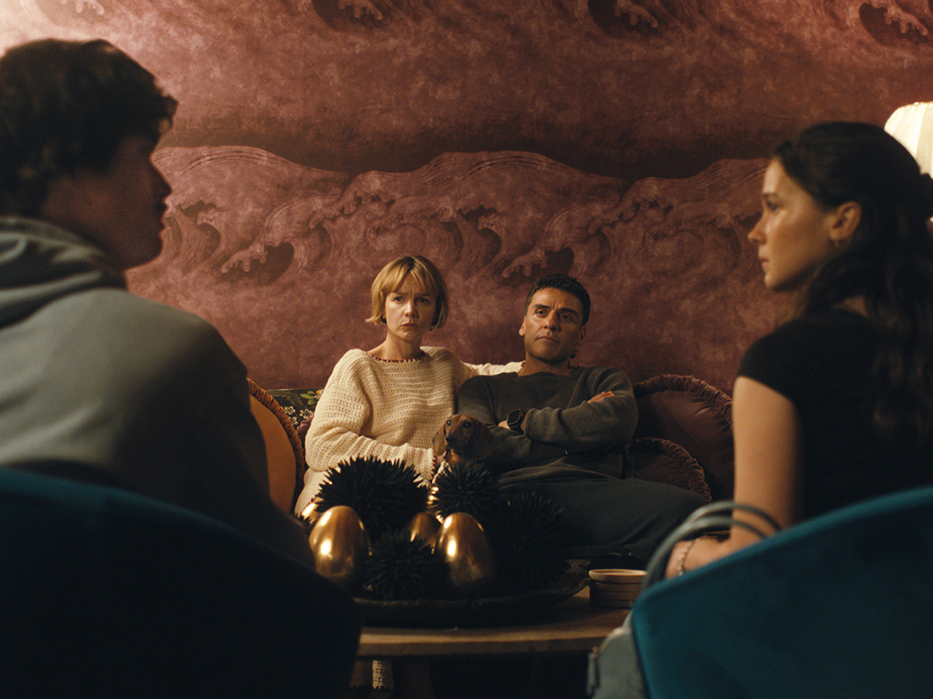
Beef is an Emmy-award-winning series from the Korean-American director Lee Sung Jin, its title referring to a road rage incident and its aftermath in the first series. While the second series features an entirely new cast and characters, it opens with a similar instance of high drama, and follows its aftershocks. Josh and Lindsay (Oscar Isaac and Carey Mulligan) are one couple, and are part of the more haut end of this setting’s servant class: Josh working as the general manager of Monte Vista Point Country Club, and Lindsay not working in any salaried sense but supplying style and glamour at the club’s fundraising dinners. But all is not well in their marriage, and after one such dinner, and a bickering drive home, they have one of those merry evenings of marital archaeology – excavating and then exchanging every buried resentment from their relationship.
Even this prolonged row is insistently upscale – the wine glasses both individuals end up smashing are very large, and filled with red – but it does eventually turn semi-violent, a turn which, unfortunately for the couple, has witnesses. Ashley and Austin (Cailee Spaeny and Charles Melton) are a more sympathetic and struggling couple from the lower end of the Monte Vista waiting and cleaning staff. And, doing a good turn, returning Josh’s wallet that had been left at the club that night, they approach the commotion in Josh and Lindsay’s home. Sensing that they are going to see something they shouldn’t, they film the scene.

The video is soon weaponised as blackmail. But the show is smart enough to keep testing your morality and sympathies: Lindsay has a fertility condition that might prevent her from having children, and needs the promotion that she leverages from Josh to secure health insurance. After this one act of justified extortion, though, none of these characters can stop. Josh has debts and is siphoning money from Monte Vista to pay for them; Lindsay is bored and is texting other men, including the club’s tennis coach. There’s the sense of a moral dam bursting, each act of betrayal and bribery blasting through your expectations of natural human virtue.
This could all get a bit relentless and wearing, but fortunately the quality of the writing carries it as satire and not as nihilism. Mulligan has all the best lines, playing a sub-aristocratic posh English woman with a dog called Burberry and ambitions in interior design. “I love light. I love windows. I love colour,” she announces to the new owner of the country club, who is touring its rooms with Josh. But it’s clear this hasn’t quite filled the hole in her life, and you can see why: “No I asked for eggshell and this is bone,” she snaps at an orderly who brings her a tablecloth in the wrong shade. And there’s a great shot of her dragging the cushions rejected by the new owner behind her in a binbag.
“Rich people are, like, so gross,” remarks one character early on the first episode. There are a dozen other series that have circled that general point in recent years. But this is a terrific way of making it once again.
Beef
Netflix
[Further reading: Richard Gadd’s half-formed masculinity]
Content from our partners



Related


Join the debate
Subscribe here to comment