
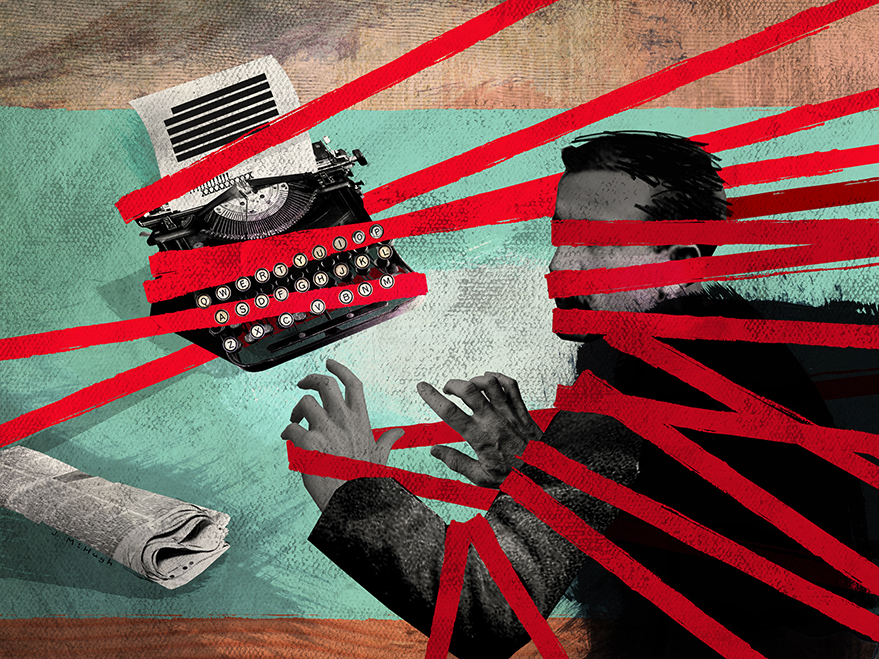
Cormac Kehoe was in the semi-arid mountains above Málaga last August when he received an unexpected email. A county court in Bromley, south-east London, was ordering him to pay £10,000 for “defamation, aggravated harm and loss of business”. The 28-year-old freelance reporter didn’t even know a libel claim had been made. But the claimant’s name was very familiar: Claudio Di Giovanni.
Before taking a rare week off in the Andalusian hills, Kehoe had published an investigation into Di Giovanni’s property empire on the Londoner website. Now the Italian was suing him personally for libel. “It’s a nightmare, really. You’re trying to take a break from the relentless torrent of work and then you are suddenly faced with this prospect of financial ruin,” Kehoe said. Di Giovanni later filed a separate suit claiming £250,000 in damages.
Cases like Kehoe’s were supposed to be a thing of the past. London has long been called “the libel capital of the world”. The Aga Khan, Kremlin insiders and Kazakhstan’s one-time dictator Nursultan Nazarbayev have all availed themselves of Britain’s relatively strict libel laws, as have myriad well-heeled Britons. It’s not just journalists who have been targeted. Environmental campaigners, online reviewers, even victims of sexual assault have been hit with libel suits.
But in March 2022, soon after Vladimir Putin’s tanks rolled into Ukraine, London’s libel lawyers became international news. MPs lined up to accuse claimant-friendly law firms of abusing the legal process to intimidate critics into silence. The former Conservative MP Bob Seely told the Commons these “amoral lawyers” had teamed up with “Putin’s henchmen” to offer a “one-stop corruption shop”. In April a US congressman accused British media lawyers of “enabling” Russian oligarchs. In response at the time, the accused firms rejected these claims, with one describing them as “misconceived”; another said they acted at all times in accordance with their professional and legal obligations.

The libel lawyers’ rebuttals were not enough to prevent action, or at least the promise of it. Boris Johnson announced a clampdown on “the oligarchs and super-rich” who use the threat of legal action as “a new kind of lawfare”. The Conservative prime minister said his government would introduce legislation that would stop “strategic lawsuits against public participation” – commonly known as “Slapp” litigation. These are generally defined as cases designed to intimidate, harass and financially exhaust critics and to silence free speech. Slapps don’t have to involve libel action, but in the UK they usually do.
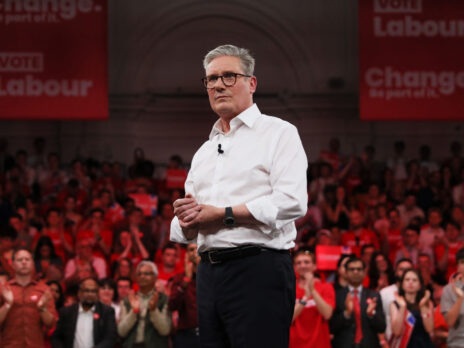
Four years later, however, comprehensive anti-Slapp legislation is yet to materialise. Increasingly, the blame for inaction is being laid at Labour’s door, even by some of the party’s own MPs. A few months after winning the 2024 general election, Keir Starmer pledged to stop “powerful people using… Slapps to intimidate journalists away from their pursuit of the public interest”. But in February this year, anti-Slapp measures were shelved from a civil justice and courts bill, reportedly following interventions from Downing Street.
The government’s change of tack was preceded by a discreet but highly effective lobbying blitz – spearheaded by a group of leading London libel lawyers whose members have in the past represented Russian oligarchs, the disgraced Tory peer Michelle Mone, and even Jeffrey Epstein.
The Society of Media Lawyers (SML) has little public presence, but over the course of almost three years it has secured meetings with key officials and aggressively pushed back on anti-Slapp legislation, according to hundreds of pages of documents, released following a number of freedom-of-information (FOI) requests. The society’s lobbying appears to have borne fruit.
“The Carter-Rucks of this world have successfully scared the civil servants into thinking that it’s too difficult to do anything about Slapps,” said a source close to the government’s discussions on libel reform.
While our source was speaking generally, the law firm Carter-Ruck responded to this characterisation, telling us that “we would do nothing of the sort… We agree that the issues surrounding so-called Slapps are properly a matter of public interest, and would welcome a sensible and balanced debate about these issues.”
The SML has a clear message: that anti-Slapp legislation is unnecessary, and could even embolden the media’s worst excesses. In this telling, concerns about the use of Slapps to muzzle investigative journalists, and even victims of sexual abuse, are all part, according to the SML, of “a misleading narrative presented by the media”. That lawyers who represent wealthy clients would lobby against laws that might restrict their business is hardly surprising, perhaps. Anti-Slapp campaigners have been pushing their case, too. But the society’s lobbying is seen by many as an important factor in the government’s apparent decision not to act.
The former Tory MP Charlotte Leslie, who successfully saw off a long-running defamation claim from Conservative donor Mohamed Amersi, said that “it’s clear from these documents [obtained by us by FOI] that the Society of Media Lawyers conducted a persistent lobbying campaign to kill off any prospect of sensible legislation that could threaten the UK’s lucrative racket in libel lawfare.” Leslie added that the lobbying “exposes a sector of the British legal profession that is in complete denial about the threat they have posed to freedom of speech and the reputation of the UK’s legal system”.
In response, the SML told the New Statesman that it “has written a very limited number of letters to the Ministry of Justice (MoJ) and one to MPs trying to share its expert views on the efficacy of the proposed Slapp provisions”. The society also rejected the idea it was “in any form of ‘denial’ about anything”, adding that “its position is informed, expert and measured”.
London’s libel gold rush long predates the city’s “Londongrad” days. In the Second World War, a young lawyer named Peter Carter-Ruck came back from duty as a gunner in the Royal Artillery and set about turning the then almost moribund Libel Act of 1843 into the basis for a lucrative business. His trademark was aggressive suits on behalf of wealthy clients. In 1963, Randolph Churchill, Winston’s son, instructed Carter-Ruck to sue “every single person connected with Private Eye, right down to the girls in the office” over a story that suggested an official biography of his father would gloss over incidents such as Churchill sending the army to tackle striking Welsh miners. Carter-Ruck secured all the top libel barristers for his client to prevent them acting for the magazine – which swiftly apologised and paid Churchill’s legal costs. Private Eye also had to publish a full-page retraction and apology in the Evening Standard.
After this, a charabanc of colourful characters used libel threats, primarily against publishers, throughout the 1970s and 1980s. James Goldsmith settled a notorious libel case with Private Eye on the steps of the Old Bailey. Robert Maxwell and Mohamed al-Fayed had an army of lawyers on retainer. Soon, rich claimants with far less obvious ties to the UK were filing defamation cases in London.
An oddity of libel law in the UK, compared with some other countries, is that it presumes a supposedly defamatory statement to be false from a claim’s outset – it is up to those being sued to prove they were in fact telling the truth. This has made bringing defamation actions in Britain a particularly attractive option for the rich and powerful around the world.
In the 1990s, Carter-Ruck persuaded the British courts to hear a claim from the Russian oligarchs Boris Berezovsky and Nikolai Glushkov relating to a piece in Forbes that described the pair as “criminals on an outrageous scale”. The House of Lords gave permission to sue in London even though fewer than 2,000 copies of Forbes were distributed in the UK. The case was eventually settled in 2003. Forbes did not pay damages or legal costs, or make an apology. The following year the editor of the magazine’s Russian edition, Paul Klebnikov – who was the unbylined author of the contested article – was shot dead in Moscow. Allegations that the killers were acting on orders from Berezovsky have long swirled. (Both Berezovsky and Glushkov later died in Britain, five years apart, after falling out with Putin.)
The Berezovsky trial opened the floodgates for a wave of libel tourism that, almost three decades later, has yet to abate. Reforms introduced in 2013 that were supposed to rebalance the playing field between defendants and claimants and to prevent “jurisdiction shopping” had limited effect. Uzbek oligarchs, Russian state-owned enterprises, a Kazakhstani dictator: all have filed defamation claims in London in recent years.
Often, small journalism outfits or human rights organisations are targeted. An Azerbaijani MP sued the investigative journalist Paul Radu over a 2017 series exposing alleged money-laundering. The case was brought in London even though Radu is Romanian and the publisher, the Organised Crime and Corruption Reporting Project, has a minimal footprint in the UK. (The case was settled on terms favourable to Radu in 2020.)
Perhaps the most egregious case involved Yevgeny Prigozhin. The former hot dog seller who had become a central figure in Putin’s regime sued for defamation after the investigative outlet Bellingcat published a series of stories in 2020 about his mercenary army, the Wagner Group. But rather than pursue Bellingcat, which is based in the Netherlands, Prigozhin went after the site’s founder, the British journalist Eliot Higgins, for his social media posts about the story. In a turn worthy of a black comedy, Prigozhin’s lawyers – the aptly named Discreet Law – were given special dispensation by the Treasury to represent him, as the Russian was under British sanctions – for his involvement in the Wagner Group. Court papers claimed that Higgins’s tweets had caused Prigozhin “great distress” and his character and reputation had been “gravely damaged”.
The case collapsed when Discreet Law withdrew their services after the invasion of Ukraine. Higgins, who was left with costs of £70,000, complained vociferously to the Solicitor’s Regulation Authority (SRA). As the investigative journalism website Democracy for Sale revealed last year, the SRA took two years to produce a four-page report that found “no evidence” that Discreet Law was aware that Prigozhin ran the Wagner Group and that the firm had “acted appropriately” in handling his claim.
These cases became the cornerstone of calls for Slapp reform after Russia’s full-scale invasion of Ukraine. “The government will not tolerate Russian oligarchs and other corrupt elites abusing British courts to muzzle those who shine a light on their wrongdoing,” declared the then justice secretary, Dominic Raab, in March 2022. By the autumn of 2023, the Tories were preparing to pass new laws to tackle financial crime that included anti-Slapp provisions. The measures – which came into force last year and cover libel threats on reporting around economic crime – were widely seen as piecemeal but were enough to convince some of London’s most expensive libel lawyers that they needed to mount a campaign of their own, against broader anti-Slapp legislation. The Society of Media Lawyers was born.
The society is not a registered company or charity, which means it does not have to file accounts or give much detail about its activities. A blurb on its website talks about adding “fairness and balance… to the discussions surrounding media law”. But a published list of its over 80-strong membership is tilted towards solicitors predominantly known for their work on behalf of wealthy libel claimants. There’s the Carter-Ruck boss Nigel Tait; the current “reputation lawyer of the year” Emma Woollcott from Mishcon de Reya; Paul Tweed, the lawyer to the stars, whose clients have included Johnny Depp, Uri Geller and Jeffrey Epstein. (A spokesperson for Tweed has said that his involvement with Epstein was “brief” and that the pair never met.)
From its inception, the SML prosecuted its case with gusto. The documents we obtained paint a picture of a dedicated, and highly targeted, lobbying campaign. When the Department for Culture, Media and Sport announced it was setting up an anti-Slapp taskforce in September 2023, the SML wrote to the then culture secretary, Lucy Frazer, demanding to join. The plea was unsuccessful, but the lawyers were undeterred. Two months later, the Tory peer Edward Garnier wrote an op-ed in the Times summing up the SML’s position: that “the emotional demand” for comprehensive anti-Slapp legislation “should be resisted”. (The piece did not mention that Garnier, a former solicitor general for England and Wales, was a member of the society.)
While the Conservative government was flatlining in the polls, the battle around comprehensive Slapp legislation intensified. In December 2023, the Labour MP Wayne David introduced a private members’ bill that would greatly expand the definition of an abusive lawsuit, and allow courts to strike out meritless claims. As the Tories threw their weight behind David’s wide-ranging bill, the SML started to lobby ministers more directly. Garnier, widely seen as an eloquent and effective advocate for the cause, wrote to the justice under-secretary Christopher Bellamy with his “grave concerns” about the proposed legislation. “You cannot simply ban rich people, our own citizens or foreign nationals, from bringing claims against poorer defendants,” Garnier counselled his Conservative Lords colleague. In April 2024, the SML wrote to the then lord chancellor, Alex Chalk, himself a KC, warning that David’s bill was “entirely one-sided” and that “the government should heed the lessons of the Leveson Inquiry and be very slow to hand further litigation advantage to the unregulated press”. This is a common refrain among those who oppose Slapp reform: that defamation reform may enable press abuse. The SML’s letter did not mention that Leveson was sparked by phone hacking – not libellous claims.
If the society’s interventions were designed to get its views noticed within government, it seemed to work. A civil servant in the Ministry of Justice wrote that the society was “packed with heavyweights, including peers. I’m personally more concerned about their strength of feeling on the bill.” Another mentioned that they believed the SML had support from the then Tory MP and former defence secretary Ben Wallace. (“I am not against making sure that our legal system is not abused by organised criminals or oligarchs,” Wallace told us in a phone call. “But just be careful you don’t burn the people on the other side in over-protecting it.”)
Officials advised that ministers should meet with Garnier “but only once possible concessions have been agreed with whips”. As it turned out, Conservative ministers did not need to offer any sweeteners to the media lawyers. Rishi Sunak’s snap general election marked the end of David’s bill, and of the government.
Faced with an incoming Labour administration led by a human rights lawyer who was personally committed to Slapp reform, the media lawyers stepped up their lobbying. On 31 July 2024, less than four weeks after the general election, the society wrote a letter to the incoming justice minister in the Lords, Frederick Ponsonby, copying in the then justice secretary, Shabana Mahmood, the then foreign secretary, David Lammy, and senior figures in the Law Society, which represents thousands of solicitors in England and Wales.
The tone of the letter was clear: the entire Slapp issue was overblown, based on “a misleading narrative” presented by the media and campaigners “who want to reduce the legal protections available to victims of misreporting and invasions of privacy”. High-profile cases such as that against Catherine Belton and HarperCollins over her 2020 book Putin’s People (brought by Roman Abramovich, Mikhail Fridman, Petr Aven and the oil company Rosneft, among others), and the Kazakh mining conglomerate ENRC’s failed defamation claim against investigative journalist Tom Burgis were the exception, not the rule. “Libel claims by oligarchs are a rarity.”
At times, the lawyers stressed their political connections with the new administration. “As a lifelong supporter of the Labour Party, I am hopeful that the new government will want to consider the matter afresh,” Iain Wilson, a partner at Brett Wilson, wrote in an email to Ponsonby. Civil servants seemed wary of antagonising the well-connected lawyers. Privately, they mused about the risk that the lawyers might “lobby via other means, which is unhelpful”. In another email, a Ministry of Justice official commented that “the fact we’re not moving on Slapps quickly will please them”.
In internal proposals for consulting on Slapps, the MoJ began to classify the SML as a “civil society organisation” alongside anti-Slapp campaigners. “A balance must be struck between claimant and defendant positions given the strength of feeling at this time,” an official wrote, “so equal engagement should be the aim.” The peer Edward Faulks KC, an English barrister who until April this year chaired the press regulator the Independent Press Standards Organisation, told us that it was “very surprising” that civil servants were treating the SML as a civil society group. “These are not disinterested stakeholders,” he said. “Let’s not forget this is pretty lucrative stuff for them.”
The society often strongly contested the idea that Slapps existed at all. The media lawyers sent MoJ officials a 2024 research paper that, it said, “undermines the evidential basis put forward by the previous government” for anti-Slapp legislation. Written by Paul Wragg, a professor of media law at the University of Leeds, and funded by the society, the paper argued that numerous high-profile cases, including Belton and Burgis’s, were not Slapps. Wragg concluded that the current public debate about Slapps was “worryingly one-sided”. He examined the cases relied upon by the Coalition Against Slapps in Europe as examples of strategic libel actions and found only one lawsuit that he believed was “properly classifiable as a Slapp”. The case, brought by a Serbian businessman who had been accused of involvement in organised crime in the Balkan-language press, was thrown out of a London court in 2013.
The SML told us that it considers the paper “to be detailed and informed” and “significantly more authoritative than the other documents we have seen citing supposed Slapp cases”. The society confirmed that its members had “contributed to the cost of his report”. Wragg told us the SML had approached him as “they were looking for an independent report and they approached me as an expert in the field”. He added that he was concerned about the “ambiguity” of how Slapps have been defined in the UK. “What we don’t want is mischievous defendants trying to misuse the language of Slapps in order to frustrate legitimate claimants,” he said. “We’ve got to be careful not to rush into any kind of legislative solution thinking that this will just solve all the problems.”
For Susan Coughtrie, co-founder and co-chair of the UK Anti-Slapp Coalition – which includes campaigners, media organisations and lawyers – searching for “the perfect example of a Slapp completely misses the point”. The cost of going to court is so high that many abusive cases are never made public, she said. “People are forced into making retractions or settlements simply because they cannot afford to go to trial to defend their reporting. This is then spun to imply they did something wrong. The system is not balanced, there is a clear inequality of arms, and while there is no legal protection, this will only continue.”
This lack of legal protection is not just an issue for journalists. In 2010, a 20-year-old student, Nina Cresswell, was sexually assaulted while walking home from a nightclub in Sunderland. A decade later she wrote a blog and a series of social media posts accusing a tattoo artist, Billy Hay, of the crime. Hay responded, threatening legal action.
When the case went to court a judge ruled in Cresswell’s favour, finding that her account was “substantially true”, and that her statements were “on a matter of public interest”. The use of legal threats to silence victims of sexual abuse has been well documented. A 2021 United Nations report found that, in a “perverse twist in the Me Too age”, women who denounced alleged attackers online are “increasingly subject to defamation suits or charged with criminal libel”.
The SML’s letters to officials mentioned Cresswell’s case, but said claims that libel law is used to silence victims of sexual crimes is “a misleading oversimplification”. Cresswell’s victory, the letters went on, showed that the current legal system is fit for purpose.
Cresswell explained to the New Statesman that, despite winning the case, the drawn-out process had had a “devastating impact” on her life and her work. “I couldn’t focus on the work, I couldn’t manage clients, because all my time was consumed with fighting off these legal threats,” she said. “I know this isn’t an oversimplification, because it literally happened to me. It’s legal silencing.”
Responding to this, the Society of Media Lawyers told us that in citing the case in its letter, it “did not intend in any way to seek to dismiss or diminish the ordeal of Ms Cresswell”. It also observed that her case “was notable for the flexible approach which the court took in applying the public interest defence [under the 2013 Defamation Act] to assist the defendant”.
It added that “it is important to note in the context of the Slapps debate that courts will work to find solutions under existing provisions. That is, in our view, to be encouraged.” In their correspondence with us, both the SML and Carter-Ruck pointed out that lawyers in their organisations act on behalf of claimants and defendants in defamation cases.
Nevertheless, the media lawyers’ arguments seemed to chime with the government’s evolving position on Slapps. In October 2024, the SML wrote to Labour’s then minister for courts and legal services, Heidi Alexander, warning that campaigners from the UK Anti-Slapp Coalition were “promoting a misleading narrative in order to place parliamentarians under pressure to introduce legislation”. Anyway, the lawyers said, a remedy already existed to tackle the problem: the Solicitors Regulation Authority (SRA) can refer cases to an independent tribunal that adjudicates allegations of misconduct against solicitors. The Solicitors Disciplinary Tribunal ultimately “has the power to impose an unlimited fine and strike off solicitors”. A few weeks later, Alexander told the Commons that while Slapps “represent an abuse of our legal system”, the area was “complex” and “we should not legislate in haste”. Instead, the justice minister said, the SRA was a “weapon in our arsenal to deal with abuse of the system”.
(Alexander added that her department was in regular contact with the regulator, but when we asked the Ministry of Justice for its correspondence with the SRA during the six months after her speech we were told none existed.)
By most measures, the Solicitors Regulation Authority has struggled to deal with the issue of Slapps. The regulator has issued guidance – warning against using threatening language in correspondence – and prosecuted lawyers accused of taking on Slapp cases. But in recent months the SRA’s Slapp strategy has suffered a string of high-profile defeats.
In December 2025, the Solicitors Disciplinary Tribunal threw out a case against Carter-Ruck’s Claire Gill (who is an SML member), who had been accused of sending an “improper” legal threat to a whistleblower in 2017 on behalf of the “cryptoqueen” Ruja Ignatova. While Ignatova’s cryptocurrency business, OneCoin, was later found to be an investment scam – the whistleblower had been trying to warn fellow investors of this – Gill was cleared of all wrongdoing by the tribunal, which said the SRA’s case against her was based on “hindsight not evidence of professional misconduct”. Carter-Ruck has said it intends to seek costs from the regulator, believed to be around £1m. The firm told the New Statesman that in its dismissal of the case, the tribunal had “made unequivocally clear that [Gill] had acted properly and in good faith”.
An in-house media lawyer at one of Britain’s biggest newspapers said that this and other rulings against the SRA have emboldened aggressive libel lawyers. “We are definitely seeing more in the Slapps category in the last few months,” the source said. “For 18 months, when the SRA seemed to be really pushing the issue, it wasn’t as bad, but now the threats have regained some of their old force.”
In February this year, the Times reported that the current minister for courts and legal services, Sarah Sackman, had drafted anti-Slapp measures, but that the proposed legislation had been shelved. A government source blamed the fear of backlash from lawyers. Speaking to the New Statesman, the Conservative MP David Davis said that documents uncovered by this investigation showed the impact of the claimant lawyers’ lobbying efforts.
These lawyers have helped “create a multimillion-pound industry around suppressing free speech”, said Davis. “In the process, they have become fabulously wealthy and have helped turn London into the global capital of Slapps. For the Ministry of Justice to look to those same lawyers for advice on whether Slapps are a problem would be laughable if the issue were not so serious.”
A spokesperson for the Ministry of Justice told us that it had “engaged with a number of different stakeholders and campaigners while we consider how these measures are working – and how we can further clamp down on Slapps”.
The Society of Media Lawyers, meanwhile, remains sceptical that the system needs reform. It told the New Statesman: “We do not contend that there are never inappropriately brought media cases. But we do believe the evidential basis on which the MoJ and parliament has proceeded as regards the extent of the problem is to say the least questionable.”
Defenders of Britain’s libel laws argue that newspapers and TV stations can afford the cost of defamation cases. The BBC is fighting a long-running case brought by the political donor Mohamed Amersi; Amersi is reported to be seeking £10m in damages and legal costs. But the days in which publishers were willing – and even keen – to go toe-to-toe with wealthy claimants are largely over.
Defamation isn’t the only legal threat. Data protection and privacy laws are increasingly used as alternatives to a libel claim. Unlike a defamation writ, which must be filed within a year of the offending article’s publication, data protection and privacy actions can be taken up to six years later – and for publishers there is no recourse to the complete defence that a published statement is true, as in a defamation case.
All of which, campaigners say, makes the need for anti-Slapp legislation more urgent. In January, an open letter calling on Starmer and the Culture Secretary, Lisa Nandy, to legislate was signed by national newspaper and magazine editors – including the authors of this piece, on behalf of Democracy for Sale. In March, more than 100 British academics joined the chorus of calls for reform.
Pressure has been applied from inside the Parliamentary Labour Party, too. In February, more than 50 party MPs signed a letter calling on the Prime Minister to introduce “universal anti-Slapp measures in the next King’s Speech”. The letter, whose signatories included Phil Brickell, who has been recently appointed parliamentary private secretary to the MoJ, and the Business and Trade Committee chair, Liam Byrne, closed with an appeal to end the government’s timorousness: “Almost two years on, we need to finish what we started to firmly demonstrate our commitment to freedom of expression, the public’s right to information, and access to justice as fundamental pillars of a democratic society.” When the King’s Speech was unveiled on 13 May, strengthened anti-Slapps measures were notably absent from the list of planned legislation.
Responding to this investigation, the former shadow chancellor Anneliese Dodds, who also signed the letter, told the New Statesman that “Slapps stop the investigation and scrutiny of matters that are squarely in the public interest. Academics, journalists and whistleblowers should not be harassed or intimidated through Slapps. There is a real problem here, with the UK substantially out of step with other countries on this issue; so it is concerning to hear about the extent of lobbying to stop action against Slapps.”
The sense of urgency felt by Dodds and her fellow signatories has so far been unmatched on the ministerial benches. David Lammy, who took over as Justice Secretary from Shabana Mahmood last September, did introduce a new anti-corruption strategy that mentions Slapps – but only to say that the UK will “consider the future approach for comprehensively tackling all Slapps” by 2029. A promise to think about doing something within the next three years hardly feels like a binding commitment. While London’s libel lawyers have successfully argued that legislation is tough – if not outright impossible – other jurisdictions have acted. Ireland, another libel-tourism destination, recently completed a radical overhaul of its defamation law. The European Union brought in an anti-Slapp directive in 2024. Ontario, whose anti-Slapp provisions are often held up as particularly effective, has had legislation in place for more than a decade.
Gavin Millar KC, a libel specialist at Matrix Chambers, says that there is a straightforward solution for our libel problem. Rather than try to define what constitutes a Slapp in the abstract – “which is impossible to do satisfactorily” – the government could pass legislation that allows courts to dismiss cases against public-interest expression as soon as they are issued.
“A case should be stopped if the defendant has a valid defence, or if the public interest in protecting the free speech right outweighs the need to protect the claimant’s reputation through complex and costly court proceedings,” Millar told us. “If the judge decides there is a valid defence, the case gets struck out simply because it concerns public-interest speech.”
Back in London, the journalist Cormac Kehoe is still fighting the case brought by Claudio Di Giovanni, and the costs – presently sitting at £20,000 – continue to mount. “It’s not just the money. It’s the massive amount of our time and energy that gets sucked up by this kind of litigation,” said Joshi Herrmann, who runs the parent company of the Londoner, which published Kehoe’s article on Di Giovanni. “Our archaic libel system means that lots of resource we should be spending on reporting is spent fighting [such] cases in the courts.”
London’s reputation lawyers present themselves as a bastion of justice against a rapacious press. There is an alternative view. “If Jeffrey Epstein had been English, we may well have never known about his crimes,” says one former newsroom editor. So long as the rich and powerful can continue to pay lawyers exorbitant fees, this country is, in the words of the veteran human rights lawyer Geoffrey Robertson KC, “not the land of free speech. It is the land of expensive speech.” Whether this matters enough to the government after the libel lawyers’ lobbying blitz remains to be seen.
Peter Geoghegan and Jenna Corderoy are investigative journalists at the award-winning website Democracy for Sale. Visit democracyforsale.uk to follow their work
[Further reading: Inside the Tony Blair Institute]
Content from our partners



Related


This article appears in the 13 May 2026 issue of the New Statesman, Never-Ending Chaos
Join the debate
Subscribe here to comment