
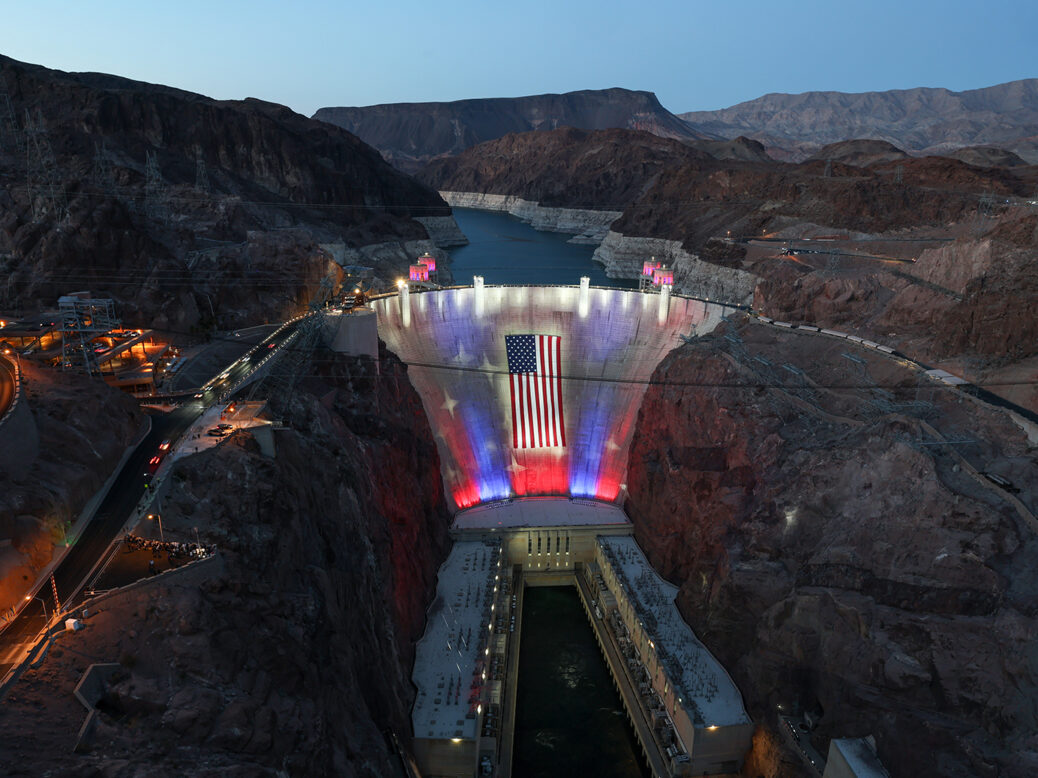
I don’t know, as an American, what I imagined our 250th anniversary might look like. Yet as 4 July arrives, the day of the big birthday bash, I only feel somewhat numb. I am not cynical about the anniversary, but I am also not terribly interested. This is not an outlier opinion. Many Americans are only minimally engaged.
In every way, this is a peculiar time to celebrate what remains the most consequential, fascinating and dangerous country on Earth. Americans themselves are not in a triumphant mood. National pride, if polls are to be believed, is at a historic low. If much of this decline is driven by the left, which despises Donald Trump, conservatives aren’t exactly making up for the deficit in chest-thumping. Trump is hated by large swaths of the country, and those who do still support him are, on the balance, less excited. The novelty of Maga has long worn off. Trump is an octogenarian second-term president who just led the United States into a Middle Eastern war no one, beyond a few interventionist sociopaths, actually wanted. Now it is done, Iran’s hand is strengthened, and Americans – like our allies – are left to puzzle over what that round of bloodshed was all about.
Yet it would be easier to conceive of the 250th anniversary if the US were in an even worse place. Pundits, especially those on the left, are fond of declinist narratives, and there is no shortage of columns, essays, and books written about how the US resembles Weimar Germany or the late stage Roman Empire, predicting that all of this, in a single generation, will collapse into dust. Then we could fathom America 250 as the very last gasp, almost like a valediction or one of those clip shows they used to run on network television to celebrate a series that was about to be canceled. Here lies America. Wasn’t she great?
Except the United States, for all the ways it may be ailing, is not going anywhere. We may be leaving a unipolar world, but Europe and the rest of the world will be reckoning with some version of this empire for the next few decades, if not longer. America is simply too large, too rich, and too heavily armed. What this doesn’t mean, however, is that the US will stop mattering. China can’t erase it off the map, any more than war hawks in America might fantasise about marginalising the great Eastern power. Prime Minister Andy Burnham, when he arrives, will have to think very hard about US-UK relations, just as his predecessors did.

It is true, as Canadian Prime Minister Mark Carney declared at Davos, that the middle powers should learn, quickly, to rely less on the US. Two elections of Trump have proven the American electorate is simply too volatile – too prone to uplifting mad kings – to be trusted. But it is also true that the US is not a fascist country, nor becoming one, despite arguments to the contrary. Free elections continue all across the country. There will be presidents and political parties after Trump.
The uneasy nature of the 250th birthday of the United States is that it offers neither redemption nor obsolescence. Is the American Dream dead? Did it ever live? Europeans are finding out as they trek across our vast land for the World Cup that there is a life here – bustling, booming, and plenty strange — that still thrills, a sense of bigness and great possibility that hasn’t been beaten out of us yet.
Of course, as our country turns 250, it is easy to note that we find ourselves victims of exactly the sort of political polarisation that the founders warned against. The US desperately needs a check on its imperial president. But the anniversary is a time to remember what the Founding Fathers got wrong just as much as right. The admiration of monarchy and fear of the common voter led the US to adopt a system where only a successful impeachment trial can drive a president from office and senators, two per state, help to muzzle the will of the electorate. If Congress had the power to take a no confidence vote, Trump might have been dragged from office long ago. And if the Senate didn’t exist at all, and the House of Representatives were the only legislative body, there might not be nine unelected judges with no term limits or mandatory retirement age deciding policy that impacts 300 million people.
What to do with all of this? Like many Americans, I can only shrug and enjoy my 4 July. It is, despite my own deep awareness of our nation’s sins, one of my favourite holidays. I love its kitsch, and what it’s come to actually represent: a celebration of the summer in all its promise. What I will hazard about the United States is that it is going to celebrate many more anniversaries before it, like all empires, withers. A tricentennial, at least, seems like a reasonable proposition. Perhaps, by then, Americans will be a little more excited.
[Further reading: The Degradation of Independence]
Content from our partners


Related



Join the debate
Subscribe here to comment