
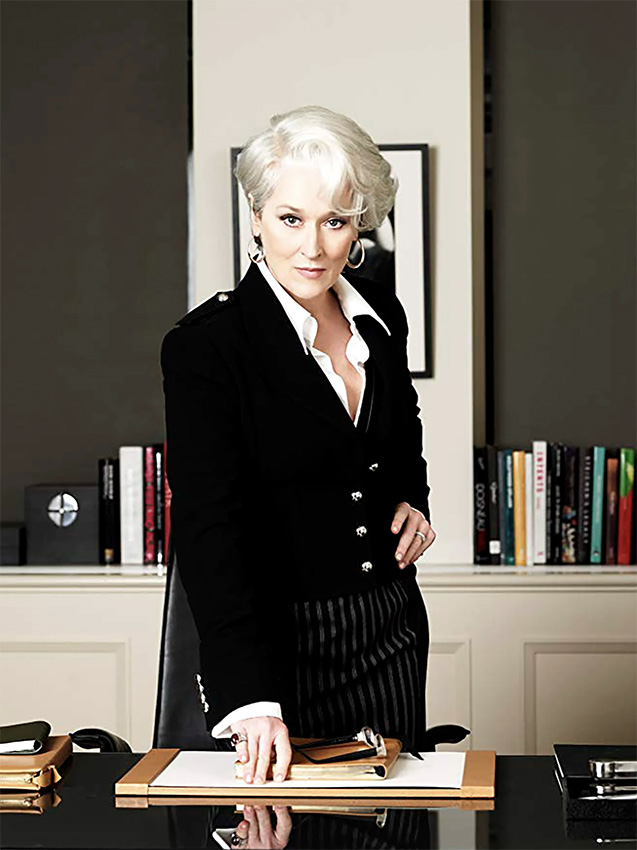
Some things are just too good to improve on. The Devil Wears Prada 2 may have made almost $250m in its opening weekend but if the original film was Prada quality, the sequel is more like a Camden market knock-off. Plenty has already been written about its problems: the lack of a memorable villain (yet more iterations of evil tech bro Succession-knock-off doesn’t count); a tone that ricocheted drunkenly between the righteous (“journalism fucking matters!”), the soppy and the almost accidentally bleak (for the death of journalism is, well, quite sad); an alarmingly over-caffeinated performance by Anne Hathaway; and don’t even get me started on her inexplicably Australian love interest.
So it was interesting how few dedicated fans of the first film – either at my packed opening night showing in Brixton, or those I’ve spoken to since – seemed to care. The atmosphere in the cinema and spilling out onto the street afterwards was warm. That’s partly because in spite of its flaws, there was plenty to like about the sequel – the clothes (angels wept at that first sight of Emily Blunt in a sculpted black corset top from Wiederhoeft), the music (Raye, Doechii, Lady Gaga, yes please), the zingers penned by returning screenwriter Aline Brosh McKenna (“May the bridges I burn light my way”), Meryl Streep – but it was more than that. What the new film understood, and what I think made us fans ready to forgive it almost anything, is that Miranda Priestly, one of early 21st-century cinema’s greatest villains, is also The Devil Wears Prada’s hero. She’s always been mine, that’s for sure.
Really? That icy, sadistic cult leader who in the first film brainwashes, humiliates and isolates Hathaway’s Andy, the assistant she affectionately calls “the smart, fat girl”? Yes, of course, for the audacious brilliance of the original movie was how it gradually changed your mind about Miranda. One way it did this was through various speeches arguing for the artistic value of a fashion magazine (“You have no idea how many legends have walked these halls,” Stanley Tucci’s Nigel growls at Andy) but that approach always felt a little halfhearted to me, as though the film secretly agreed with Andy’s boyfriend Nate’s withering assessment of why people work for fashion magazines: “for shoes and shirts and jackets and belts”.
A much more effective method was simply by letting us see what boss Miranda could offer young Andy: the immense satisfaction of being good at your job, and the intoxicating power that comes with that. Such satisfaction went beyond the materialistic (although the shoes, shirts and jackets were certainly nice). There was a symbolic quality to Andy’s makeover from hopeless dowd to designer-clad siren, as though her newly polished exterior reflected a newly polished soul. She looked good because suddenly she was good… at her job. The sequel has a similar message: there’s a poignant moment when Andy demands to know what Nigel thinks about the imminent disappearance of his job. Calmly turning back to examining a series of images from a shoot, he replies: “I like the bag cross-body, that’s what I think.” A six-word manifesto for paying attention to details and taking pride in your work.

So successfully did the first film manage to turn Miranda from villain to hero that the sequel simply didn’t bother to pretend we weren’t rooting for her, choosing instead to immediately reunite her with Andy, purportedly on a quest to save Runway/journalism, but really just to give the viewer maximum opportunity to luxuriate – via an endless sequence of lush, couture-heavy montages showing them striding around Milan in couture, camera bulbs flashing – in the Miranda fantasy: that it is possible to be a beautiful woman who also wields immense professional power. This is not a moral argument – quite the opposite, it requires ruthlessness, as Miranda and Andy demonstrate over and over – but it is a political one. This pair of films show women choosing the delicious, selfish pleasures of personal fulfilment over everything else (which is why the romantic storylines in the sequel are so ludicrously half-hearted) and not only that: they make doing so look incredibly glamorous.
All of this goes some way to explaining why the new movie wasn’t terribly successful. A defanged Miranda may appeal to the soul but she is much less fun than an evil one plotting Andy’s downfall. Hathaway’s breathless, grinning performance was jarring but it makes sense when you consider that as the audience avatar, she was simply as thrilled to be back with Miranda as we were. In my screening, when Miranda gave Andy one final, venomous “go,” the whole cinema ahhhhh’d in delight.
The best line came right at the end (and was apparently improvised by Streep, just when you thought there were no more kingdoms left for her to conquer), when Miranda tells Andy: “People should know there’s a cost to what we do, they should know how much of my children’s lives I’ve missed… but boy I love working, don’t you? I do. I just love it.” At this, I felt myself, slightly embarrassingly, well up. Women’s liberation has been such a successful project in the west, where increasing evidence shows parents would now rather have girls than boys, that it’s easy to forget that in historical terms, the movement is still in its preteens. My grandmothers left school at 16 and stopped work the moment they got married, something I think they both regretted for the rest of their lives. Even today, the female lead of a Hollywood film expressing a preference for work over children arrives with a little thrill of transgression. Which is why Miranda will always be my hero. Because I love working, I just love it, I do.
[Further reading: The Devil Wears Prada 2 is pure guilty pleasure]
Content from our partners

Related
Join the debate
Subscribe here to commentMuch Feminism exists in a middle-class cocoon.
One that is deflating in the current world political and economic situation.
Not to mention demographics. Workaholics have few successors.