Earlier this year, the government quietly published a national security assessment with findings so stark that it should have dominated our news.
The message that government intelligence chiefs spelled out was crystal clear: environmental degradation across the globe is an existential threat to UK national security.
Ecosystems such as the Amazon rainforest, the Himalaya mountains, and South East Asia’s mangroves and coral reefs are the vital organs of our planet. If functioning well, they provide us with clean air, water, soil, food and a stable climate. So, the news that intelligence chiefs regard each of these as being on a pathway to collapse is no ordinary government assessment.
The report warns that crop failures, increased natural disasters and infectious disease outbreaks will only intensify as ecosystems degrade and collapse, leading to geopolitical instability, economic insecurity, conflict, increased migration and more inter-state competition for resources.

Have we become so accustomed to doom-laden and apocalyptic warnings that we are now immune to fearing them? The fact that this document was produced not by an environmental think tank or green activist, but by the battle-hardened intelligence core employed by government to identify national security threats, should give us real cause for alarm.
Earlier this week, Lieutenant General Richard Nugee CB CVO CBE told an Environmental Audit Committee evidence session that the “seminal” assessment was the first time that a report by our intelligence organisations has made explicit the link between national security and climate change and biodiversity loss.
General Nugee revealed that NATO already has an action plan against climate change, as part of its strategy to increase member’s homeland security.
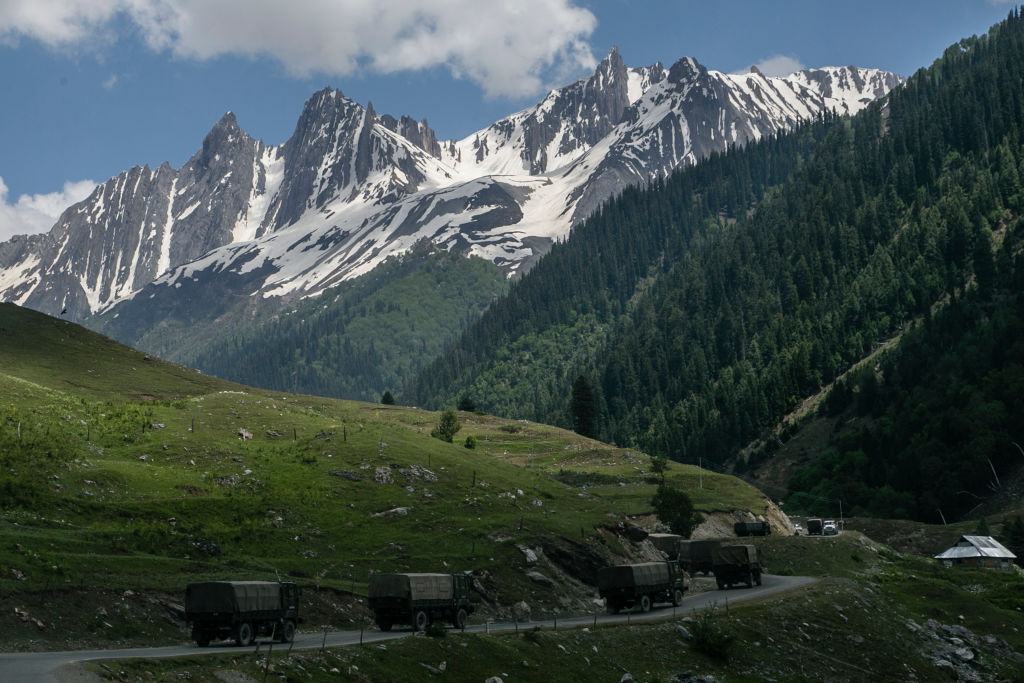
Water scarcity in the Himalayas, already a current risk but even more likely from 2030, will escalate tensions between China, India and Pakistan, increasing the threat of conflict and potentially nuclear exchanges, according to an ITV News account of the unabridged national security assessment.
The summary public version states more succinctly: countries will be competing for viable arable land and ever scarcer food and water sources. Already, we have seen how resources such as oil, gas, wheat and fertilizer have driven or been exploited by conflict in Ukraine and Iran.
Continued biodiversity loss means that economic insecurity and political instability will increase. Existing conflicts will worsen. Military escalation will become more likely, both within and between states, due to resource shortages.
In light of the current migration and asylum crisis, there was further sobering reading. Migration will increase and the report warns that climate refugees’ desperation will further push them into the hands of organised criminals who look to exploit their circumstances.
As a warning of disasters to come, the failed coffee harvests caused by disease and highly erratic weather patterns in Central America, which displaced an estimated 373,000 people in just three years, are cited.
Environmental tipping points – the thresholds which, once crossed, lead to accelerating and irreversible changes – are fast approaching, the report warns.
For example, the Amazon is likely to collapse at 20-25 per cent deforestation. The national security assessment states that it is currently at 17 per cent. In fact, the report goes further to say that there is a realistic possibility that we have unknowingly crossed thresholds already and irreversible collapse of some ecosystems, like coral reefs, is now inevitable.
These alarming and important findings were only made available to the public as a result of a freedom of information request from the think tank Green Alliance. Now, I have invited government representatives to appear in front of the Environmental Audit Committee, which I chair, to discuss the national security assessment and its implications.
At a time of global insecurity, this report must be taken seriously. The issues and the solutions are global, but their impacts will be felt locally, and so we must act locally as well as internationally.
Our intelligence authorities have clearly reached that conclusion, but have they persuaded the public and political decision-makers that this is a national mission that cannot be ducked?
At a time of volatility and uncertainty – from increasing conflicts, to fragmenting politics, to accelerating climate change – it is tempting to see these threats as too large and frightening to consider, but an approach that would see Britain batten down the hatches and ignore the global realities sets us on the path for disaster.
Instead, as we head toward this year’s global biodiversity and climate summits, COP17 and COP31, the UK must play its part in protecting and restoring the global ecosystems upon which our own peace and prosperity evidently depend.
Content from our partners



Related