
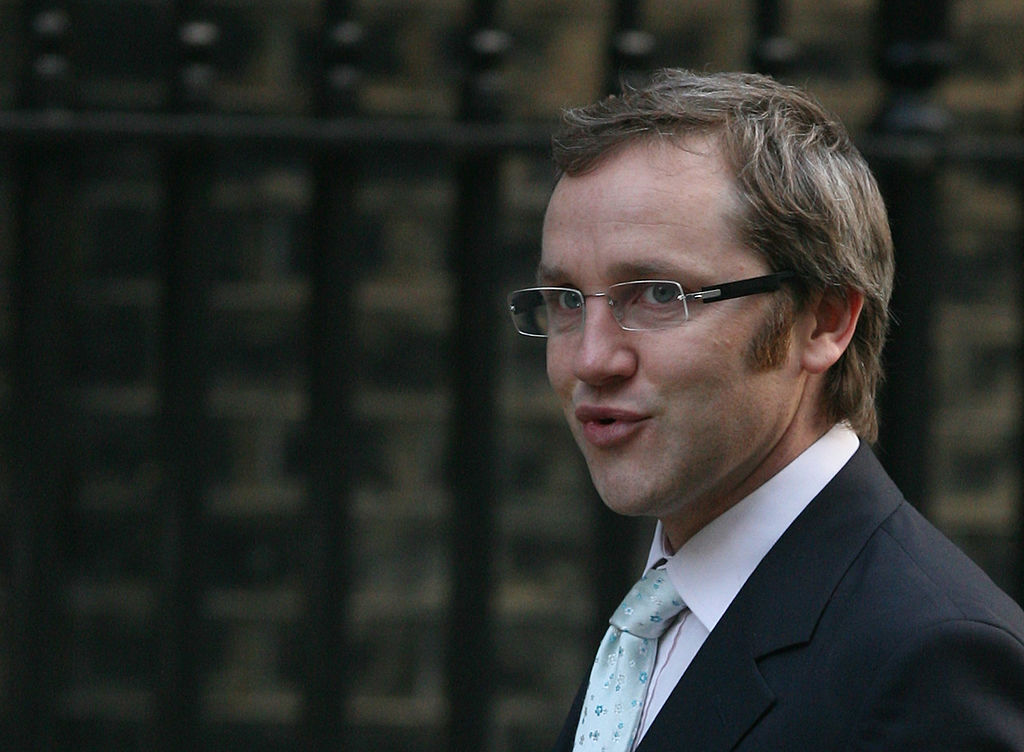
Andy Burnham is set to appoint James Purnell, a former New Labour minister, as his chief of staff in 10 Downing Street if he becomes Prime Minister. But what does the appointment tell us about Burnham’s intentions and instincts?
The chief of staff role, like many of the cogs in the machinery of British government, was invented on the fly and carries no official job description. But it was key in making a success of the only two Downing Street tenures this century which have resulted in a prime minister seeing through a full parliamentary term (Tony Blair and David Cameron).
To make the right choice, it’s a good idea for a prime minister to know what the job of their chief of staff is. It’s a question that Keir Starmer was unable to conclusively answer through his two years in office. He began by appointing a veteran Whitehall trouble-shooter, Sue Gray, then sacked her after a few months because he felt that she lacked sharp political instincts.
He then replaced her as chief of staff with a political strategist, Morgan McSweeney, who eventually had to resign because of advice he had given on a major issue of government that was largely separate from political strategy (the choice of British ambassador to the United States of America). One of the criticisms made of McSweeney in the months before his resignation was that he had spent too much of his time engaging in electoral strategising and media management, and not enough time helping to run an effective government. In Starmer’s final months in office he asked two aides – Jill Cuthbertson and Vidhya Alakeson – to hold the role on an interim and joint basis.

A handy guide to the chief of staff job was provided by Gavin Barwell, who held the role under Theresa May from 2017 to 2019. He writes in his memoir: “Whatever other roles the chief of staff to the prime minister may have their primary responsibility is to keep their boss in office.” This they do through enforcing the prime minister’s priorities across government and speaking authoritatively for them in moments of internal conflict, crisis and deadlock. Barwell continued: “The core of the role is to be the prime minister’s most senior political adviser and to manage the rest of the political team in Number 10 and, to a degree, political advisers across the government. Another key role is to tell truth to power. Very few people are prepared to say no to the prime minister or tell them something they don’t want to hear.”
So how does Purnell measure up to Barwell’s tests? Well, he has known Burnham for about 30 years and they have been friends and football team-mates, as well as political colleagues in Gordon Brown’s cabinet. In addition to the two cabinet roles he held under Brown, Purnell has since served in a range of senior management positions outside politics. That’s a fairly promising start.
While the May government ended in tears, Barwell got a lot of credit for keeping the show on the road for another two years after the Conservative’s 2017 general election disaster. I emphasise his perceived successes because although he may not be the most famous of the chiefs of staff – that would be Jonathan Powell, who did the job for Blair – he is thus far one of only two former ministers to have held the chief of staff role (along with Steve Barclay’s brief stint in the dying days of Boris Johnson’s premiership). When Purnell takes it up, he will be the third.
That gives an added depth of experience, on the general ins-and-outs of politics and the way No 10 works in relation to the rest of government. It also provides him with valuable knowledge on the specific challenges any Burnham premiership will face.
Purnell, for example, was the Welfare Secretary who tried to get through controversial reforms to the benefits system under Brown – that might prove to have been a useful primer as Labour now prepares to grasp control of a welfare bill that continues to increase while delivering poor outcomes. Purnell also served, under Brown, in a Labour government that was unpopular with the public and felt under siege from political opponents. Back then he had enough ideas about how to solve the political malaise that he felt he had to resign from government in order to make the arguments. He could provide a similar critique now as Burnham attempts to turn Labour’s fortunes around.
[Further reading: How Starmer lost control]
Content from our partners



Related

Join the debate
Subscribe here to comment