
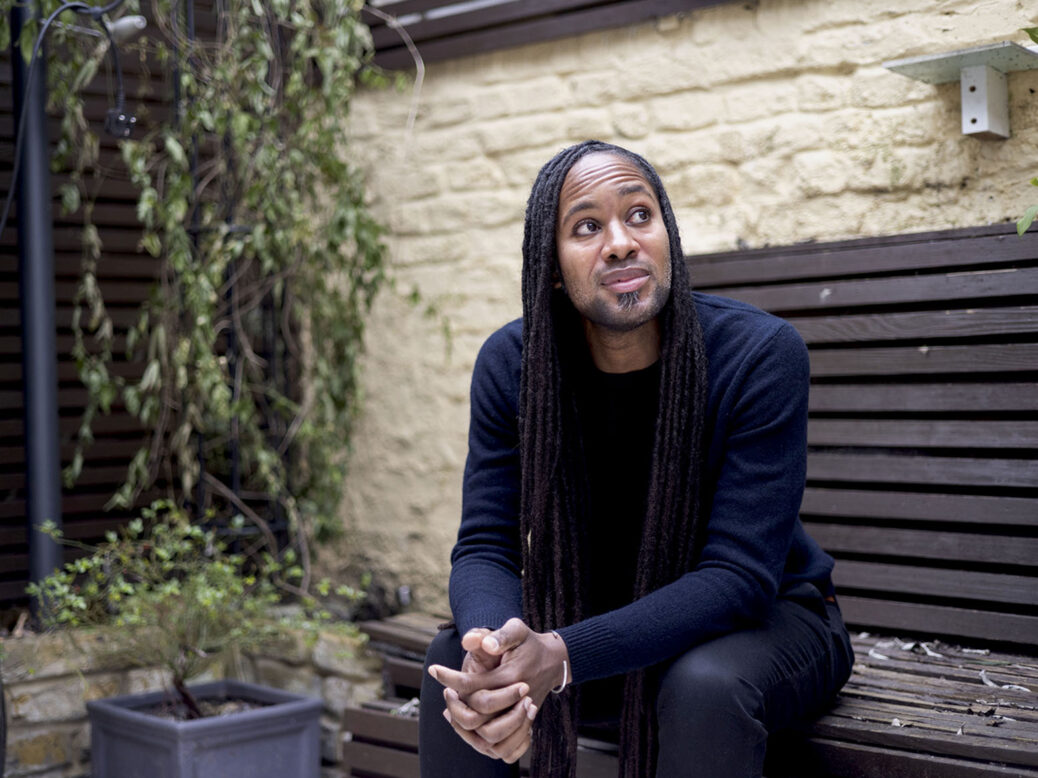
The Jason Arday affair has turned into a global furore. Arday is a young black man who, in 2023 at the age of 37, was appointed professor of sociology at the University of Cambridge. The scandal erupted after Arday was accused of plagiarism in his PhD thesis, among other publications, and of pepping up his biography with fake stories of remarkably diverse personal achievements. His fantasised triumphs ranged from authoring a non-existent book to running a 600-mile charity marathon that would have defeated a prime Mo Farah. Despite initial protests from staff at Cambridge, his PhD supervisors at Liverpool John Moores University, and many academic colleagues across the country, the allegations mounted to a point of demanding a formal investigation. Arday resigned on 5 August.
Commentators with a stack of rather predictable axes to grind joined the fray. Far-right figures threw in crude racist tropes about the inherent cerebral inferiority of black people. Liberals and conservatives alike complained in haughty tones about the so-called long march of woke culture through Western institutions and the inevitable failure of equality, diversity and inclusion policies (EDI). Some rather uncharitable practitioners of science joined crustier academics from traditional humanities disciplines to condemn Arday’s qualitative brand of sociology as a low-value pseudo-science. Given that internal investigations had found some substance in the accusations, activists who might instinctively have sympathised with Arday were divided, hesitant and relatively muted in their support. Public reaction therefore quickly degenerated into a rather ugly free-for-all. However, as usual, underneath the noise lies a context. Academia’s top tier might well contain a number of over-promoted individuals, but Arday quickly became a scapegoat for what some see as a general decline in academic standards. And while that is a simplistic reading, Arday’s story belongs to higher education as much as it does to him, and his failures belong to academia.
Over the past few decades, all academics have noticed a change. Students weaned on technological aids and soundbites seemed increasingly ill-prepared for academic study. Academia found itself compelled to meet the demands of indebted students who regarded themselves as customers, rather than apprentices in need of self-improvement. Academics struggled to do much about it. The time and energy they were able to devote to teaching preparation had been reduced by the demands of administrative roles, which meant floods of emails, and meetings to organise restructuring and networks of accountability. “Meetings about meetings” and “restructuring of restructuring” became standard faculty jokes as managerialism expanded to fill every available space in the working day.
Academics also had to deal with the pressures of an increasingly competitive research culture. After 1992, the university system was allegedly “democratised’ and converted into a research marketplace. Each university was given a chance to impress, which ramped up the pressure to publish an increasing quantity of research. Success was rewarded with income and prestige. The Research Excellence Framework (Ref), which translates the quantity and metricised quality of “outputs” – formerly known as books, articles and reports – into government funding, made research compulsory at all levels of the system.

But given the existing pressures of teaching and expanded administration, the ability to actually conduct research became increasingly reliant on “buying time” with grants from various external funding bodies. This imperative simply added another duty to the roster – the seemingly endless writing of grant applications in the full knowledge that the chances of actually receiving any money was quite low. Such difficulty increased the pressure to conform ever-more rigidly to research themes set by these external bodies, which tend to seek policy-friendly findings, and have little time for deep, original thought or paradigm-shifting ideas.
The principal research theme guiding the humanities and social sciences is often described as “social justice”. And this can be traced to a major shift in the political zeitgeist in the early 1970s. Concerned by the soixante-huit troubles in France, the big US funding bodies such as the Ford Foundation and Rockefeller Foundation tried to accelerate away from the politically dangerous areas of class and economy in the social sciences and the humanities. This financial network was midwife to the rather comfortable birth of the post-structuralist movement, which saw the real impetus for progressive social change not in a politically informed and organised working class but among women, gay people and minority cultural groups. The new culturally grounded movement – given various names, such as the “cultural turn”, “cultural politics” or “identity politics” – was initially quite effective in representing minorities. But it posed no real threat to the neoliberalism which achieved power and hegemony across the West after 1979.
Whereas mid-20th-century civil rights struggles had often been associated with socialist or revolutionary movements, the new “identity politics” was quickly incorporated and institutionalised to help forge what political theorist Nancy Fraser called “progressive neoliberalism”. Leaving working-class women and members of ethnic minority groups to their fate as precarious workers competing in the service sector, progressive neoliberalism flooded all major public and private organisations in the policy-friendly guise of EDI. Lockheed Martin and Disney could claim to be doing their business on the same bedrock of liberal values as the University of Cambridge. Universities began to act as advertising hoardings for the meritocracy and tolerance that progressive neoliberalism claims to safeguard in the West’s deindustrialised and, since 2008, fragile economies.
The impact on academia was significant. A common complaint among scientists about their own disciplines was always that only a minuscule number of papers introduced new concepts or triggered interpretive shifts. The rest are merely niche-bound interventions prescribing minor adjustments to existing analytical frameworks. Post-structuralism offered the humanities and social sciences a seemingly endless expansion of niches in which such gently revisionist studies could take place. Each niche ended up with its own journal, or small group of journals, and its own specialist books, whether monographs or weighty tomes. This led to a process of fragmentation and dilution.
The academic publishing industry is a vast commercial concern. The roughly 20,000 niche humanities and social science journals are valuable vectors for career progression and for universities’ prestige and funding. While a few standout specialist publications receive hundreds of citations, many are read only a handful of times. Given the conflict between this overproduction in multiple niches and academics overloaded with work, editors struggle to find appropriate reviewers for book proposals and journal submissions. It’s virtually impossible to maintain intellectual standards in this fragmented, marketised milieu. Indeed, standards had taken a backseat behind the two products of this revolution inside higher education: a sprawling, unmanageable system of academic publishing; and a prioritisation of a university’s ideological appearance over its internal reality.
Modern academics forge their intellectual identities, adopt their personal styles and plan their career progression around these conditions. And that includes Jason Arday. Arday appeared to Cambridge management as a young, rather sensitive black man from a poor background who had surmounted extreme personal difficulties to achieve wonders. Aligning nicely with the diktats of critical race theory, he was a spectacular, made-to-measure poster boy for a university trying to demonstrate its anti-racist credentials. Employing Arday allowed Cambridge to present the vanities of fairness, tolerance and pristine meritocracy as realities to the general public, and to sell an attractive PR image to government. He was not an opportunity to be missed.
Unfortunately, Cambridge underestimated how far both intellectual and administrative standards have fallen. Issues with Arday’s work should have been detected and rectified by staff at Liverpool John Moores University during his PhD studies. If it had, he may have been prompted to improve the originality and rigour of his thesis. Improvement could have displaced the fantasies he thought necessary to enhance his image and employment prospects. At Arday’s previous jobs, the standard of his publications should have been scrutinised to ensure the quality was up to professorial standard. The fantastic claims in his biography should also have been questioned and verified. All this is nothing more than routine administration. But, in the turmoil of today’s fearful marketplace, it didn’t happen.
We can’t help but wonder how many academics have been a little too hastily fast-tracked to the top tier for reasons other than discipline-leading intellectual sophistication. Conversely, have others with the required qualities been overlooked and restricted to the lower tiers? Arday is neither a victim nor a crook, just an ambitious young man with a penchant for telling tall tales, actively recruited by a system keen to capitalise on his image.
However, in a precarious service economy in which hard-working, lower-tier academics producing incisive and sophisticated work are receiving redundancy notices, the revelations that followed his appointment at Cambridge were bound to cause some degree of broad-spectrum resentment. And, of course, the whole debacle hands ammunition to the racist far right. The university sector should be a refuge entirely independent from the prevailing political-cultural zeitgeist, not its nervous, uncritical servant. It is a quintessential public service that, like health, utilities and energy, requires public funding and should never have been marketised. Had Arday settled down as a senior lecturer in such a system, he could have avoided this scandal and still be working now.
[Further reading: My feud with Rod Liddle is finally over]
Content from our partners


Related

Join the debate
Subscribe here to comment