
It’s too damn hot. Trying to cover the Starmer and Burnham story, something genuinely new in British political history, would be hard enough at the best of times. But with my frontal cortex turning to macaroni cheese, it feels almost impossible. And now I have fallen as well.
I don’t often complain about the consequences, or as the medical people say, “deficits”, following my major stroke 15 years ago. After all, I can move around on two legs, speak, write and therefore work. But because of “drop foot” I do trip and fall. The last time I broke a bone in my hand. This time I seem to have just avoided that. But the humiliation of finding myself sprawled across the pavement – phone, headphones, paperwork in a ragged arc around me – is real. I might as well be drinking again…
In the firing line
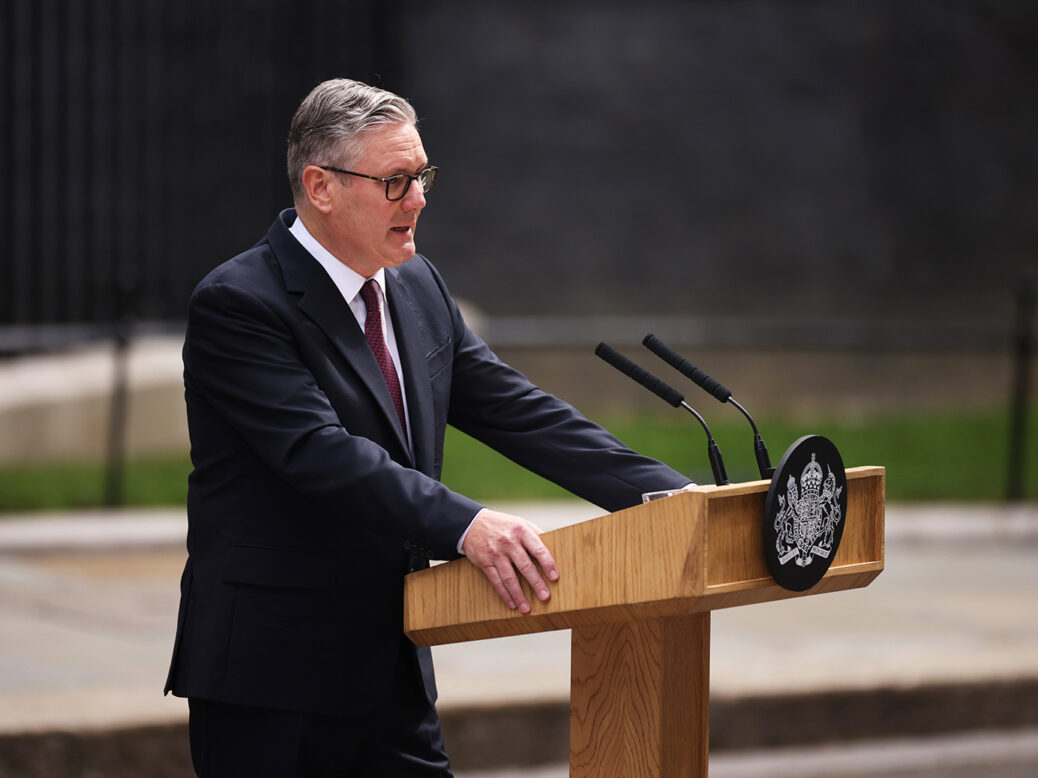
Keir Starmer’s podium speech was almost perfect: sad, dignified, graceful and helpful, with a break in his voice for Victoria. Almost – because that phrase about the Corbyn-era party being “morally bankrupt” will stick in many craws. There are lots of huge questions immediately ahead, but let’s remember Starmer as a man not naturally fitted for the job, but who took Labour into government at a time when few others could have done.
When we talk about how many prime ministers have come and gone, part of the story is simply the intersection of attack-dog social media with open and easily influenced parliaments. One of Starmer’s former advisers pointed out to me that if you take 2007 and the first iPhone as the beginning of the modern era, we’ve had seven prime ministers since then (Burnham would be the eighth). Scroll backwards by the same number of years and you reach 1988, and the number is just three.

And online, all the clever people have already decided that Andy Burnham is useless. He’ll be just more of the same. The memes are meming away. The right-wing joke factory is gleefully clattering with abuse. On the centre left, we are all congenitally disloyal, of course. But if we don’t give Burnham a decent shake of the stick, then we are heading towards a much darker kind of politics.
I don’t know him well, but I’ve talked to him quite a bit and always found him an alert man, thoughtful, without pomposity, and with a fair amount of self-knowledge. He told me that in his earlier years at Westminster he was beset with imposter syndrome – and that it was only when he was back home that he remembered who he truly was. No, he’s not the Messiah, but he’s not just a naughty boy either: it might be a good idea to listen and watch before calling that podium out again.
Elon’s pipe dream
Speaking of Elon Musk, as I almost was, he says that the economy will be ten times bigger in ten years’ time. So I got thinking: what would that actually feel like? What would we be consuming, and doing, ten times more of that we don’t do now? It pays for more people, of course, and could mean the obliteration of what we currently see as poverty; but what about the average middle-class life, once AI has taken so many of the jobs?
I have an image of us becoming a fleshy interruption in a huge financial and tech loop – blobs getting the internet squirted into us, paid for by the government through universal basic income, raised from taxing the tech dopamine-suppliers. Round and round. We’d all sit at home in an endless, incurious but pleasurable enough dream. But would it be living? It would not.
The next big political movement is going to be a general technology rejection uprising: the quiet army who unplug, refuse wi-fi, use coins and read maps. But this, so far, doesn’t seem to have arrived on Elon’s radar. Funny that…
Out of season
The season for summer parties has arrived, and I am feeling ambiguous. I always seem to end up standing on the edge of the throng, moving uneasily from foot to foot. Impostor syndrome again. My feelings are better expressed by Alan Bennett at 89 in his new collection of diaries, Enough Said: “It is absurd to say that I feel I am not yet grown up… What I mean is, there has never come a time when I could be thought to have acquired dignity, common sense, still less worldly wisdom… I have a partner, a house and some standing in the community but none of it counts. When I enter a room full of people (these days a rarity) I am 16.”
Exactly so. I have always hoped to be wise, affable, with a glass in hand, at the centre of an attentive knot. It hasn’t happened yet… and did I mention the heat?
[Further reading: Keir Starmer: A Political Obituary]
Content from our partners
Related

Join the debate
Subscribe here to comment