
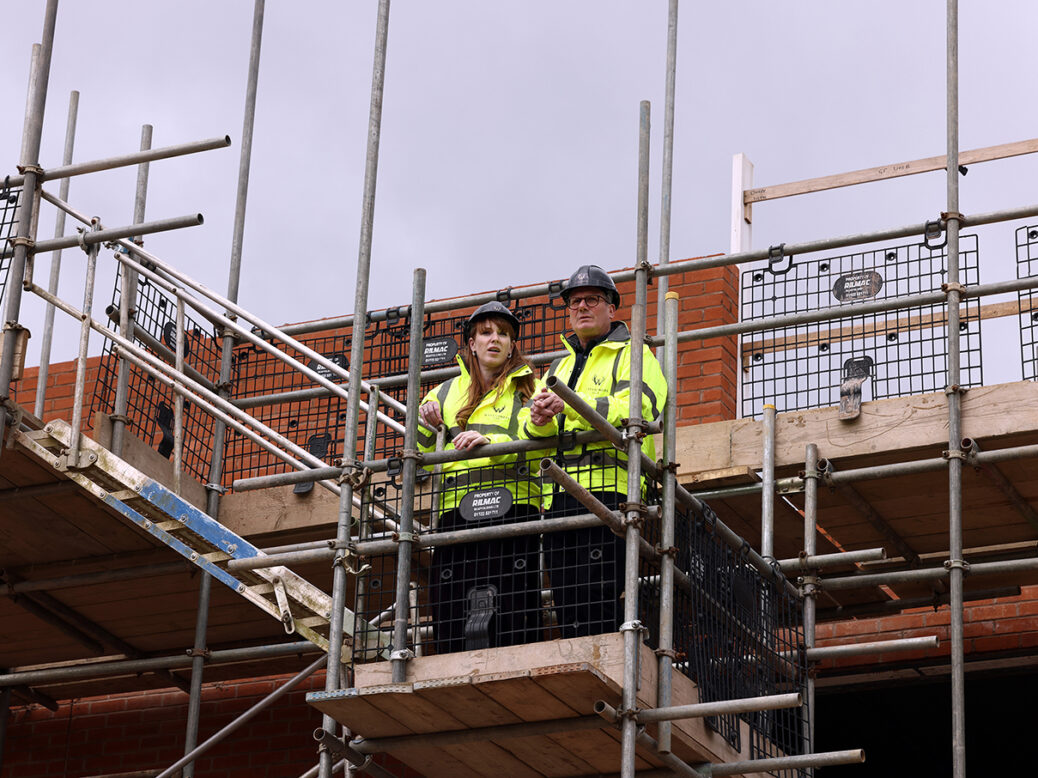
After a summer break, Labour want to take on Britain’s “dysfunctional” housing and land markets. They want to make them fairer for those who want to buy homes to live in and less of a boon for “speculative” investors. And although Labour’s much-awaited long-term housing strategy will not be published before recess, Housing and Planning Minister Matthew Pennycook has hinted that if year one was about laying the groundwork for Labour’s housing plan, year two will be significantly more radical.
It is a testament to the functionality of Pennycook’s department – the Ministry of Housing, Communities and Local Government (MHCLG) – that it rarely makes headlines in the way that, say, the Department for Work and Pensions (DWP) or Treasury do. Between them, Rayner and Pennycook have delivered on manifesto commitments by tweaking legislation in a quietly radical and efficient way.
The Renters’ Rights Bill will soon become law. Similarly, the Planning and Infrastructure Bill is paving the way for urgent planning reform, which, though not radical for some because environmental considerations must still be factored into planning approval, will make clever tweaks to existing frameworks for delivering development, such as beefing up the compulsory purchase powers of public bodies to stop the sale of land for development at inflated prices. Leasehold reforms, similarly, have been amped up, and there is reportedly more to come.
With legislative changes that former Tory Housing Secretary Michael Gove wanted but could never get through his own party, Pennycook wants to step things up and reform the housing market once and for all by “addressing the financialisation of housing”, and “ending our overreliance on a speculative model of development that… constrains housing supply.”

Punchy in theory, so how will it work in reality? Ministers are exploring ways to give people who want to buy homes to live in them, as opposed to as an investment, an advantage. This could include implementing rules that stipulate new homes can only be sold to local people who will live in them, as Cornwall Council have done to protect hard-won new housing developments and prevent new housing being sold to investors. Labour have suggested that they will similarly protect homes in their new towns.
Developers who buy up land, obtain planning permission to build, but then, instead of actually building anything, sit on the land and wait for it to rise in value, will be penalised and blocked from planning permission in the future. The sites for a “new generation” of around a dozen new towns, like those built post-war, have also been plotted on a map to be announced imminently. Pennycook is determined that these will be built out quickly and purposefully.
Ministers are thought to be considering giving Homes England more regional power so that it can be involved in planning at a local level, ensuring that the right homes are built in the right places. New towns will also be overseen by development corporations with their own governance structure, taking some decisions away from local councils and putting them in the hands of bodies specifically tasked with getting things built. These public bodies will be able to invoke the new rules on compulsory purchase to get hold of land cheaply and build homes and infrastructure on it.
Rayner and Pennycook need to get this all over the line, and fast. The stakes couldn’t be higher. Labour will be judged harshly on whether they can be bolder and go further than the governments of recent decades, who presided over an increasingly dysfunctional housing market and did little to nothing. But, more importantly, there is now not a single part of Britain which is not impacted by this country’s sclerotic housing market.
Since the 1970s, house price-to-income ratios have more than doubled nationwide, pricing younger generations out of homeownership, ushering in 35- and even 40-year mortgages, and trapping nearly 5 million households in an expensive and unstable private rental sector. That’s more than the number living in social and council housing, which not only provides secure and affordable homes but also provides a return for the state through rent.
None of this is new. The housing crisis was fast becoming one of the defining issues of modern life when Labour lost to David Cameron in 2010. But the situation is worse than it ever was. Week after week, new lows are reached. Housing makes headlines for all the wrong reasons. Rising homelessness is now such a grotesque new normal that it rarely makes a front page. So is the increasing number of homeless families, and, at last count, 164,000 children who are forced to live in temporary accommodation. That’s anywhere from a hotel to a converted office block and, even, a converted shipping container.
And, of course, these bleak statistics don’t capture the misery of the people who can afford their rent, just as long as they don’t put the heating on, let alone contemplate a holiday. They also don’t tell the story of the anguish of young adults who can’t afford family-sized homes, or who still live at home in their twenties and thirties, and those whose mortgages have recently jumped up due to higher rates, swallowing chunks of their disposable income in the process.
The human suffering caused by expensive housing and homelessness also has an economic impact. Housing costs consume ever-larger amounts of public money. A rise in the number of lower-income households relying on private renting has meant that the Housing Benefit Bill is predicted to rise to £35bn by 2028. That’s more than the total spend of many government departments. Temporary accommodation now costs councils £2.3bn a year.
As the Chartered Institute for Housing has pointed out, these expanding bills mean only 12 per cent of government spending on housing in 2022 went towards new buildings, compared to 95 per cent in 1976. High rents and mortgage costs, relative to income, also mean that young people today, who are less likely to be homeowners than their elders, are spending disposable income that could be contributing to growth through either the consumption of goods and services or investment on their homes.
In the end, those who do the reading draw the same conclusions about what William Beveridge described as “the problem of housing” in this country back in 1942 – affordable housing is the only way to prevent people becoming homeless and unwell and, in doing so, reduce the pressure on the state to support them. Before he backed down on housing reform and bowed out, Gove had realised this. He started to talk about the problem that the impact of extractive “rentier economics” was having in Britain.
The phrase was not a borrowing from Gary Stevenson, let alone Friedrich Engels. Downstream from Adam Smith via Thomas Piketty, Gove said it during a 2024 interview with that leftie rag the Financial Times. The Tory grandee correctly identified that Britain’s housing crisis would be the death knell for his party because younger generations were at the sharp end of it. After all, why would any young person vote Conservative if they have no assets to conserve?
However you slice it, the housing crisis is emotionally and financially draining us all. Economists (like Smith and latterly Piketty) have pointed this out for centuries. Labour knows that fixing housing will be key to their electoral survival. But, more than that, they know that it is the right thing to do. With one year down and four left of Labour’s first term, the clock is well and truly ticking. After all, imagine a baby born into homelessness, to a family with one bedroom emergency temporary accommodation when Labour entered Downing Street last year will be five and in need of space to grow and do homework and play in no time at all.
[Further reading: Immigrants did not cause Britain’s social housing shortage]
Content from our partners



Related


Join the debate
Subscribe here to comment