
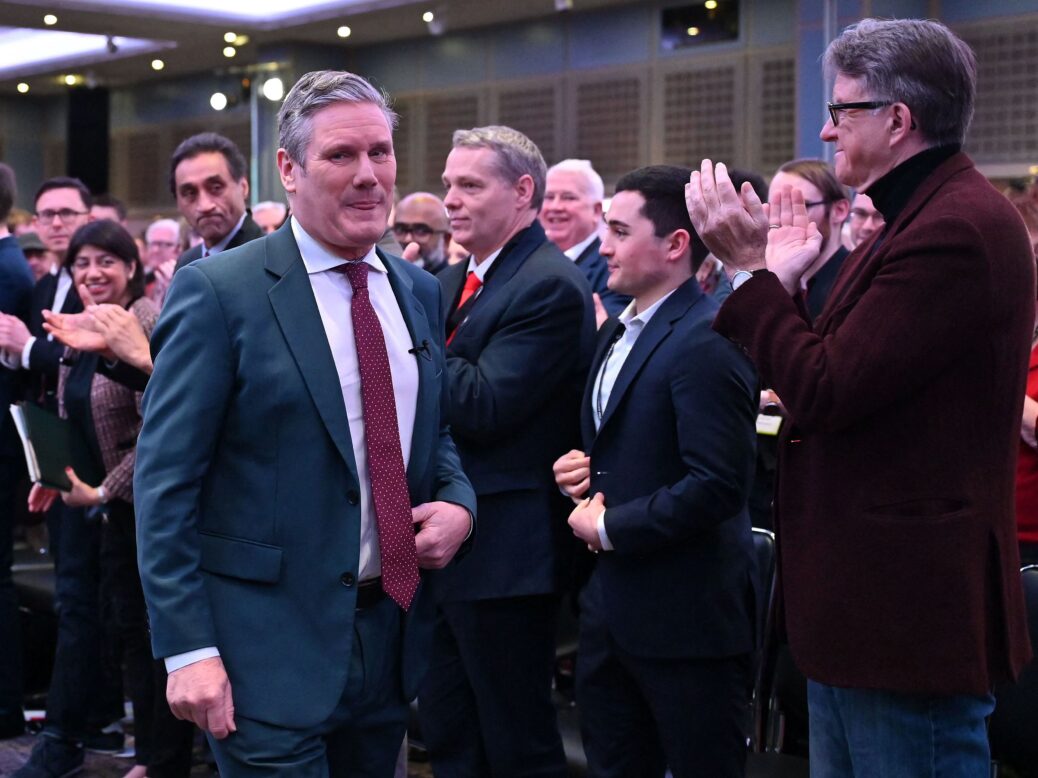
The government faces a brutal round of local elections, a foreign war Britain did not start has sent energy prices and inflation rocketing and the Prime Minister is in crisis over misleading the House of Commons – it’s all starting to feel very 2022.
For Boris Johnson, it was a birthday cake and a karaoke machine in the midst of Covid lockdowns that shattered his repeated assertions that the rules had been followed at all times. For Keir Starmer, the memorable points in the story are not quite so overtly comical – but in way no less farcical for that.
On Thursday 16 April we learned that Peter Mandelson, a man who had twice been forced to resign as a minister in Tony Blair’s government following scandals, failed the enhanced vetting necessary for him to take up the role of UK ambassador to Washington in 2025. Yet his appointment was signed off anyway, apparently without anyone from Downing Street knowing about it.
This missing piece of information, which was only uncovered by the Cabinet Office on Tuesday, means Starmer has made misleading comments to parliament and the public multiple times. On 10 September 2025, as revelations about Mandelson’s longstanding relationship with the disgraced sex trafficking financier Jeffrey Epstein were starting to break, the Prime Minister told the House “full due process was followed” – a line repeated several times by officials and ministers in subsequent days. In February, in the midst of yet more explosive details concerning leaks of sensitive government information when Mandelson was last in government a decade and a half ago, Starmer was even more explicit about the process of the appointment: there had been “security vetting carried out independently by the security services, which is an intensive exercise that gave him clearance for the role”.

Except it hadn’t. Clearance had in fact been denied. The government’s line is that someone in the Foreign Office (nudge-nudge-wink-wink permanent secretary Olly Robbins, who started in his role just weeks before Mandelson officially began his ambassadorial gig and has just been sacked) overruled the vetting decision in January 2025 without telling anyone in No10. No one bothered to tell Starmer in September either, when he was insisting to the Commons due process was followed. Nor did they enlighten him ahead of his comments to the media in February 2026.
According to Starmer, this is both “staggering” and “unforgiveable”. No disagreement there (although allies of Robbins are now suggesting the civil servant was bizarrely not permitted to inform the government of the outcome vetting procedure). The PM is also “absolutely furious” about it.
“Furious”, perhaps, like Boris Johnson claimed to be in December 2021, when a video leaked of government aides jokingly gaming out how to answer questions about lockdown-breaking Downing Street parties? Is it “staggering” to Starmer in the same way Johnson claimed to be “shocked” by the lockdown breach revelations? Is there really any difference between Starmer’s vehement defence that he didn’t know Mandelson’s vetting had been denied and Johnson’s emphatic line: “I repeat that I have been repeatedly assured since these allegations emerged that there was no party, and that no Covid rules were broken”? How would the Keir Starmer of that era, skewering Johnson from across the aisle at PMQs over his muddled partygate story, have reacted to the excuses he himself is using now?
We know the answer – because it was Starmer, with that lawyerly eye for detail and forensic ability to target weak spots that worked so well in opposition, who laid the traps that eventually snared the Conservative prime minister in his own deceptions and half-truths. Many things helped bring down Boris Johnson’s dysfunctional government, from the kamikaze machinations of Dominic Cummings to the sexual harassment row concerning Chris Pincher, not to mention a dire round of local elections. But Starmer was the crusader leading the charge against partygate, reminding the nation every day what the enveloping scandal revealed to us about the man holding the highest office in the land.
Partygate was so corrosive because epitomised what was already well known about Johnson: that he was reckless, frivolous and fundamentally unserious, the type of character one could well imagine hosting boozy parties where children’s swings got broken and then claiming to have no memory afterwards. In a very different way, Mandelsongate reveals something similar about Starmer’s true nature. The most positive reading of what we have learned in recent days – the only reading that absolves Starmer from having deliberately and knowingly misled parliament – is of a man with such a weak grip on the government he is supposedly running that key decisions routinely get made without ever crossing his desk.
From the botched winter fuel reforms to the “island of strangers” speech he claimed not to have read, Starmer’s hands-off approach to governing has become the hallmark of his time in office. We know that Starmer didn’t even like Peter Mandelson; we know the appointment was pushed for by chief aide Morgan McSweeney against ethics advice; we know it was publicly announced before the enhanced vetting process had even begun. Might the incoming head of the FCDO have felt pressure, either overt or implied, to spare the Prime Minister the embarrassment of having to pick a new US ambassador and, and might the culture of abdication and incuriosity Starmer has propagated prevented that information from trickling up? With another leader, one would have doubts. With this one, it seems evidently plausible.
Starmer would be horrified by the partygate comparison. He built his brand in Westminster as Johnson’s polar opposite: a politician lacking sparkle but led by old-fashioned ideas of duty, principle and process. I’m sure he feels utterly betrayed by the circumstances that have led him to such a similar place, when his defence rests on being kept in the dark about information any competent leader would be expected to know. If the Mandelson scandal is to be the trigger for his downfall (which, given the mutinous noises coming from Labour MPs, is very possible) he will no doubt see it as a great injustice.
The rest of us will see the irony. Scandals unravel political careers when they reveal something fundamental about their architect’s unsuitability for office. Starmer helped Johnson learn that the hard way. Now he is learning it himself.
[Further reading: Partygate has taken us all for fools]
Content from our partners



Related

Join the debate
Subscribe here to comment