
Like Instagram, politics is all about appearance versus reality. A secretary of state is just like you, desperately trying to make life seem as though it’s all sunsets and job promotions when, in fact, most of their time is spent looking at their bank account and worrying about how to pay for the basics.
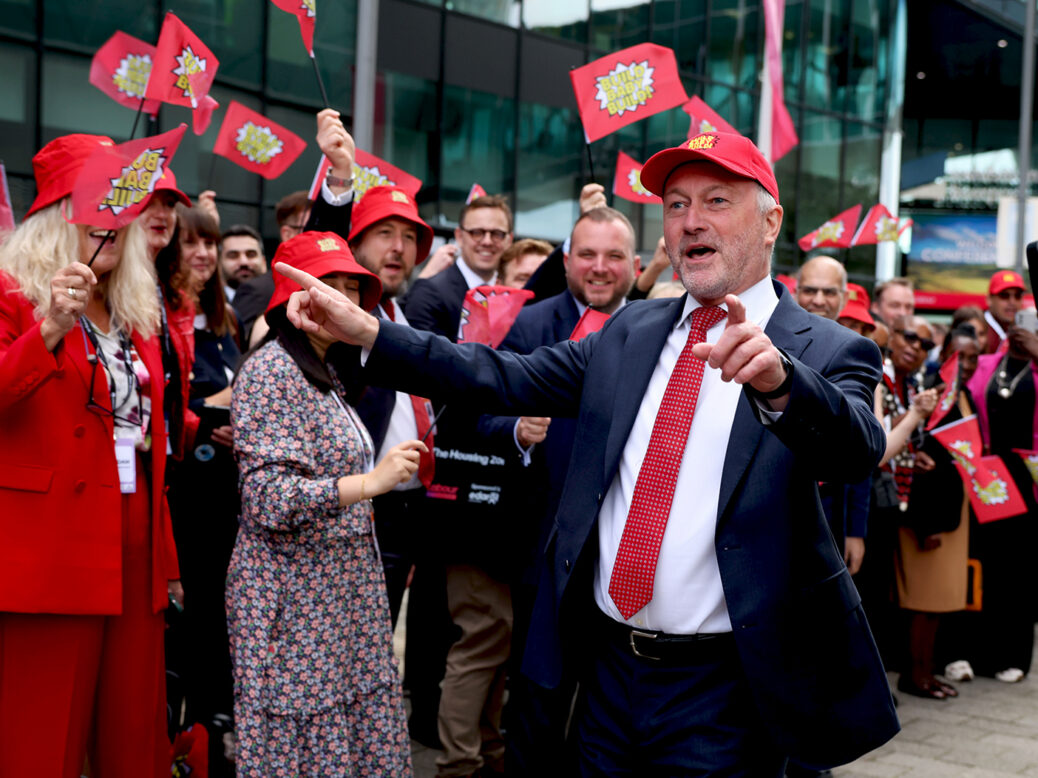
This is particularly true of Labour’s new Housing Secretary, Steve Reed and his “Build, baby, build” slogan. This rallying cry to end Britain’s housing crisis might sound good, but there are huge question marks over whether it’s possible without the state spending huge sums on social housebuilding.
Since taking over at the Ministry of Housing, Communities and Local Government (MHCLG) from Angela Rayner, Reed has well and truly entered Britain’s housing chat and upped the ante by doubling down on Labour’s wildly ambitious target to build 1.5 million new homes before the end of this parliament.
At Labour’s conference in Liverpool, there was merch, too: bright red caps and bucket hats, tote bags and flags, all bearing the Yimby words “Build, baby, build”. At housebuilding rallies, supporters cheered and chanted. On social media, Reed looked into the camera and explained why it all mattered: he pledged to stem the tide of rising homelessness and declared his passion for helping young people into homeownership.

In the corridors and discussion rooms of the ACC, MPs, Labour supporters and housebuilders nodded. This was the Yimby movement’s moment to come together, almost cult-like, around a Housing Secretary who full-throatedly endorsed their slogan. Some Labour members and advisors were more enthusiastic than others, however. While even those who said they would “never be caught dead” in a red cap applauded Reed’s “new energy” and “ambition”, nervousness began to take over as the gulf between the politics of slogan-making and the policy required to deliver widened.
The news is dominated by immigration, Nigel Farage and growth (or the lack thereof), but the truth is that all roads, for both Britain’s government and economy, lead to the housing crisis.
Labour, as I’ve reported, will live and die by its housing policy. That’s because building, whether of new homes, towns, or infrastructure, is needed for job creation as well as growth. But, more importantly, it’s needed to stabilise housing costs and lift millions of people – particularly younger adults – out of the misery of private renting.
The government knows this. That’s why Reed opened Labour’s conference by announcing Labour’s flagship plan for 12 new towns across England. For years, housing and planning minister Matthew Pennycook has worked to bring this together in parallel with a package of planning reforms, which will reintroduce development corporations and make it easier for public bodies to compulsory purchase order (CPO) private land.
But there’s more to it than that.
Reform are now the real opposition. They have been able to capitalise on public concerns about border control and immigration, which surged under the Conservatives after Brexit. And, like other populist parties across Europe, they have been helped by Britain’s housing crisis.
A growing body of academic research shows that hard-right or populist politicians do very well in places where housing is of poor quality or inaccessible, and also in places where, though expensive, house prices have not risen dramatically (as they have in parts of London), making people overnight millionaires.
Right now, Britain is not a country where everyone can access the sort of housing they need. Whether that’s social housing (you’ll be on a waiting list with 1.3 million other households), homeownership (mortgage approvals are down, and young adults are more likely to be able to buy if they have wealthy parents) or renting (the market is hot and unaffordable).
This is creating anguish for people from all walks of life – those on low incomes are at the sharp end, but, increasingly, people on middle incomes can’t get on with their lives either. This impacts how people behave and vote.
The Tories learned the hard way, at local and national elections, that the housing crisis can send a political party into a death spiral. The problem was that only former housing secretary Michael Gove seemed to get the memo.
Unlike their predecessors, Labour are delivering on planning reform, and Pennycook has been coaxing this complex legislation through Parliament. Reed’s new rhetoric and Instagram-ready energy have got Labour’s pro-development supporters fired up about a topic that often fails to excite, but they aren’t the people he and Pennycook must convince.
The new Housing Secretary’s “energy” and “ambition” mask the desperate situation Labour now finds itself in. This government almost definitely will not be able to build 1.5 million new homes. Indeed, they may struggle to get anywhere near their own target. And, even if they could, there’s no guarantee that the people currently locked out of homeownership would be able to access the mortgage credit to buy them. Chancellor Rachel Reeves has tried to convince major lenders to increase the amount that young homebuyers can borrow in relation to their incomes, and failed to convince all but one (Nationwide).
Reed’s decision to double down on an unachievable target may prove to be ill-judged. Failing to build all of those new homes doesn’t have to mean this government is doomed to fail on housing and all of the other areas of public policy it impacts.
At this point, even delivering Pennycook’s planning reforms and getting development corporations building again across the country would be a win. However, Labour could and should be bolder than that. They need to ask mortgage lenders why unstable and expensive short-term fixed rates are the norm in Britain when other countries, like Germany and Canada, offer people long-term stable rates? They need to get creative and look at new models of housing, like affordable social housing starter homes for young professionals who can’t afford to buy in the traditional way.
As reality comes crashing back down for the government as it returns from Liverpool to Westminster this week, it’s going to take more than “Build, baby, build” merch to materially improve Labour’s electoral chances and, more importantly, people’s lives.
[Further reading: Has Kemi Badenoch actually read Terry Pratchett?]
Content from our partners



Related



Join the debate
Subscribe here to comment