
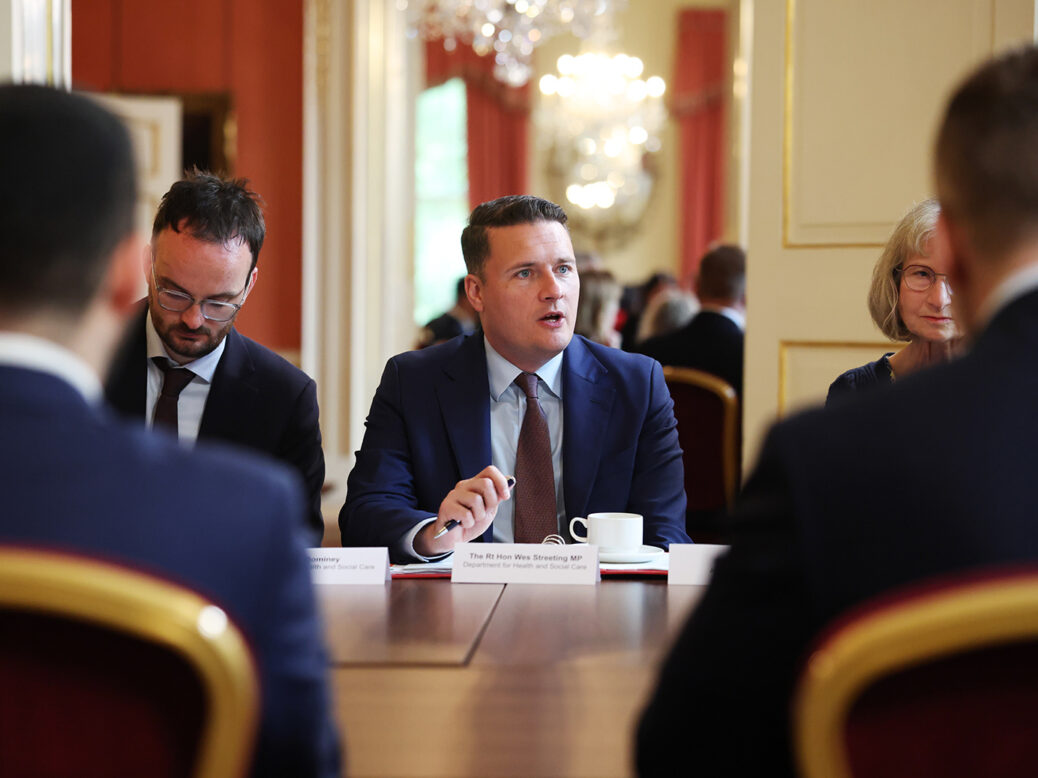
Before the country went to the polls on 7 May, one of Keir Starmer’s cabinet ministers offered a word of warning. Even though bad results for Labour were “baked in”, it was impossible to know what might happen afterwards. “There’s a visceral emotional reaction when you hug your colleagues who have lost,” the minister told Starmer. And that might cause Labour MPs to behave unpredictably.
Wes Streeting was that cabinet minister. Forty-eight hours after the results came through, and with only a smattering of calls on Starmer to resign, Catherine West, the little-known MP for Hornsey and Friern Barnet, decided she had had enough. She was reeling from seeing friends losing their jobs on the council she had once led. Frustrated by the lack of leadership from the cabinet, she took to Radio 4 to tell them to get together and agree a successor. If they didn’t, she would take on Starmer herself – not to become prime minister, but just so that the Labour Party would finally do something.
West spent the weekend fielding calls from journalists and from her own colleagues, who cautioned her that the most likely beneficiary of her intervention would be Streeting. She might end up triggering a contest before Andy Burnham could return to parliament. West didn’t want that. She sent typo-laden messages to leading Labour women to ask if they would consider running, including Sarah Sackman, a close ally of the Prime Minister, who politely declined. Bridget Phillipson, the Education Secretary, did the same when West asked her live on TV. But by Monday, when West changed tack to coordinate a letter entreating Starmer to set out a timetable for his departure, things had started moving without her.
“Catherine West opened Pandora’s Box,” one senior Labour figure put it. “She will never have to buy a drink at Labour Party conference for the rest of her life,” another claimed. Soon a steady drip of Labour MPs began calling on Starmer to go, reaching 50, 60, then more than 70. By the time Joe Morris, Wes Streeting’s PPS, resigned on Monday night, swiftly followed by other Streeting, Burnham and Shabana Mahmood allies, it was clear that Starmer was in deep trouble.

Inside No 10, things “went into a tailspin”, one insider told me. Mahmood entered the building and told the PM that he should set out a timetable for his departure. Yvette Cooper followed suit, according to two sources, although those close to her deny this. Other cabinet ministers held conversations with him about how to leave in a “dignified way”. Pat McFadden, the dour Blairite seen as a steady pair of hands, calmed nerves. He told Starmer not to do anything immediately, reminding him that no leadership challenge had been triggered. “You shouldn’t be bounced into resigning because of Twitter,” he counselled. “It’s just four ministerial aides.” Richard Hermer and Steve Reed offered similar advice. Jill Cuthbertson, his longstanding aide, who recently replaced Morgan McSweeney as joint chief of staff, returned from maternity leave to help.
And yet, as the evening of 11 May drew in, even supportive cabinet ministers thought the pressure might be too much for Starmer to withstand. One told me: “I don’t see how he survives this.” Another reluctantly concluded he was finished. As dawn broke the next day, former No 10 aides, ministers and other insiders were in disbelief at what was happening. “I’m so depressed – how have we ended up here, in a death spiral to nowhere?” one former senior aide messaged. “The total shitshow to come makes me despair,” said another. The markets wobbled. Starmer’s departure appeared an inevitability.
But at that morning’s cabinet meeting, the PM did what he had always said he would do, and fought. “The Labour Party has a process for challenging a leader and that has not been triggered. The country expects us to get on with governing,” he told colleagues. It was his “put up or shut up” moment, laying down the gauntlet to Streeting, Burnham and anyone else circling. Before anyone had a chance to respond to his remarks, he swiftly moved on to the situation in Iran. Afterwards Streeting and other colleagues hung back to speak to Starmer. He did not let them.
That afternoon, Starmer got on with the job: he held the Middle East response committee, while outside No 10 the ministerial resignations piled up and rumours of imminent cabinet resignations and leadership challenges mounted. Streeting and other cabinet ministers asked to see him again, but were blocked. Trade unions tried to see him; they found their meeting was cancelled. Burnham, meanwhile, arrived in London.
“Keir can stop this instability. He can make this orderly,” Miatta Fahnbulleh, the first minister to resign from his government, told me that afternoon. She urged the PM to stay through the summer months to steer the country through the economic shocks from Iran, but to set out a timetable for his departure and make way for new leadership from the autumn. She concluded that Labour had a “moral responsibility to deliver the change people voted for – and also to have a hearing – and that isn’t possible with him as leader”.
While Starmer’s leadership faltered, the list of Labour figures considering running for leader – which they would all deny – grew longer and longer, to include Rachel Reeves, Yvette Cooper, John Healey, Darren Jones and Al Carns, who sets out his case in this magazine on page 19.
Streeting and Burnham, however, remain the frontrunners. Streeting believes the task ahead is to show the Labour Party he can win; he can deliver; and that he has the vision and ideas the party can get behind. In his council area in Redbridge, he showed he has the capacity to win: dismissing the argument often levelled against him that he will likely lose his seat at the next election, and showing that he can take the fight to Reform, the Greens and independents. He believes he has been delivering on the NHS and that voters are starting to notice. It is the third area – proving to the Labour Party that he has the ideas they can get behind – that is his greatest challenge.
Streeting knows he is associated with a faction and style of politics that the Labour Party now resoundingly rejects – the blokey McSweeneyism, as many see it. He has insisted privately (and publicly, at every opportunity he gets) that he would take a different approach, respect the different traditions of the Labour Party, break with the culture of the past. Many are sceptical.
Burnham, meanwhile, is increasingly confident that things are moving in his direction. At every level of the party, from the cabinet to the National Executive Committee – which will decide if he can stand in a by-election – he believes support is coming towards him. He expects to fight a by-election within the next six weeks, even though at time of writing no Labour MP has announced they are standing down for him.
His campaign would be his time to make a change argument to the country, his allies believe. “He has the platform of the outsider. That’s worth more than anything anyone else has got,” one says. Then, if Burnham has “gone out and faced the public and won, is there really a lot of jeopardy in a leadership election?” they ask.
But while Burnham and Streeting plot, Starmer insists the instability of a leadership election is the wrong thing for the country. He, and many concerned allies, believe Labour will lock themselves out of power for a generation if they change leader two years into government. Yet many other Labour MPs believe they are doomed to extinction if they don’t.
[Further reading: Tracked: the Labour MPs calling for Keir Starmer to go]
Content from our partners



Related
Join the debate
Subscribe here to comment