
The mellow hills of Charlbury, Oxfordshire, have been singed brown by the summer’s heatwaves. Yet the village’s cricket pitch remains twinkling green and finely manicured, watered by the nearby River Evenlode. “Our sports shall be seen/On the Ecchoing Green,” goes William Blake’s incantatory song of innocent English game-playing, an ode that can be applied just as pleasingly today despite the centuries.
On the cusp of July, this emerald eye blinking wide among the fields of Oxon plays host to the Charlbury Beer Festival, a volunteer-run event that raises money for causes across the county. But the star of the show is not the beer, nor the talks in the cultural area, nor the band tent, nor even the St Mary’s Church tea stand, but the Aunt Sally World Championship.
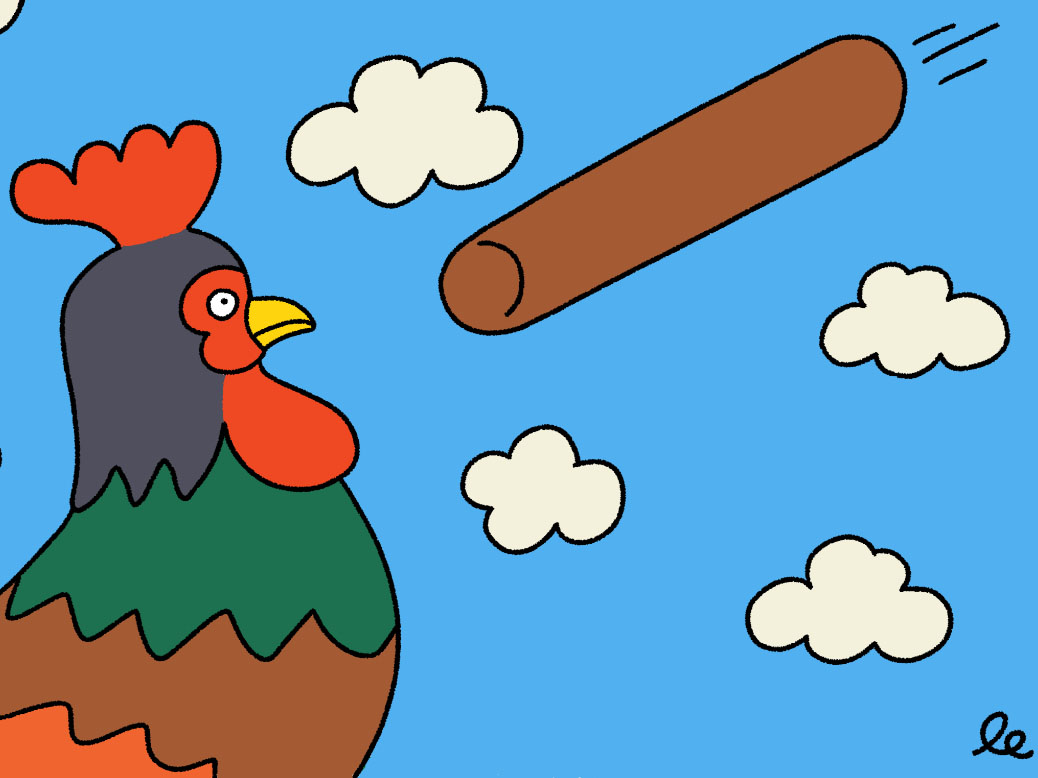
Aunt Sally is a game that’s played across an area stretching down from the Gloucestershire Cotswolds to the Vale of White Horse and the northern reaches of Berkshire. Its origin varies – invention by bored royalists in the Civil War, or as a rustic relic of pre-Victorian fairgroundia, or as an excuse to chuck a bit of wood at a live cockerel, or at an object that looks a bit like a woman in skirts – but it’s a game that, with a healthy dose of county pride, belongs to Oxfordshire. This ensures a strong regional following, and a steady crowd gathers in Charlbury for one of Blake’s sports on the green, albeit with the cool boxes, fold-up chairs and smart speakers that the poet and printmaker could not anticipate.
The rules of the game are straightforward. Players have six wooden sticks, or battens (18 and a half inches long), to knock a dumpy six-inch doll off an iron bar ten yards away. It is mostly played in pubs and, since the 1960s, teams have developed a complex league system composed of regional divisional pyramids with promotion and relegation, played by hundreds. Bands of participants rove across the county to pubs in villages and towns. Fixtures can be raucous: away teams designate a driver and arrive together at a match, where the game and social drinking conspire to generate a spirited atmosphere in which good-natured heckling and calling out between throws are an important part of the viewing and playing experience – like a more localised, non-televised darts.

Charlbury, however, is the home of the world singles competition. Each player takes their six throws, and whoever knocks the doll off the bar the most times after each turn wins that leg – like a tennis set. If there’s a tie after the third leg, a sudden-death round determines the winner. The 2025 final was decided by a penalty shoot-out of one batten each.
Between the two pitches is a white gazebo, under which assemble a platoon of players chuntering together alongside the usual objects that clutter outdoor summer games – microphones, tripods, leads, plus the plastic draw spinner. The competition’s chief organiser, Nick Millea, an amiable, enthusiastic man in a floppy hat, whose day job is at the Bodleian Library in Oxford, stands proudly among it all. He tells me 60 people have entered this year’s competition – including a German, a Lithuanian and an American – which plays out as a straight knockout contest. Their names all appear on the tournament bracket, grandly splayed out on a huge plank for all to see. A system of layered strips of masking tape allows for the progression through the rounds to be recorded easily.
Player technique varies. Some hold the stick in the middle, most at its end; some hold it horizontally, most vertically; some take a couple of steps before releasing, some throw from a fixed point; one or two raise their hind leg as they let go of the batten, as if the anatomical rebalancing helps conduct the cupola-arc of the toss more accurately. “There’s only so far technique can take you,” says one player I talk to. “But the natural ability of these guys…” he trails off, gesturing at some of the seasoned competitors assembled, for whom four strikes in a leg is normal. In the semi-final a former champion, Rob Bradford, manages five hits in one leg, only for his opponent, the reigning and four-time winner Roger Goodall, to knock the doll down with all six of his throws.
“I’m just happy to be in the top 32 in the world in something,” the player I speak to adds – he had gone out in the second round. I’m about to ask him if booze improved his performance but I’m distracted by my six-week-old baby, whom I courageously or foolishly brought with me, when he commits a poo both too voluble and voluminous to ignore. I find a spot in the cricket pavilion to change him.
The conditions, a touch under 30°C but stiflingly humid, are barely mitigated by less a breeze than a puny, sporadic movement of air. The ambient tension increases as the competition moves through its latter stages, and beneath the chuckles this is a game that’s taken seriously. One avid spectator takes a dim view of a woman frivolously trying to take a photo of her sons with their friends on the front row – “It’s the final,” she proclaims, exasperated, and wheels her arms around to indicate they should keep out of her eyeline.
Spectators are drawn away from the food vans and down the slope towards the pitch. Adults fill their glasses, a child glides past on a penny-farthing and music from the band tent continues to blare out, but conversations drop in the seconds leading up to a batten toss, like the respectful hush at Wimbledon. Even the long grass in the meadow beyond bend their fronds in the direction of those ten yards.
Goodall pulls out the shots in the final to beat Wayne Townsend 3-0, 2-4, 4-3, and wins his third straight title. Goodall is also the top scorer in the Wychwood Aunt Sally League for his team, the Three Pigeons. I try to speak to him after his victory but he’s swept away, engaged in a merry round of hand-shaking and baby-kissing. Dressed in grey shorts and a white polo shirt, there’s something of Lionel Messi in Goodall’s unassuming countenance and shambling walk – a dispositional modesty that contains a similar, if much nicher, brilliance. And nobody can say that consecutively knocking something over nine metres away with an unwieldy rod isn’t brilliant.
After watching so many battens pitched, their rotating trajectories begin to acquire a poetic resonance, like the bone tool flung in 2001: A Space Odyssey that becomes a spaceship. If that editing splice is meant to represent the vertical thread of human evolution, of civilisational and scientific progress, these gyroscopic sticks suggest something a little different. That spinning batten becomes a means of accessing the past, as an echoing of previous generations who played the same game on similar greens. The game’s simplicity ensures it’s unchanged by time and technology.
Yet one can imagine a surge in popularity pushing Aunt Sally beyond its geographical hinterland, giving it a profile large enough to enter the stultifying orbit of the sports scientists. Their austere precision would, through computer modelling, work out the ideal number of batten revolutions between hand and doll, deduce the perfect arc angle with some machine-learning protractor and impose strict dietary requirements for optimal athletic performance – no red meat perhaps, and hard restrictions on the consumption of brewed hops. What’s the cybernetic equivalent of dark satanic mills?
For now, L’Angleterre profonde plays on, and once Goodall gets his trophy the Charlbury punters stumble away from the theatre of Aunt Sally and back towards the beer marquee.
[Further reading: Football is a losing game]
Content from our partners


Related
This article appears in the 15 Jul 2026 issue of the New Statesman, After Keir Starmer
Join the debate
Subscribe here to comment